About Drake

This author has not yet filled in any details.
So far Drake has created 2061 blog entries.

Return of the Jedi – 1983 Marquand

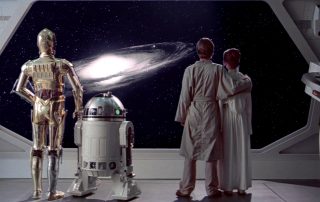
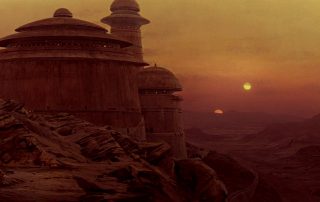
Compared to the original and The Empire Strikes Back, the finale the original trilogy comes crashing down to earth with a thud. There is a pandering from Lucas that doesn’t need to be here and that’s frustrating. Whether it is the Ewoks (warm and literally fuzzy), the silliness of some of the dancing scenes at Jabba’s club, the film just does not strike the same balance of narrative and mood as its predecessors. However, I agree wholeheartedly with Ebert here- “At the end of it all, after the three movies, we've taken an epic fantasy journey. Lucas has in
Return of the Jedi – 1983 Marquand2026-02-18T22:45:05-05:00

The Empire Strikes Back – 1980 Kershner

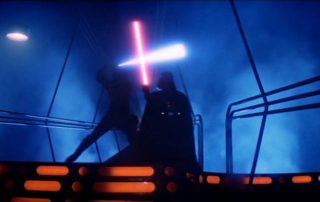
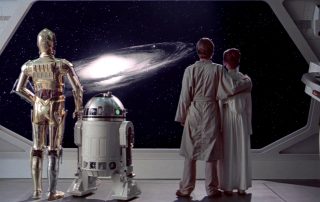
It is a myth that George Lucas can’t direct—or that he stepped aside for Empire so the more polished (talented/ or whatever adjective.) Irvin Kershner could do a better job at the helm. There’s nothing in Kershner’s filmography, before or after Empire, to suggest he had as much talented in his entire body as Lucas had in a single appendage. This isn’t a war on authorship or the auteur theory- I just see this as Lucas doing most of this from another title- producer in this case- maybe the David O. Selznick example/comparison works- but I think Lucas may

The Empire Strikes Back – 1980 Kershner2021-06-26T13:33:11-04:00

Star Wars – 1977 Lucas

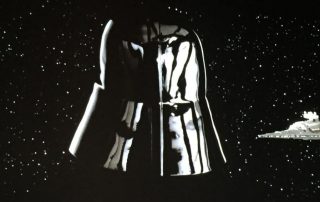
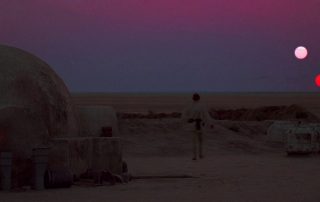
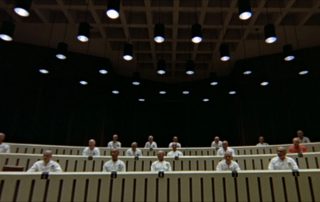
George Lucas’ exhilarating Star Wars opens in medias res with the instantly memorable Darth Vader chasing around Princess Leia after the famous scrolling yellow prologue. Like The Hidden Fortress from Kurosawa, Lucas centers much of the narrative deliberately (especially in the beginning) on two non-heroes if you will- in this case, two droids. Lucas borrows from many inspirations (including the Saturday morning serials, the burned-out massacre of Uncle Owen and Aunt Peru from John Ford’s The Searchers), but make no mistake, with The Hidden Fortress and the unmissable wipe edits (which I adore the use of here)—the main source
Star Wars – 1977 Lucas2021-06-25T13:53:40-04:00

Experiment in Terror – 1962 Edwards

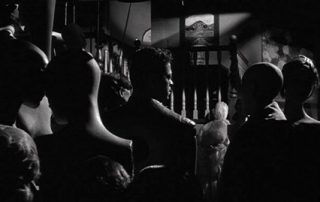
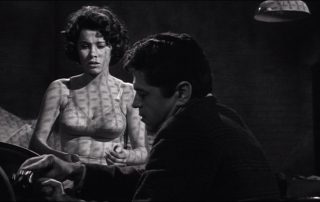
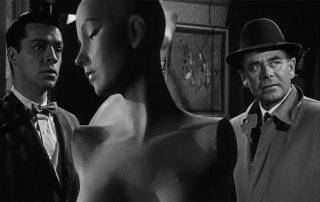
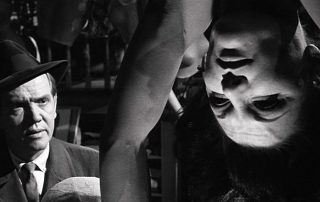
Blake Edwards had a big 1962. He was coming off 1961’s Breakfast at Tiffany’s and delivered both this, Experiment in Terror, and Days of Wine and Roses in 1962. Both of his 1962 efforts were captured in black and white photography, and both starred Lee Remick. There is an interesting reading of Experiment of Terror as purely an influence on David Lynch. Lynch fans and scholars should see it. I have not seen it listed as one of Lynch’s favorite films, but the clear influences are aplenty. The film is set in Twin Peaks (though clearly this is San

Experiment in Terror – 1962 Edwards2021-06-24T13:21:19-04:00

Escape from Pretoria – 2020 Annan

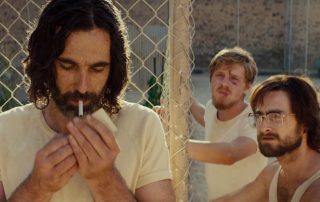
Escape from Pretoria is a film that eluded many in 2020 and should be sought out by cinema enthusiasts. Francis Annan has created a very solid entry in the annals of the prison break subgenre.  Daniel Radcliffe leads the way for the cast—but really it is here because of the strong use of the split diopter and full frame compositions. It opens with documentary footage and Radcliffe’s voice-over. Most of the negative reviews point out the semi-successful attempt to make this a realism The Battle of Algiers-like political argument of a movie—and that’s fair—but if you take that out

Escape from Pretoria – 2020 Annan2021-06-10T20:26:25-04:00

A Simple Plan – 1998 Raimi

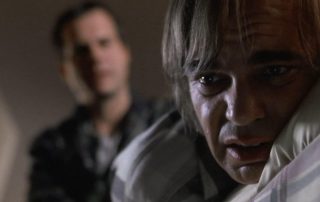
If you get the feeling that A Simple Plan could’ve been directed by the Coen brothers, you aren’t far off. This marvelous film is connected to Fargo and the Coen brothers in general. The moral thriller is made by the Coen’s long-time friends and occasional collaborator Sam Raimi. Joel worked as an editor on The Evil Dead (1981), Raimi co-wrote The Hudsucker Proxy (1994). I think Danny Elfman (here) emulates Carter Burwell’s 1996 Fargo score. The Coens’ apparently gave Sam advice on shooting in the snow and even the title has a shared connection with the brothers' 1984 debut

A Simple Plan – 1998 Raimi2021-06-23T13:05:33-04:00

The Father – 2020 Zeller

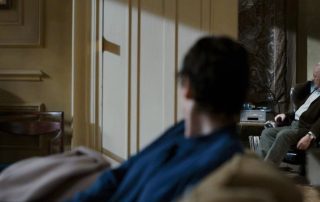
The Father is the debut film for Florian Zeller, Parisian director and playwright (this is based on his own play). He wrote the film with Anthony Hopkins in mind. Hopkins plays a character named Anthony- and when his character gives his birthdate- it is Hopkins’ own. Hopkins won the best actor Academy Award here at age 83 making him the oldest actor to ever win. He also won in 1991 for The Silence of the Lambs. It is an acting showcase for Hopkins—it is more than that, but it IS that. He gets a “you’re abandoning me” powerful monologue

The Father – 2020 Zeller2021-06-10T20:19:45-04:00

The Long Gray Line – 1955 Ford

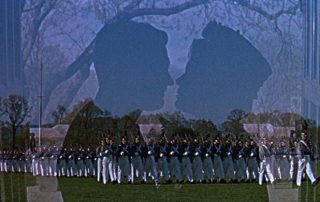
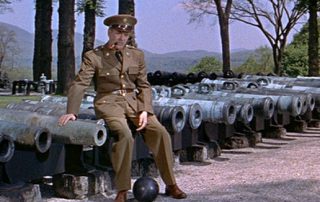
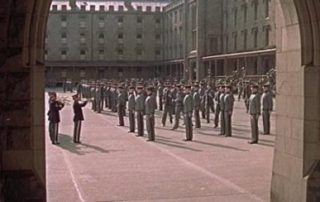
The Long Gray Line is pleasant but mostly routine, minor, John Ford. It is actually the first full film he made just before The Searchers in 1956 (the weird designation here is because he was famously fired off of Mister Roberts (also 1955) after punching star Henry Fonda). Technicolor, a breezy 138 minutes Ford’s romanticism of the military (he was a Navy man himself) and Irish immigrants shines through. So, this is perfect material for him. West Point location shooting, singing, plenty of extras here help give the film scope. The story the life of Martin 'Marty' Maher played

The Long Gray Line – 1955 Ford2021-06-22T15:51:43-04:00

1980

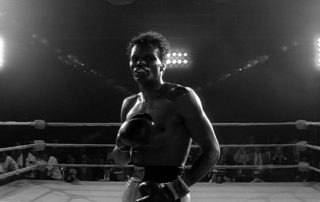
best film:  Raging Bull from Martin Scorsese The performance from Robert De Niro is what is discussed the most often and for good reason. This is truly one of the great performances (if not THE greatest- it would have my vote) in cinema history.  But as much as I love good screen acting, this is also Scorsese’s best directed film and that is simply more important. The opening credits are beautiful enough to make you weep, the in-ring tracking shots (on roller skates by director of photography Michael Chapman), zooms, and manipulation of lighting (see above with the shot

19802022-09-11T17:51:05-04:00

More American Graffiti – 1979 Bill Norton

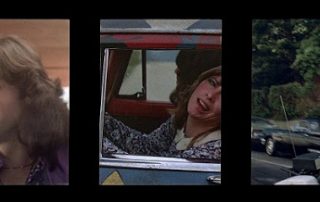
Whoever picked the title, More American Graffiti, should have been sentenced to a few months in prison. I don’t often get so worked up over a title, but this is both lazy and misleading. It really isn’t “more” American Graffiti. The sequel to the hit 1973 film is far different in tone. It was panned (and a flop) upon release and still has mostly bad reviews. If you can get past the title, there is actually a ton to praise here including a very ambitious visual/formal structure. This is the story of a few characters (apparently they couldn’t get

More American Graffiti – 1979 Bill Norton2021-05-06T19:47:41-04:00

American Graffiti – 1973 Lucas

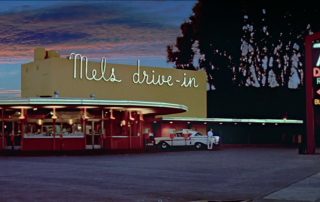
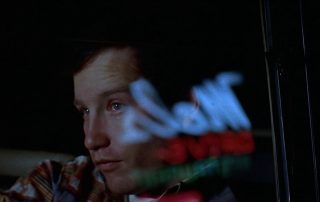
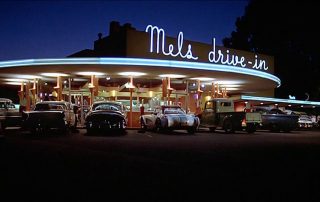
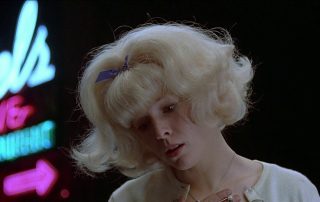
Lucas pivots from the Kubrickian artistic asceticism of his debut THX 1138 for an all-time nostalgic, hang-out film with his second effort Lucas is always the gambler- here, he bets on a slew of unnamed actors and no plot—and then runs up a big budget curating some of the greatest songs of the late 1950’s and early 1960’s era. “A brilliant work of popular art, it redefined nostalgia as a marketable commodity and established a new narrative style, with locale replacing plot, that has since been imitated to the point of ineffectiveness.” – brilliantly from David Kehr- https://www.chicagoreader.com/chicago/american-graffiti/Film?oid=1150459 Wolfman

American Graffiti – 1973 Lucas2021-06-20T12:50:53-04:00

THX 1138 – 1971 Lucas

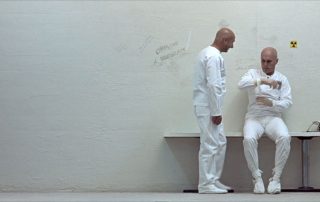
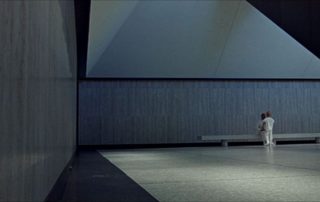
27-year-old prodigy George Lucas debuted with THX 1138 in 1971- a remarkable achievement of sight and sound It is a bleak film, Orwellian—Empire Strikes Back is also gloomy but this is as cold (sort of like Lang or Kubrick) as Lucas would ever be. He served as his own editor- and it is a fantastic feat of montage. The crew surrounding Lucas is noteworthy as well. Lalo Schifrin did the score—I’m not sure how Lucas got the backing of Lalo Schifrin (Cool Hand Luke in 1967) as an unknown in 1971. Walter Murch is the co-writer and does the

THX 1138 – 1971 Lucas2021-06-19T12:32:41-04:00
Go to Top