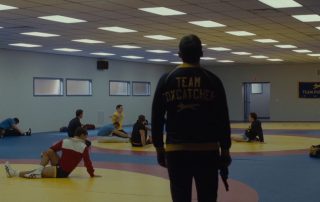
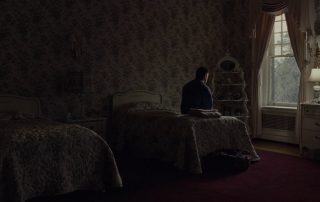
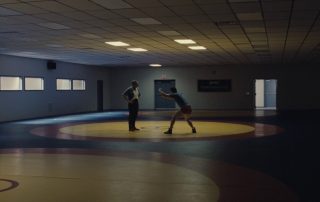
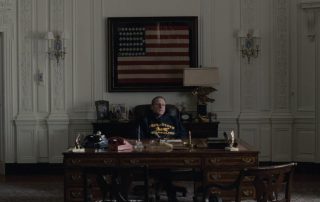
Foxcatcher – 2014 Bennett Miller

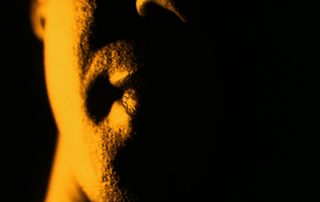
Three films into his career (Capote, Moneyball), Bennett Miller seems incapable of making anything less than a meticulously crafted character study. Foxcather (also based on a true story, and also, like Moneyball, is about the sphere surrounding athletics) explores the tragic events surrounding John du Pont (a horrifying Steve Carell) and the wrestling Shultz brothers- Mark (Channing Tatum) and David (Mark Ruffalo). Ruffalo and Tatum’s authentic performances were paved by practice and study. I remember the story in 2014 of Tatum getting his eardrum popped while wrestling in preparation for the role. He has cauliflower ear, Ruffalo masters the
Foxcatcher – 2014 Bennett Miller2021-11-07T13:20:16-05:00

Matador – 1986 Almodovar

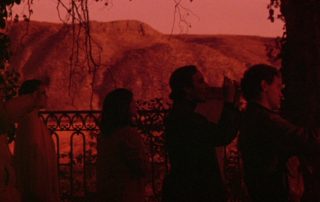
Matador is Pedro Almodovar’s strongest effort to date in 1986. Some of his decade-spanning obsessions: vibrant colors, dark humor, mothers, and more - have been undergoing fermentation. This is Almodóvar’s fifth film, and long gone is any trepidation or lack of confidence in his skills as a technician. You can see the confidence in the big, flashy (just like Fassbinder) red lettering for the titles. Almodovar takes aim at religious zealots, touches on regressed homosexuality, and yes, even has rape as part of the action (as he has in pretty much every film) again. During one exceptionally well edited

Matador – 1986 Almodovar2022-12-26T02:18:12-05:00

Labyrinth of Passion – 1982 Almodovar

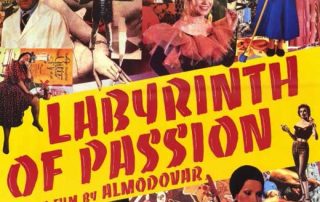
Again, often referred to as Almodóvar’s second film, after Pepi, Luci, Bom and Other Girls Like Mom (1980), which makes it his first on 35mm Almodovar continues a provocateur or agitator, a rebel of melodrama (like Fassbinder) but with even more outwardly button-pushing themes (and jokes) like rape. Here, the set up includes a pick-up artist (including a young Antonio Banderas in his first archiveable film at age 22-- getting picked up) and a nymphomaniac. It is a mixture of the punk rock mentality and Almodóvar’s sort of bathroom humor and sexual focus (gynecology plays a role in this

Labyrinth of Passion – 1982 Almodovar2021-11-05T13:02:20-04:00

Evil Dead II – 1987 Raimi

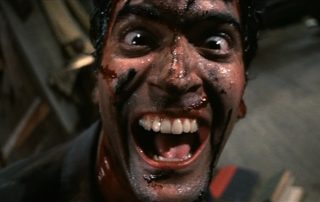
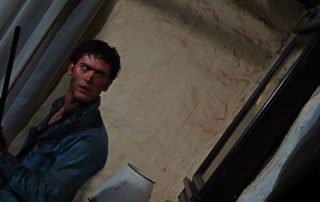
Sam Raimi’s Evil Dead II is the rare sort of sequel that also sort of works as a remake as well. Raimi, with a bigger budget, switched from 16mm to 35mm, changed tone (this is far more comedy than The Evil Dead (1981)) and instead of expanding the cast, this actually focuses more on Bruce Campbell’s talents as Ash here. Stylistically (which is different than special effects), Raimi’s greatest tool is the shaky cam. That kinetic shot, flying through the frame, often pushing doors open, is used again and again. The Coen Brothers, buddies of Raimi, also would use

Evil Dead II – 1987 Raimi2021-11-03T12:58:32-04:00

The Evil Dead – 1981 Raimi

Sam Raimi directed The Evil Dead at age 22. That is simply incredible. It is shot in a foggy 16mm, and it is rated NC-17 (which is proof poor, young Raimi did not have Spielberg’s legal team). Raimi’s The Evil Dead shows a wealth of ingenuity. The exaggerated audio of the porch swing slapping against the cabin in the opening is a splendid effect-- but just the beginning. These are young college kids (the Michigan State gear) on a trip to a cabin in the woods- three girls and two guys. The set up (and low budget horror appearance)

The Evil Dead – 1981 Raimi2021-11-02T14:03:38-04:00

Pepi, Luci, Bom and Other Girls Like Mom – 1980 Almodóvar

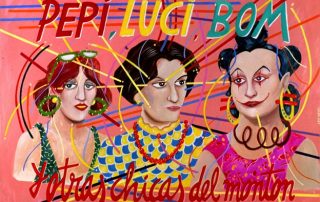
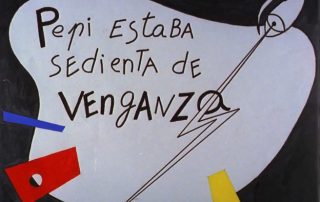
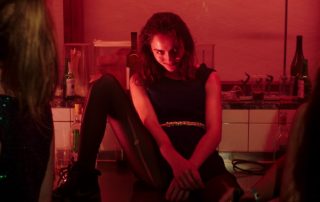
Though 1978’s Folle... folle... fólleme Tim! Is technically Almodóvar’s debut, most cinephiles use Pepi, Luci, Bom and Other Girls Like Mom as the great Spanish auteur’s starting point (he made a number of short films as well). Loud talk and loud clothes—this is Almodovar. This is a raunchy, button-pushing (multiple rape scenarios- and in a comedy) enfant terrible Almodovar. The setting is Madrid and the punk scene. Bold, colorful titles (above)- even in an ugly, grainy 16mm Almodóvar’s style bleeds through In the home of Félix Rotaeta’s character Almodovar sets a great frame. The wallpaper is dramatic, there is

Pepi, Luci, Bom and Other Girls Like Mom – 1980 Almodóvar2021-11-01T14:43:40-04:00

The Howling – 1981 Dante

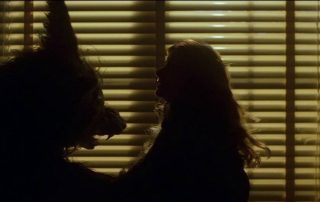
Joe Dante’s The Howling is his follow up to 1978’s Piranha and it happened to arrive in 1981 – the same year as John Landis’ An American Werewolf in London. Dante’s work is more self-aware. He has John Carradine and Slim Pickens in support and at this point in their distinguished careers they had both been in spoofs (Pickens in Blazing Saddles in 1974 and Carradine in Everything You Always Wanted to Know About Sex * But Were Afraid to Ask in 1972). In one scene in The Howling, Christopher Stone’s character, after getting bit by a werewolf, is

The Howling – 1981 Dante2021-10-31T12:25:19-04:00

Raw – 2016 Ducournau

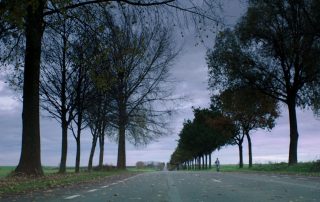
Julia Ducournau’s debut film Raw is rich in subtext. Ducournau wrote the screenplay as well tracing Justine’s (Garance Marillier) entrance into veterinary school and horrifying transformation/awakening. Justine is hazed, pressured into getting eating meat, getting a painful Brazilian. The opening frame (above) long take string of trees composition is perhaps the strongest in the film- and a sublime one. One must applaud Ducournau for having a fresh take on the vampire genre in the 21st This is part Near Dark (1987) and part Cronenberg body horror. Ella Rumpf plays Justine’s sister Alexia and Rumpf is superb. Based solely on

Raw – 2016 Ducournau2021-10-03T15:15:09-04:00

Run Silent Run Deep – 1958 Wise

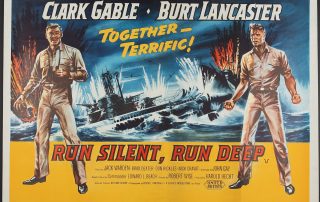
Two-hander tales of potential power struggles and mutiny at sea have been around since at least Mutiny on the Bounty in 1935. That film starred Charles Laughton and Clark Gable. Here, Gable switches roles and plays the sort of Captain Bligh ruthless, hardnosed ship Captain. This is an aged, worn down Gable. He can still act, but he has visible tremors in many of the scenes. Whether this was alcoholism or the beginnings of Parkinson’s, I’ll leave to the biographers. Either way, sadly, Gable would pass away in 1960 just a few years later. This is from Burt Lancaster’s

Run Silent Run Deep – 1958 Wise2021-10-28T14:56:59-04:00

Mo’ Better Blues – 1990 Spike Lee

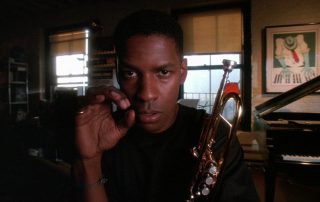
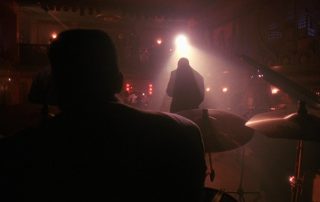
Mo’ Better Blues is Spike Lee’s fourth feature, and first after 1989’s Do the Right Thing. The opening credits are breathtaking. It does seem like the best, from Scorsese to Hitchcock to Spike, take the opening credits seriously Spike's credit sequence in 1989 for Do the Right Thing make it two straight films with this kind of artistry right up front to start   It opens in 1969 Brooklyn to tell the story of the young Bleek Gilliam (adult version played by Denzel- the first of four collaborations between Denzel and Spike). Unfortunately,

Mo’ Better Blues – 1990 Spike Lee2021-10-27T13:12:18-04:00

Rio Lobo – 1970 Hawks

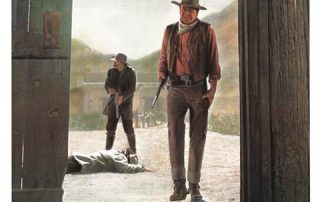
The final film of Howard Hawks (at the age of 74) is certainly one of his lesser works, and the least of the five John Wayne collaborations (four of them westerns including Red River, Rio Bravo, El Dorado). It brings back screenwriter Leigh Brackett, and there is talent here in the music as well (Jerry Goldsmith). Instead of getting Robert Mitchum to return from El Dorado, they cast his son. Jonathan Rosenbaum was one to point out that one of the most inspired sequences in the film (the opening train action set piece- the clever little hornet heist) was

Rio Lobo – 1970 Hawks2021-10-02T13:29:45-04:00

The Bird with the Crystal Plumage – 1970 Argento

  The Bird with the Crystal Plumage is the auspicious debut for first time director Dario Argento. It marks quite the meeting of talented Italians with Argeno (thirty at the time) working with cinematographer Vittorio Storaro (also thirty, his first color film, and this was the same year he worked with Bertolucci on The Conformist) and Ennio Morricone (an unnerving score using some vocalizations). It is an important film in the Giallo subgenre (there was a sort of post-Spaghetti Western boom about to happen). Yet, this is also clearly tied to the successful Italian import Blow-Up from Antonioni in

The Bird with the Crystal Plumage – 1970 Argento2021-10-02T12:52:09-04:00
Go to Top