Shirley – 2020 Decker

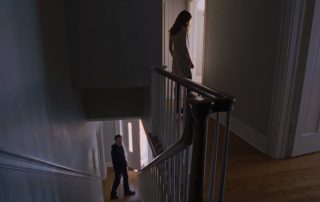
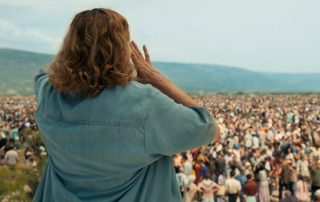
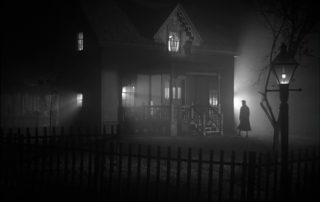
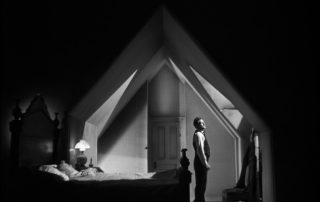
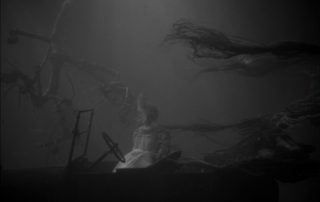
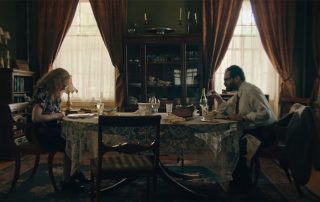
  Josephine Decker’s Shirley has more in common with Mike Nichols’ Who’s Afraid of Virginia Woolf? than any conventional biopic about the life of writer Shirley Jackson. The chamber play-like drama consists of Elisabeth Moss (putting together an remarkable body of work) Michael Stuhlbarg (outstanding in everything he does) as Shirley Jackson and Stanley Hyman. She is a writer and Stanley is a professor at the local college. Odessa Young and Logan Lerman are the younger couple that live with them. This makes Stuhlbarg the Richard Burton character and Moss the Elizabeth Taylor character. These two superb actors are
Shirley – 2020 Decker2026-02-23T07:24:20-05:00

La Ciénaga – 2001 Martel

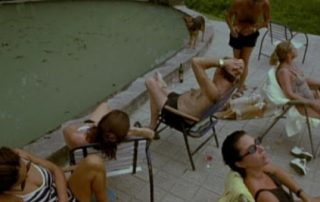
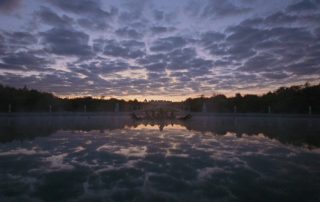
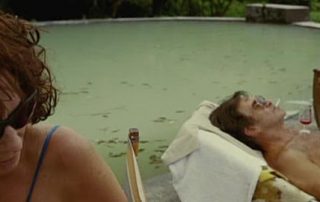
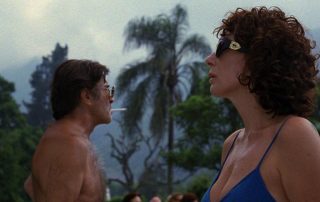
It is a very strong debut from Lucrecia Martel—the title literally translates to “the swamp” and the opening pool set piece one of the film’s highlights (all three shots above from the opening). Martel starts off with these drunk upper/middle-class laying around by an unclean (very green swamp-like) pool. Mercedes Moran plays Tali, and Graciela Borges (really the center of the film) plays Mecha and they are sisters living in provincial Argentina. Mecha and her husband are in this sort of inebriated, apathetic malaise that hovers around and infects everyone in and around their house (which 75% of the

La Ciénaga – 2001 Martel2021-08-09T14:05:46-04:00

Cowboy – 1958 Daves

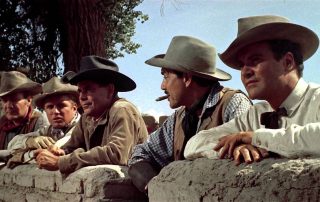
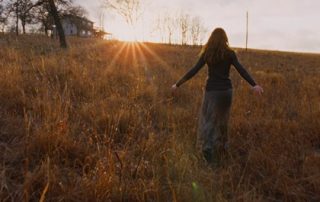
Cowboy is made the year after Delmer Daves and Glenn Ford paired up for 3:10 to Yuma There are noteworthy contributors here beyond just Glenn Ford. Saul Bass did the opening titles, Dalton Trumbo partially wrote the screenplay (originally uncredited due to the blacklist). But the film is probably most remembered for being the only Jack Lemmon western. He plays Frank Harris. Lemmon is 33-years old here, and this is the first archiveable film for him since his Oscar-winning turn in Mister Roberts (1955)—his first archiveable film overall. It opens with Lemmon’s character as a hotel clerk (perfect fit)

Cowboy – 1958 Daves2021-08-08T12:51:14-04:00

Mad Max: Fury Road – 2015 George Miller

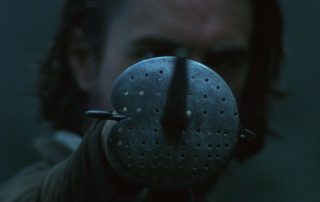
There is no other auteur in cinema history to rewrite his story at the age 70 like George Miller has with Mad Max: Fury Road. For years—really decades, Miller’s best work stood as The Road Warrior (or Mad Max 2) from 1981. There was not much of note from Miller since (a few archiveable films, none of them landing in their respective years top 10). It certainly felt like he was done as a cinematic artist of consequence. Mad Max : Fury Road destroys that notion—or rather, sets it on fire. There are varying stats on the average shot

Mad Max: Fury Road – 2015 George Miller2021-09-29T14:59:47-04:00

The Ballad of Narayama – 1958 Kinoshita

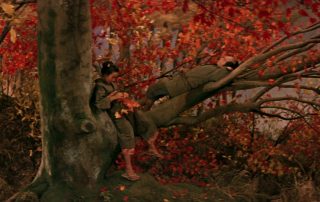
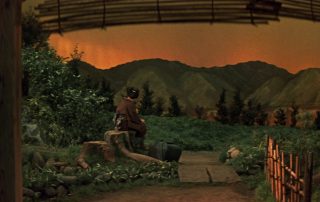
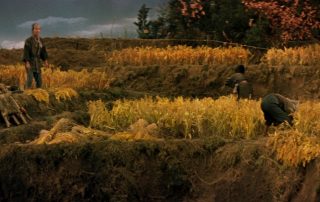
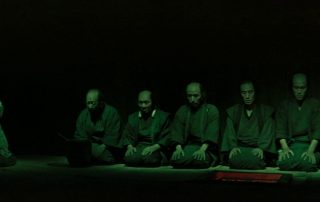
  It is worth noting that in at least one year during the prime of Ozu and Kurosawa, it is Keisuke Kinoshita who made the best Japanese film of the year (Equinox Flower for Ozu and The Hidden Fortress for Kurosawa in 1958). It was famously dismissed (and debated) by some at Cahiers du Cinéma for the vast departure from realism in the world Kinoshita built (which feels like judging it on the merit of its black and white photography (it is in color)). Set in a remote village, Kinuyo Tanaka (playing way older, and she is fantastic here)

The Ballad of Narayama – 1958 Kinoshita2023-07-31T19:50:23-04:00

City Streets – 1931 Mamoulian

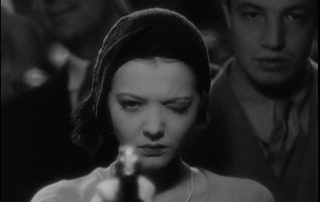
City Streets is a welcomed entry into the early 1930s prohibition gangster genre. It is not to be confused with 1931’s City Lights from Chaplin of course based on an original story by Dashiell Hammett 6-minutes into the film Rouben Mamoulian starts with a striking close-up of Sylvia Sidney (who makes the most of her chance to replace Clara Bow here in the lead after Bow’s breakdown) using a gun (which turns out to be a squirt gun at a game), and brilliantly pulls back the camera. This shot choice would be repeated often in the film as

City Streets – 1931 Mamoulian2021-07-04T13:13:06-04:00

Knight of Cups – 2015 Malick

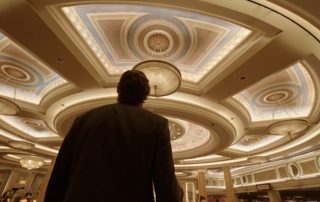
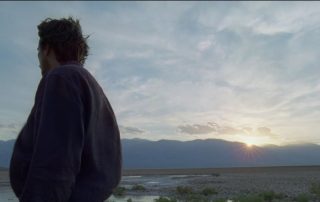
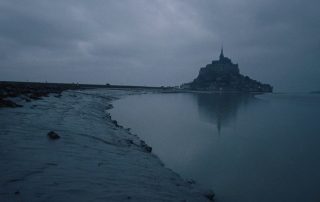
For the first time in his career, Malick chooses a single character for his central figure. Christian Bale plays Rick, a writer in Hollywood, living out a sinful life filled with material excess, and spiritual emptiness. After being cinema’s J.D. Salinger from 1978-1998—Malick is now firing almost at Woody Allen’s pace in the 2010s this is his third film of the decade already. This is his second straight film set in the modern day like To the Wonder. And this is not really about the dichotomy between violence in man and beauty found in nature like much of his

Knight of Cups – 2015 Malick2021-08-04T13:44:27-04:00

To the Wonder – 2012 Malick

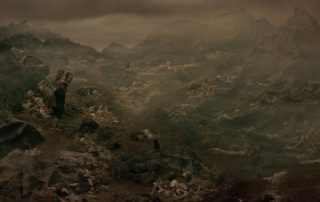
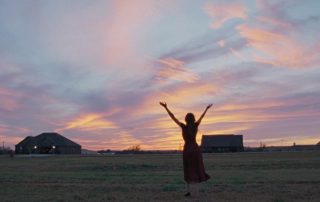
Between 1973 and 2011 Terrence Malick made five (5) films in thirty-eight (38) years. Between the five films, he took an average of 8.5 years to make his next movie. In 2012, he made To the Wonder just one year after The Tree of Life. Be careful what you wish for with an auteur with a typical long gestation period between films. It looks slightly different from the start, Malick starts with his trademark voice-over (here from Olga Kurylenko- nothing surprising there yet) with this lo-fi, grainy footage. We are not accustomed to ugliness in Malick’s world. He would

To the Wonder – 2012 Malick2026-02-01T07:45:39-05:00

The Mission – 1986 Joffé

Those stumbling upon The Mission for the first time may wonder who Roland Joffé is and how he was able to corral Robert De Niro, Jeremy Irons, Robert Bolt (screenwriter of Lawrence of Arabia), Ennio Morricone and others together for this film. Well, Irons was not such a big name yet (either was an athletic looking Jesuit here played by Liam Neeson) and as for the others, well Joffé had a big success in 1984 with The Killing Fields. These two films are similar- both well-acted political dramas shot on location. I'm not sure Joffé deserves to be surrounded

The Mission – 1986 Joffé2021-07-02T00:44:35-04:00

Quo vadis, Aida? – 2020 Zbanic

  Quo vadis, Aida? is an incisive docudrama. It is set in 1995 Bosnia, but it could be 1943 Poland with history sadly repeating itself. Jasmila Zbanic directs with great detail- there is no pandering. Jasna Djuricic plays Aida and this is her story. She is a translator for the UN—and she’s a mother, a wife, and a teacher. Through her eyes as a translator, the narrative sees both sides. The way the two strands of the story are told (macro and micro) through a translator—is inspired. She is not just doing a job either, she is from the

Quo vadis, Aida? – 2020 Zbanic2021-08-01T22:10:33-04:00

Robin Hood – 1973 Reitherman

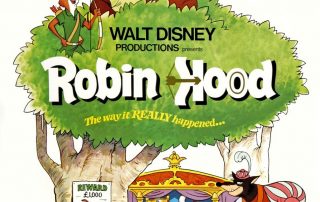
Wolfgang Reitherman was in charge of 1973’s Robin Hood as he was with all the Disney animated films after Walt’s death. These are not exactly seen as the glory days at Disney animation sadly for Reitherman’s legacy. He was one of Disney’s Nine Old Men https://en.wikipedia.org/wiki/Disney%27s_Nine_Old_Men and was over 60 sixty (with forty of those years already working at Disney) when he made Robin Hood. He brings back the vocal talents of Phil Harris from probably his most successful film – 1967’s The Jungle Book. Here Harris plays Little John and some of the best scenes capture the combative

Robin Hood – 1973 Reitherman2021-06-15T20:19:18-04:00

The Night of the Hunter – 1955 Laughton

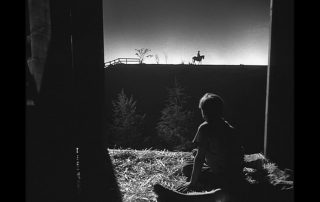
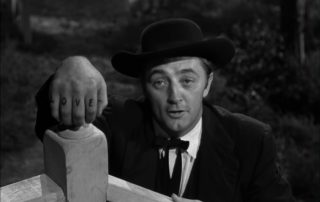
The Night of the Hunter is much more than just the chance for Robert Mitchum to sink his teeth into the Harry Powell character- one of the all-time great screen villains. It has been described as one of the great American Gothic films-- Charles Laughton described it himself as a “nightmarish sort of Mother Goose tale”- and upon revisit I was surprised at how musical it was, there are four songs in the first 18-minutes, and Mitchum’s marvelous baritone often sings a few bars of “Leaning” …. haunting. The film opens with Lillian Gish telling a story to some

The Night of the Hunter – 1955 Laughton2021-07-31T13:02:24-04:00
Go to Top