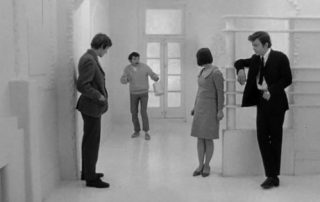
The Knack… and How to Get It – 1965 Lester

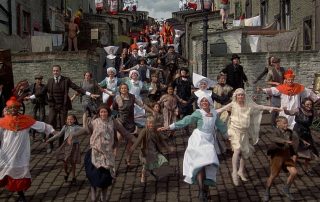
I forget Richard Lester is from Philly— between this here, The Knack… and How to Get It, and A Hard Day’s Night from the year before- the most 1960’s swinging-London films of all-time (along with maybe Blow-Up- also made by a non-British director). The knack is really “mojo”- or sex Filled with playful visual gags, great imagery (the women all in white sweaters on the stairwell waiting to audition, the painted white room), an active camera, thoughtful editing (low average shot length, freeze frame work, jump cuts) Jazzy score by the great John Barry (Bond movies, Out of Africa,
The Knack… and How to Get It – 1965 Lester2020-11-11T14:25:45-05:00

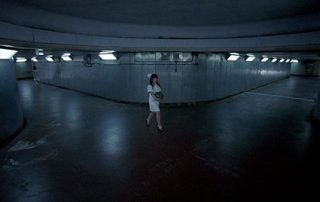
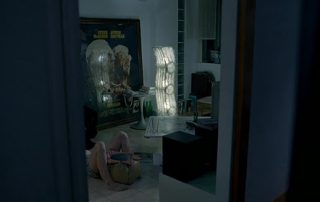
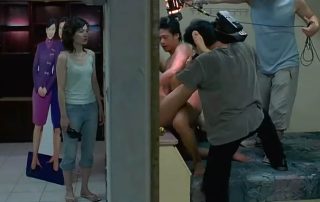
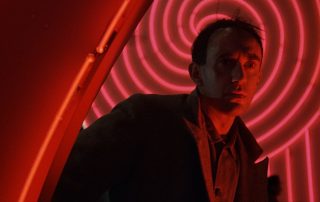
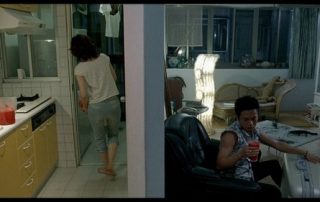
The Wayward Cloud – 2005 Ming-liang Tsai

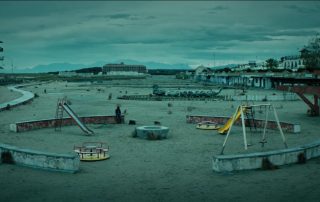
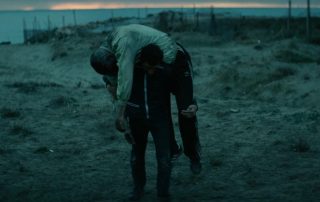
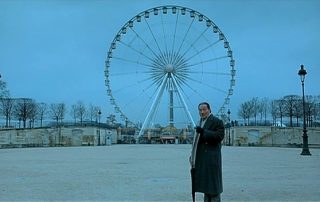
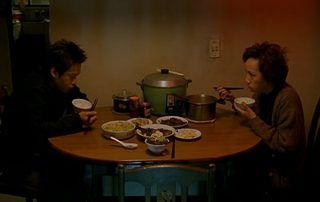
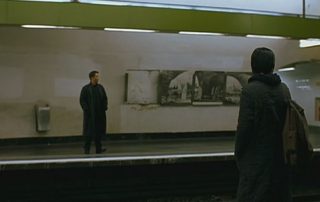
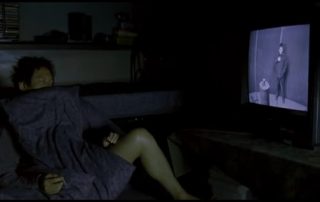
Ming-liang Tsai’s seventh feature – and quite a controversial one with the sex and soft-core pornography (which is certainly part of  Ming-liang Tsai's critique). Ming-liang Tsai is commenting on the porn culture (and more importantly the world that would accept it as part of the norm)- but doing it he uses a ton of it here. This is one of the more bizarre films you’ll see. Kang-sheng Lee (Ming-liang Tsai’s male muse- he’s in all his film) plays Hsiao-Kang a porn actor who can’t make a genuine human interaction—dead inside, empty. It is no surprise to see that L'Eclisse

The Wayward Cloud – 2005 Ming-liang Tsai2020-11-10T12:59:46-05:00

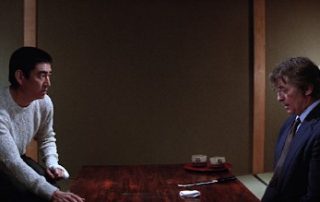
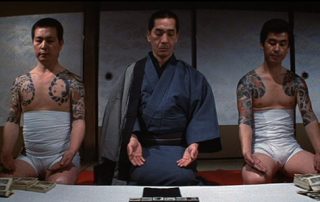
The Yakuza – 1974 Pollack

The Yakuza is Paul Schrader’s first screenplay—coming from a story by his brother (who spent a lot of time in Japan), touched up by Robert Towne (wow), directed by a hot Sydney Pollack (coming off of Jeremiah Johnson and The Way We Were). It was the most expensive script sold at the time. Many veteran actors had a look at the lead, I don’t know if they turned it down or if Mitchum beat them out—but as Tarantino says (he has a nice essay on the film https://thenewbev.com/tarantinos-reviews/the-yakuza/) it is really the last time Mitchum would be good in

The Yakuza – 1974 Pollack2021-06-05T11:43:07-04:00

Goodbye, Dragon Inn – 2003 Ming-liang Tsai

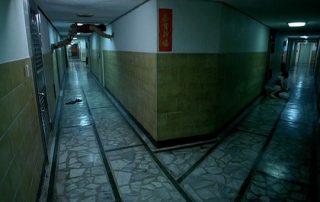
Ming-liang Tsai’s sixth feature is his shortest at 82 minutes, almost entirely silent (no more than a few lines of dialogue in the film and then you overhear the dialogue from the 1967 Dragon Inn which is the film playing at the theater), little to no camera movements. Ming-liang Tsai’s film here is an impressive formal construction, and I’ll borrow from the great Andrew Sarris in the Observer when he says “The real star of the movie is the doomed movie house itself”. Ming-liang Tsai uses that setting, a dilapidated movie house, hallways, basement, projection room as a character.

Goodbye, Dragon Inn – 2003 Ming-liang Tsai2023-09-30T21:59:23-04:00

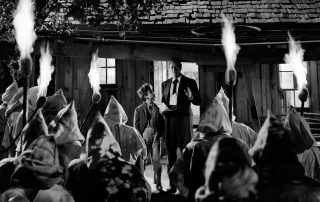
Stars in My Crown – 1950 Tourneur

Joel McCrea is rock solid Jimmy Stewart stand-in and the supporting cast here is loaded with steady actors—but it is the great Jacques Tourneur’s direction, particularly early on in the film, that makes it more than just a good story Tourneur has a slow reverse crane shot of the church in the opening shot—he pauses on a very nice black and white photograph of the church as the choir sings the title song There is a nostalgic voice-over of a small town- Walesburg and the story of Joel McCrea’s preacher The camera movement again makes it more than run

Stars in My Crown – 1950 Tourneur2020-11-09T14:09:06-05:00

City Slickers – 1991 Underwood

A charming little film that showcases some best of Billy Crystal’s comedic talents. Crystal was on a roll in 1991—not exactly a Kevin Costner sort of roll, but When Harry Met Sally was in 1989 and City Slickers is a solid comedy- and one of the five biggest box office hits in the USA in 1991 Has the cute little cartoon credit sequence, the booming Victor Young Shane-like score by Marc Shaiman and a talented group of actors surrounding Crystal. Daniel Stern (coming off Home Alone the year before) and Bruno Kirby are his buddies, Josh Mostel and David

City Slickers – 1991 Underwood2020-11-09T13:33:41-05:00

We Are Who We Are – 2020 Guadagnino

When a talent like Luca Guadagnino (Call Me By Your Name, I Am Love) makes a film you seek it out whether it is 90 minutes or 480 minutes (approximately). Feels like an lingering and imperfect novel. This long form film best fits directors who work quickly like Fassbinder and Soderbergh. Guadagnino made a film in 2017 (Call Me By Your Name) and another long film in 2018 (Suspiria). Most directly simply can’t do that. I would’ve liked to have seen him slow down and make a better, shorter film—but this still is a form that could work for

We Are Who We Are – 2020 Guadagnino2020-11-06T15:41:56-05:00

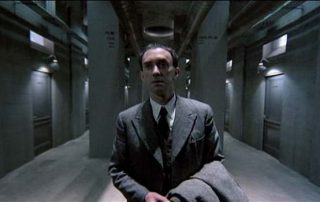
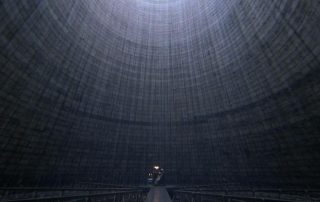
Brazil – 1985 Gilliam

Brazil is Terry Gilliam’s magnum opus, one of the truly great films of the 1980’s, and very best films of the sci-fi and fantasy genres It is the middle film in Gilliam’s imagination trilogy- starting with Time Bandits in 1981 and ending with The Adventures of Baron Munchausen in 1988 Riddled with production/financing and creative-control difficulties—clearly Gilliam is an iconoclast in the school of Orson Welles. De Niro, though impeccable in the small role, apparently was a bit of a headache with his method acting as well during production A savage comedy featuring there’s terrorism, paranoia—veiled shots at the

Brazil – 1985 Gilliam2020-11-06T13:19:22-05:00

On the Rocks – 2020 Sofia Coppola

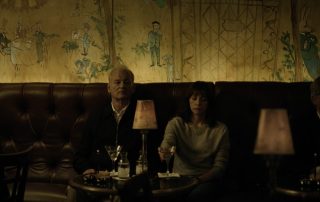
On the Rocks starts out strongly with a Chet Baker song, a spiral staircase overhead shot and a young couple (Rashida Jones and Marlon Wayans) in an elegant little mini-montage flashing back to their marriage Despite it being Bill Murray’s best work personally since at least 2012’s Moonrise Kingdom (if not farther back to 2005’s Broken Flowers) it is a disappointment from the auteur/acting duel that created Lost in Translation. Having said that, if Lost in Translation sort of had an Antonioni-like affluent malaise and quarter-life crisis (from the Sofia-surrogate Scarlett character point of view) tinge to it—this is

On the Rocks – 2020 Sofia Coppola2020-11-05T13:59:00-05:00

Dogman – 2018 Garrone

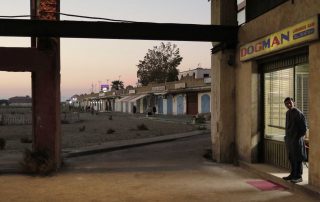
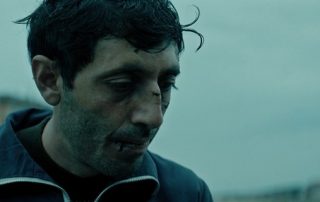
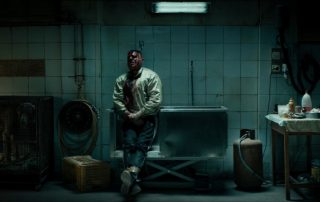
Cannes’ best actor winner Marcello Fonte plays the aptly named Marcello- a dog groomer, seemingly a great father, a gentle soul. He is diminutive in stature—and he’s the victim of violent tormenter Simoncino (played by Edoardo Pesce). You are sympathetic to Marcello early for saving a poor dog left in the freezer by Simon. Jacques Audiard's 2009 film The Prophet has much in common- an excellent film- gritty This is return to the world of dark underworld with leaning towards realism world of Gomorrah for Garrone after the pseudo-fantasy, visually stunning world he built in 2015’s Tale of Tales A shadow-laden,

Dogman – 2018 Garrone2020-11-04T16:29:19-05:00

What Time Is It There? – 2001 Ming-liang Tsai

Though there is a film between (1998’s The Hole- which I have not yet seen)- What Time Is It There? from Ming-liang Tsai picks up right where 1997’s The River left off- with one of his greatest compositions and shots. The film here starts with a long take (four minutes) of an old man (Tien Miao—in almost all of Ming-liang Tsai’s films) through two open doors. He’s eating alone from a little oven (green- which will come up again and again here) in the foreground right. The doors are green. He moves and starts smoking- now framed through three

What Time Is It There? – 2001 Ming-liang Tsai2020-11-04T14:26:56-05:00

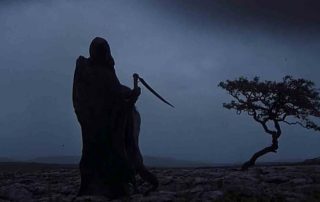
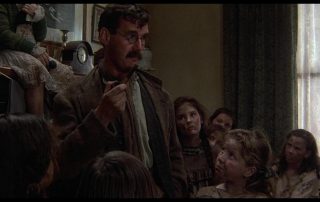
The Meaning of Life – 1983 Gilliam, T. Jones

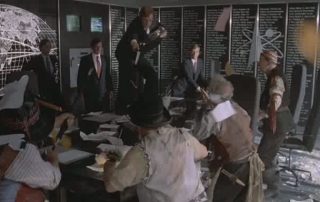
The Meaning of Life is anthology film- there’s a tying bind throughout --reflexively pointing out this is the middle of the film, end of the film, etc. It plays well to the talents of the Monty Python trope’s experience working in short form “The Crimson Permanent Assurance” opening segment is really separate from the film. It is Gilliam’s. It is a 16 minute little film, had its own crew, soundstage. Gilliam is clearly sketching for Brazil here with the rows of desks, corporate prison, paperwork and suits. This is also probably the best segment of this film. It is

The Meaning of Life – 1983 Gilliam, T. Jones2020-11-03T13:31:30-05:00
Go to Top