About Drake

This author has not yet filled in any details.
So far Drake has created 2061 blog entries.

Azor – 2021 Fontana

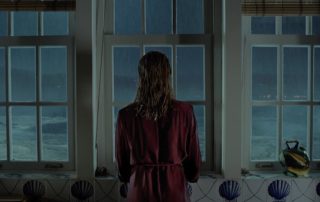
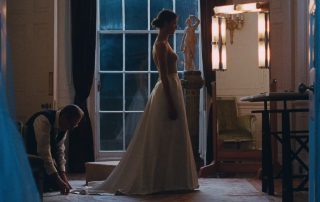
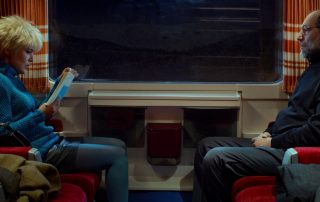
Azor is the debut film from Andreas Fontana. A private banker from Switzerland travels to Argentina to replace his partner (who is never shown during the film) during a period of political unrest. Fontana breaks the film into chapters- “The Camel’s Tour”, “A Duel”, “The Gala”, “Lazaro” (used throughout as a clue word- it is a military island)- and so on. The film stars Fabrizio Rongione as Ivan de Wiel and Stephanie Cleau as his wife Ines. At the 10-minute mark there is an impressive shot from inside the hotel room looking out where Ivan and his wife are
Azor – 2021 Fontana2022-02-23T12:45:30-05:00

Julieta – 2016 Almodóvar

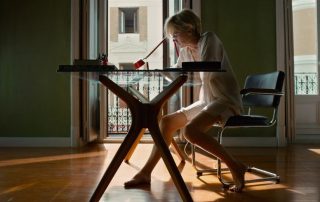
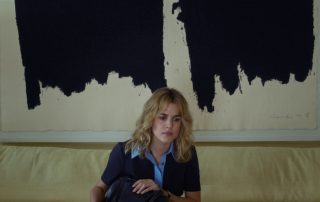
Julieta is Pedro Almodóvar’s twentieth feature. Julieta is based on a trio of stories by Alice Munro from her 2004 collection "Runaway". Munro is Canadian and the stories are set in Canada. Apparently, the original screenplay was written in English and Meryl Streep was approached to star. However, Almodovar felt uncomfortable and made the change back to his native tongue and country. Julieta (Emma Suárez) is about to move with Lorenzo (Dario Grandinetti) and living out her seemingly normal life when a chance encounter on the street with her daughter’s childhood best friend triggers a change. Julieta drops everything to

Julieta – 2016 Almodóvar2025-12-26T19:42:31-05:00

The Lost Daughter – 2021 Gyllenhaal

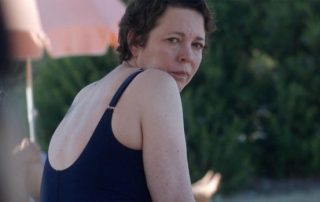
The Lost Daughter marks the writing and directing debut from Maggie Gyllenhaal (actor in films such as The Dark Knight and Crazy Heart). Gyllenhaal starts the film with some on the shoulder (a la Black Swan or Mother! from Aronofsky) closeups but that dies down rather quickly. It will resurface later briefly as Olivia Colman’s Leda dances with Ed Harris’ Lyle near the end of the film. Leda is on vacation on her own in Greece. She has some interaction with Nina (Dakota Johnson), Nina’s daughter and… Nina’s daughter’s doll. Roughly half the film surrounds flashbacks of young Leda

The Lost Daughter – 2021 Gyllenhaal2022-02-06T15:23:42-05:00

Phantom Thread – 2017 Paul Thomas Anderson

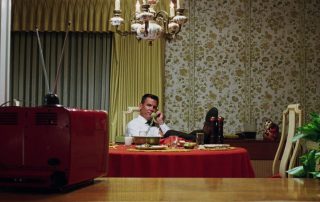
Phantom Thread marks Paul Thomas Anderson’s eighth (8th) film and second (2nd) collaboration with the great Daniel Day-Lewis. After his 70mm experimentation with The Master- this is PTA back on 35mm just like 2014’s Inherent Vice. The film opens with Alma (Vicky Krieps) telling the story of her relationship with Reynolds Woodcock (DDL) in an interview style. The film is concerned with routine. Like Punch-Drunk Love, There Will Be Blood, The Master – PTA is building this character brick by brick with Reynolds’ rigorous morning procedure. Reynolds’ breakfast is very important to him (and these are some of the

Phantom Thread – 2017 Paul Thomas Anderson2022-02-20T13:19:41-05:00

Waiting Women – 1952 Bergman

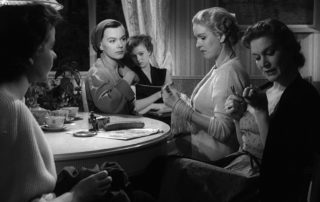
Waiting Women is a sort of anthology film telling the collective story of marriage. There are five women gathered early in the film. These women are all having issues in their marriage. At the four-minute mark Bergman captures the five women at five different fields of depth in a stunner of a shot. In the foreground left is Maj-Britt Nilsson (back with Bergman from Summer Interlude in 1951). Within the same shot Bergman’s camera moves in for a closeup of the second of the five women. These women are literally waiting (hence the title). In the same shot (it

Waiting Women – 1952 Bergman2022-04-10T04:01:17-04:00

2015

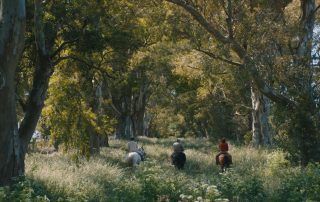
best film:  The Revenant from Alejandro González Iñárritu The Revenant gives Inarritu back to back best films of the year which is close to unfathomable. However, 2015 is not a year with a clear winner in this category- George Miller's Mad Max: Fury Road feels like a virtual tie.  But still, there is no harm in celebrating and appreciating The Revenant. A masterpiece of staggering beauty and cinematic awe Opens with a dream montage – incredible imagery, and then the cinematic gauntlet is thrown down with the hunting scene starting with the camera aimed down at the stream and capturing

20152022-08-02T03:27:36-04:00

The Killers – 1964 Siegel

Don Siegel had wanted to make Hemingway’s The Killers for nearly twenty years by the time he had the opportunity to finally make it 1964. Siegel wanted this film for his debut- but it ultimately went to Robert Siodmak of course/ Siodmak’s work proved him to be the right choice. Siegel makes a major change to the narrative structure of the 1946 original. The 1964 version drops the Edmund O’Brien insurance agent investigative character/angle. Siegel’s version (perhaps a sign that the times are a-changin in the 1960s) tells the story from the killers’ point of view. This makes Lee

The Killers – 1964 Siegel2022-02-21T20:02:16-05:00

The Killers – 1946 Siodmak

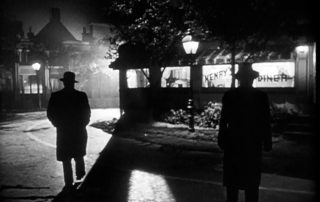
The Killers is known as the film that launched the careers of Burt Lancaster and Ava Gardner. It is also remembered as one of the best Ernest Hemingway adaptations (Hemingway’s name appears above the title). It is also considered the sort of Citizen Kane of film noir with its splintered flashback storytelling structure. It opens like its in the middle of the story with two killers (the titular killers) walking into a diner. There is a strong frame (here) right off the bat of the streetlight and the diner- this is the strongest work of German-born Richard Siodmak

The Killers – 1946 Siodmak2022-12-24T12:27:34-05:00

Carlito’s Way – 1993 De Palma

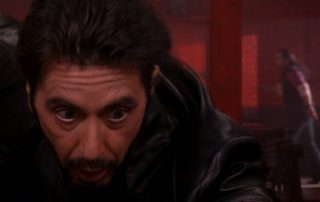
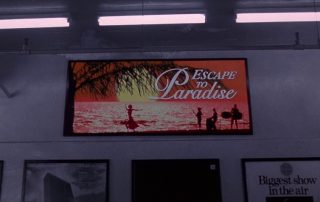
Ten years after Scarface, Carlito’s Way reteams Brian De Palma and Al Pacino for a sort of cocaine sequel. Pacino’s Carlito is certainly a much better man than Tony Montana- but he is in the drug trade- “The J.P. Morgan of the smack business.” The film opens with the end of the story- black and white slow-motion photography with the opening titles and voice over of Pacino (playing a Puerto Rican character here instead of Cuban) hovering on top. The sign “Escape to Paradise” is in color with everything else in black and white emphasizing the broken American

Carlito’s Way – 1993 De Palma2026-02-23T07:23:50-05:00

Colorado Territory – 1949 Walsh

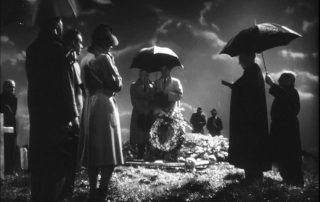
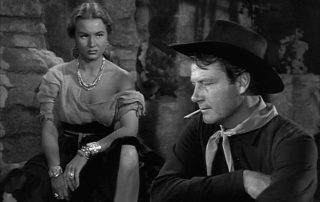
This is an impressive 1949 B-side in for Raoul Walsh, his other 1949 effort was White Heat. Shot in Colorado along with parts of Arizona and New Mexico. This is Walsh so editing and pace are crucial- kineticism is the word. There is a jail escape in the first five minutes, Joel McCrea (as Wes McQueen- great name) has a poignant moment at the grave of an old sweetheart, and then there is a stagecoach robbery chase- all in the first ten minutes. Danny Boyle is another auteur that usually brings energy through editing and pace. Godard’s Breathless is

Colorado Territory – 1949 Walsh2022-01-29T13:12:06-05:00

Summer Interlude – 1951 Bergman

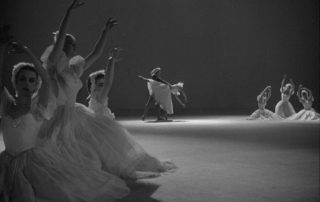
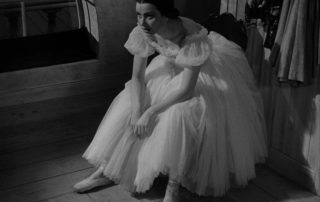
It is easy to confuse Summer Interlude with the rest of Ingmar Bergman’s oeuvre- it is one of three of his works from the 1950s with “Summer” in the title. Opens with the Swan Lake ballet. Bergman uses a stark backdrop effectively displays his acumen for low and high angles. In an impressive frame there are a trio of dancers in the foreground left—and another trio background right—with the main focus of the camera on the dancers in the center of the frame and center depth. When Bergman is not shooting the ballet, ballet practice, or backstage

Summer Interlude – 1951 Bergman2022-01-28T22:38:42-05:00

Inherent Vice – 2014 Paul Thomas Anderson

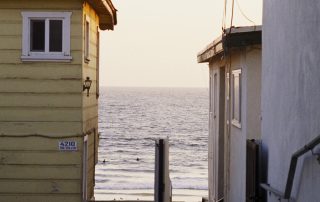
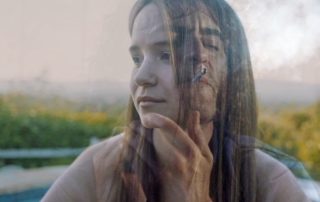
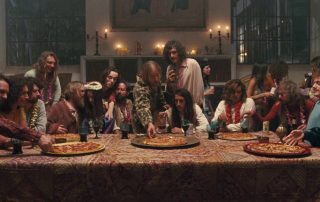
The place is Gordita Beach and the time is 1970 for Paul Thomas Anderson’s seventh (7th) film- Inherent Vice. One of the best compositions in the film takes place in the opening as PTA places the camera between houses watching the ocean waves. Inherent Vice showcases a specific date/time vernacular that had to make The Coen Brothers smile (and Inherent Vice would make a great double billing with The Big Lebowski in general) with dialogue like “flatlanders” and “gentleman of the straight world” from Thomas Pynchon’s novel. Inherent Vice is unique in that the narration comes from a very

Inherent Vice – 2014 Paul Thomas Anderson2025-12-24T07:58:08-05:00
Go to Top