About Drake

This author has not yet filled in any details.
So far Drake has created 2061 blog entries.

Bad Day at Black Rock – 1955 John Sturges

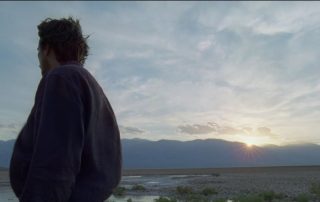
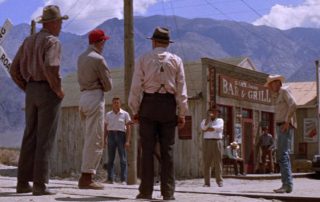
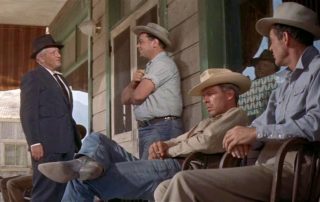
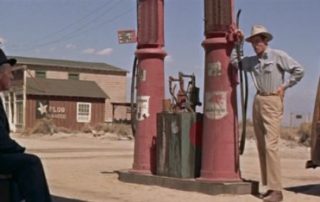
  Bad Day at Black Rock is a tight, no-bull 81-minutes coming from a no-bull director (John Sturges) and a no-bull star (Spencer Tracy). Tracy and Sturges have rarely, if ever, been better. It is set in a sleepy (and angry) little town in the west. Parts were shot in Death Valley and the Mojave. Started with a whirlwind score (even before Sturges worked with Elmer Bernstein, he apparently had a type he liked—just like with Nolan before Zimmer) with a train steaming into Black Rock. The train has not stopped there in four years. Tracy playing John J.
Bad Day at Black Rock – 1955 John Sturges2021-08-12T14:01:25-04:00

The Last Sunset – 1961 Aldrich

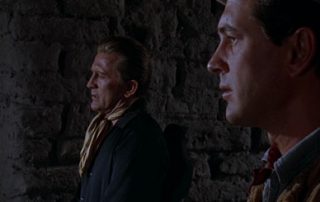
This was a bigger production, a western shot in Mexico featuring Kirk Douglas and Rock Hudson- both massive stars at the time. Douglas plays Bren O’Malley, a man with a checkered past who has come back for a former lover (Dorothy Malone’s character) while being chased by the law (Rock Hudson). Carol Lynley plays Malone’s daughter. This reteams Malone and Hudson from 1956’s Written on the Wind by Douglas Sirk. There is a great throwaway line about Douglas’ character and how he “has a hole in his chin” (referring to the actor’s famous dimple chin). At the 14-minute mark

The Last Sunset – 1961 Aldrich2021-08-11T14:29:08-04:00

Shirley – 2020 Decker

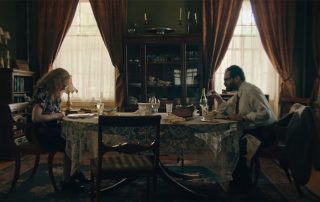
  Josephine Decker’s Shirley has more in common with Mike Nichols’ Who’s Afraid of Virginia Woolf? than any conventional biopic about the life of writer Shirley Jackson. The chamber play-like drama consists of Elisabeth Moss (putting together an remarkable body of work) Michael Stuhlbarg (outstanding in everything he does) as Shirley Jackson and Stanley Hyman. She is a writer and Stanley is a professor at the local college. Odessa Young and Logan Lerman are the younger couple that live with them. This makes Stuhlbarg the Richard Burton character and Moss the Elizabeth Taylor character. These two superb actors are

Shirley – 2020 Decker2026-02-23T07:24:20-05:00

1987

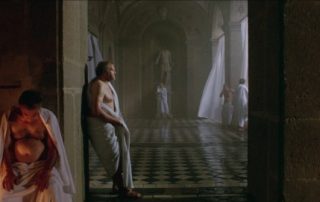
best film:  The Belly of An Architect by Peter Greenaway   Greenaway’s go-to DP and most important collaborator is Sacha Vierny — Vierny worked with Resnais on Hiroshima Mon Amour and Last Year at Marienbad Shot on location in Rome—Greenaway is clearly in absolute love with the architecture (he made The Draughtsman’s Contract in 1982 so he’s just as interested in this as he is in cinema) most good films have maybe one shot like this– at most a few- there are 40-50+ worthy of praise- certainly one of the strongest here smack dab in front of the Pantheon here-

19872021-12-27T20:16:58-05:00

La Ciénaga – 2001 Martel

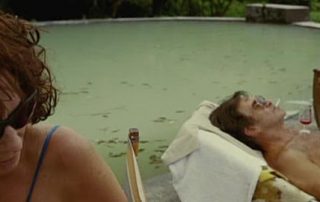
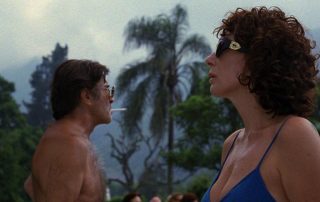
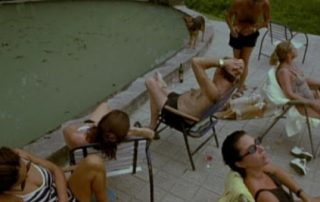
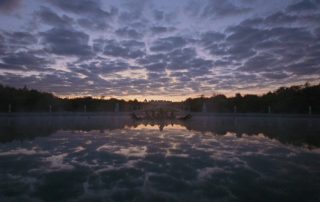
It is a very strong debut from Lucrecia Martel—the title literally translates to “the swamp” and the opening pool set piece one of the film’s highlights (all three shots above from the opening). Martel starts off with these drunk upper/middle-class laying around by an unclean (very green swamp-like) pool. Mercedes Moran plays Tali, and Graciela Borges (really the center of the film) plays Mecha and they are sisters living in provincial Argentina. Mecha and her husband are in this sort of inebriated, apathetic malaise that hovers around and infects everyone in and around their house (which 75% of the

La Ciénaga – 2001 Martel2021-08-09T14:05:46-04:00

Cowboy – 1958 Daves

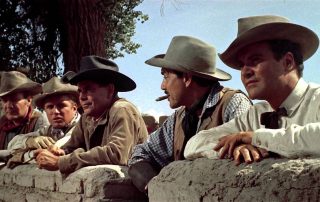
Cowboy is made the year after Delmer Daves and Glenn Ford paired up for 3:10 to Yuma There are noteworthy contributors here beyond just Glenn Ford. Saul Bass did the opening titles, Dalton Trumbo partially wrote the screenplay (originally uncredited due to the blacklist). But the film is probably most remembered for being the only Jack Lemmon western. He plays Frank Harris. Lemmon is 33-years old here, and this is the first archiveable film for him since his Oscar-winning turn in Mister Roberts (1955)—his first archiveable film overall. It opens with Lemmon’s character as a hotel clerk (perfect fit)

Cowboy – 1958 Daves2021-08-08T12:51:14-04:00

Mad Max: Fury Road – 2015 George Miller

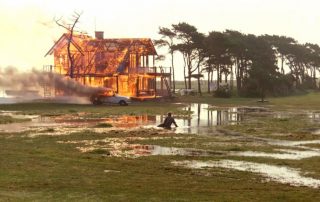
There is no other auteur in cinema history to rewrite his story at the age 70 like George Miller has with Mad Max: Fury Road. For years—really decades, Miller’s best work stood as The Road Warrior (or Mad Max 2) from 1981. There was not much of note from Miller since (a few archiveable films, none of them landing in their respective years top 10). It certainly felt like he was done as a cinematic artist of consequence. Mad Max : Fury Road destroys that notion—or rather, sets it on fire. There are varying stats on the average shot

Mad Max: Fury Road – 2015 George Miller2021-09-29T14:59:47-04:00

The Ballad of Narayama – 1958 Kinoshita

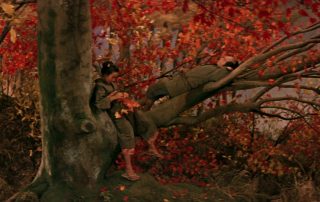
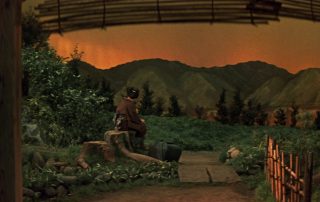
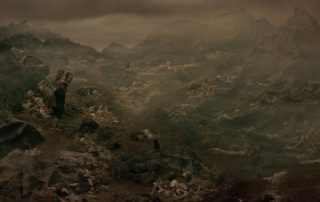
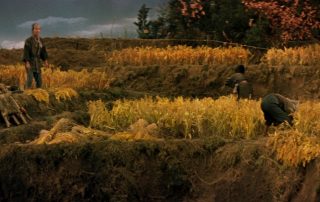
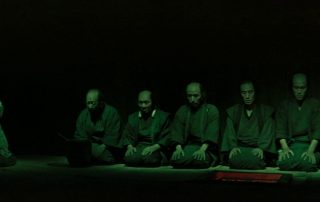
  It is worth noting that in at least one year during the prime of Ozu and Kurosawa, it is Keisuke Kinoshita who made the best Japanese film of the year (Equinox Flower for Ozu and The Hidden Fortress for Kurosawa in 1958). It was famously dismissed (and debated) by some at Cahiers du Cinéma for the vast departure from realism in the world Kinoshita built (which feels like judging it on the merit of its black and white photography (it is in color)). Set in a remote village, Kinuyo Tanaka (playing way older, and she is fantastic here)

The Ballad of Narayama – 1958 Kinoshita2023-07-31T19:50:23-04:00

1986

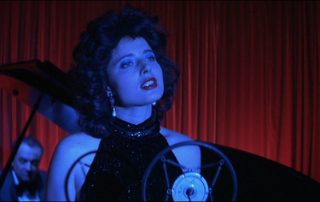
best film:  Blue Velvet from David Lynch It would take an artist like David Lynch and film like Blue Velvet to knock of Tarkovsky’s swan song and Woody’s best film of the 1980s as the cinematic event of the year. Lynch does not just use the name of the Bobby Vinton pop song- he drapes the film in the color... though Roy Orbison's "In Dreams" is provably more important to Lynch and the film. Lynch is going to take the clean cut suburban American dream and rip it apart Lynch is not just about

19862022-03-15T15:56:22-04:00

City Streets – 1931 Mamoulian

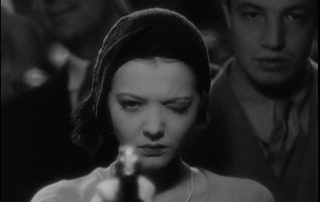
City Streets is a welcomed entry into the early 1930s prohibition gangster genre. It is not to be confused with 1931’s City Lights from Chaplin of course based on an original story by Dashiell Hammett 6-minutes into the film Rouben Mamoulian starts with a striking close-up of Sylvia Sidney (who makes the most of her chance to replace Clara Bow here in the lead after Bow’s breakdown) using a gun (which turns out to be a squirt gun at a game), and brilliantly pulls back the camera. This shot choice would be repeated often in the film as

City Streets – 1931 Mamoulian2021-07-04T13:13:06-04:00

Knight of Cups – 2015 Malick

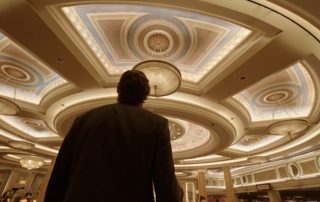
For the first time in his career, Malick chooses a single character for his central figure. Christian Bale plays Rick, a writer in Hollywood, living out a sinful life filled with material excess, and spiritual emptiness. After being cinema’s J.D. Salinger from 1978-1998—Malick is now firing almost at Woody Allen’s pace in the 2010s this is his third film of the decade already. This is his second straight film set in the modern day like To the Wonder. And this is not really about the dichotomy between violence in man and beauty found in nature like much of his

Knight of Cups – 2015 Malick2021-08-04T13:44:27-04:00

To the Wonder – 2012 Malick

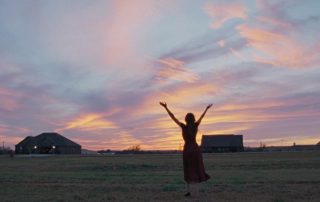
Between 1973 and 2011 Terrence Malick made five (5) films in thirty-eight (38) years. Between the five films, he took an average of 8.5 years to make his next movie. In 2012, he made To the Wonder just one year after The Tree of Life. Be careful what you wish for with an auteur with a typical long gestation period between films. It looks slightly different from the start, Malick starts with his trademark voice-over (here from Olga Kurylenko- nothing surprising there yet) with this lo-fi, grainy footage. We are not accustomed to ugliness in Malick’s world. He would

To the Wonder – 2012 Malick2026-02-01T07:45:39-05:00
Go to Top