About Drake

This author has not yet filled in any details.
So far Drake has created 2061 blog entries.

The Mission – 1986 Joffé

Those stumbling upon The Mission for the first time may wonder who Roland Joffé is and how he was able to corral Robert De Niro, Jeremy Irons, Robert Bolt (screenwriter of Lawrence of Arabia), Ennio Morricone and others together for this film. Well, Irons was not such a big name yet (either was an athletic looking Jesuit here played by Liam Neeson) and as for the others, well Joffé had a big success in 1984 with The Killing Fields. These two films are similar- both well-acted political dramas shot on location. I'm not sure Joffé deserves to be surrounded
The Mission – 1986 Joffé2021-07-02T00:44:35-04:00

1985

best film:  Brazil from Terry Gilliam Brazil is Terry Gilliam’s magnum opus, one of the truly great films of the 1980s, and at the same time one of the very best films of the sci-fi, comedy and fantasy genres. A savage comedy featuring terrorism, paranoia—veiled shots at the Reagan/Thatcher conservative dominance in the 1980s. A designed dystopia that also is consistent (and the pinnacle) of Gilliam’s garbage/hoarder art (the ducts going through each set is so inspired) expressionism. Jean-Pierre Jeunet, a clear acolyte of Giliam’s, called it “retro-futurism” Like Lanthimos’ fisheye lens in 2018 for The Favourite– Gilliam uses the

19852021-08-01T22:20:59-04:00

Quo vadis, Aida? – 2020 Zbanic

  Quo vadis, Aida? is an incisive docudrama. It is set in 1995 Bosnia, but it could be 1943 Poland with history sadly repeating itself. Jasmila Zbanic directs with great detail- there is no pandering. Jasna Djuricic plays Aida and this is her story. She is a translator for the UN—and she’s a mother, a wife, and a teacher. Through her eyes as a translator, the narrative sees both sides. The way the two strands of the story are told (macro and micro) through a translator—is inspired. She is not just doing a job either, she is from the

Quo vadis, Aida? – 2020 Zbanic2021-08-01T22:10:33-04:00

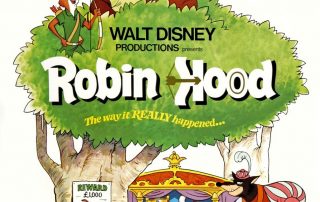
Robin Hood – 1973 Reitherman

Wolfgang Reitherman was in charge of 1973’s Robin Hood as he was with all the Disney animated films after Walt’s death. These are not exactly seen as the glory days at Disney animation sadly for Reitherman’s legacy. He was one of Disney’s Nine Old Men https://en.wikipedia.org/wiki/Disney%27s_Nine_Old_Men and was over 60 sixty (with forty of those years already working at Disney) when he made Robin Hood. He brings back the vocal talents of Phil Harris from probably his most successful film – 1967’s The Jungle Book. Here Harris plays Little John and some of the best scenes capture the combative

Robin Hood – 1973 Reitherman2021-06-15T20:19:18-04:00

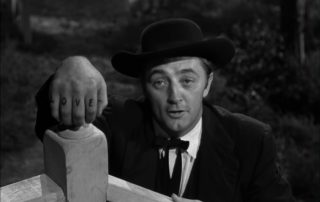
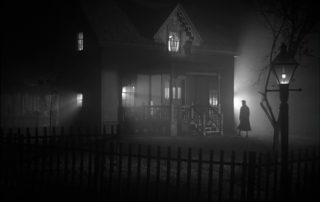
The Night of the Hunter – 1955 Laughton

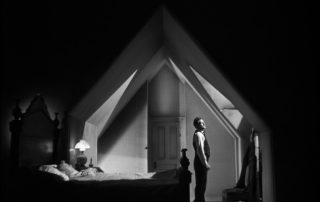
The Night of the Hunter is much more than just the chance for Robert Mitchum to sink his teeth into the Harry Powell character- one of the all-time great screen villains. It has been described as one of the great American Gothic films-- Charles Laughton described it himself as a “nightmarish sort of Mother Goose tale”- and upon revisit I was surprised at how musical it was, there are four songs in the first 18-minutes, and Mitchum’s marvelous baritone often sings a few bars of “Leaning” …. haunting. The film opens with Lillian Gish telling a story to some

The Night of the Hunter – 1955 Laughton2021-07-31T13:02:24-04:00

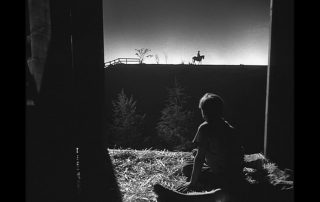
The Painted Bird – 2019 Marhoul

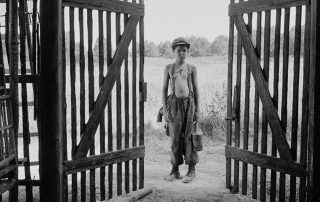
The entire process of making The Painted Bird took a decade for Czech director Václav Marhoul. In all the best ways - it shows. Despite the longer running time it feels like every frame is thought out. It is a meticulously curated, breathtakingly shot, sorrow epic. Marhoul and cinematographer Vladimír Smutný shot this on 35mm black and white at the super-wide 2.39 : 1 aspect ratio. The story of the boy Joska (Petr Kotlár) plays out over 169-minutes and nine chapters (one for each of the main people he encounters in his journey). Some of them are portrayed by

The Painted Bird – 2019 Marhoul2026-01-18T10:29:15-05:00

Merrill’s Marauders – 1962 Fuller

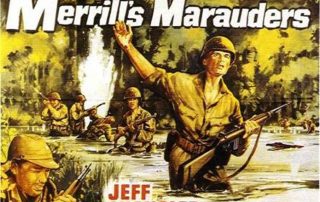
Like 1955’s House of Bamboo this feels like a bigger budget for Sam Fuller. It is shot in color, on location (or at least close- shot in the Philippines). This could almost pass for a John Sturges film in some ways in 1962 with the big bold credits. Set in Burma and parts of India, but the film suffers from a weaker cast. It seems like everyone in 1962 was busy shooting The Longest Day. That is too bad as the film probably needed a star or stronger group of actors. Jeff Chandler (this is his last film, tragically

Merrill’s Marauders – 1962 Fuller2021-07-29T13:33:33-04:00

The Tree of Life – 2011 Malick

  Terrence Malick’s The Tree of Life makes otherwise beautiful films, seem unbeautiful by comparison. The Tree of Life opens with Sean Penn’s character Jack (character names are meaningless here and hardly, if ever, referenced – so I will be using the actor’s name here for the most part) praying/talking to his brother. The angelic Jessica Chastain (2011 was her big coming out party- Jeff Nichols’ Take Shelter is the same year) takes the reins of the voice-over (before passing it to others) early, as, through her, Malick explains the duality that he has meditating on his entire five

The Tree of Life – 2011 Malick2021-06-26T18:20:37-04:00

Corpus Christi – 2019 Komasa

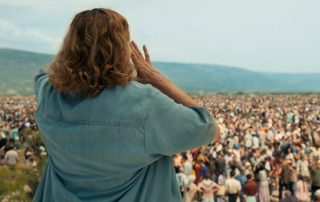
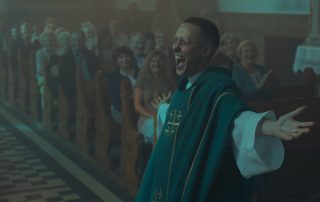
  Corpus Christi was inspired by real events. Bartosz Bielenia plays Daniel, a juvenile prisoner graduate out on parole. Through part-lie, part-happenstance (he really was just tired of being judged and made a joke to a cute girl about being a priest) he becomes the priest (and an influential figure) of this small town. Director Jan Komasa shows complete control behind the camera. Komasa is dedicated to the color green in the mise-en-scene throughout the film. Green is prevalent in the church scenes, details as small as a sweater or a cell phone case. The most noticeable (and beautiful) use

Corpus Christi – 2019 Komasa2021-07-27T13:29:18-04:00

Chungking Express – 1994 Kar-Wai Wong

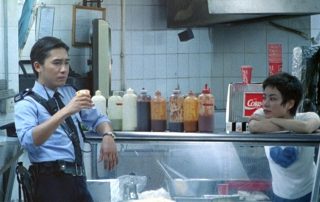
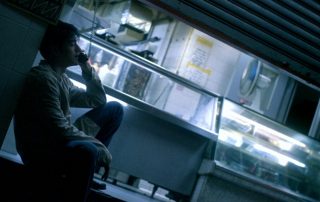
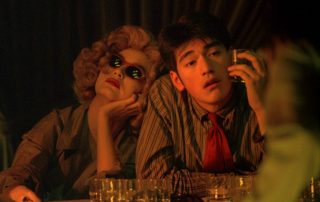
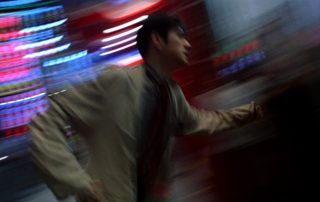
Chungking Express stands as one of the finest works of cinema in the 1990s. It is WKW’s greatest work to date in 1994 (it would take one of the greatest films of all time, In the Mood For Love, to outdo it a few years later). Unquestionably, it belongs in discussion with Goodfellas, Breaking the Waves, Pulp Fiction, Boogie Nights and a few others. the film was shot in just 23 days, apparently while WKW was on break from shooting Ashes in Time (also 1994)—which is the bigger budget, A-film, epic. It begins with the voiceover of Takeshi Kaneshiro

Chungking Express – 1994 Kar-Wai Wong2021-08-11T18:13:44-04:00

1984

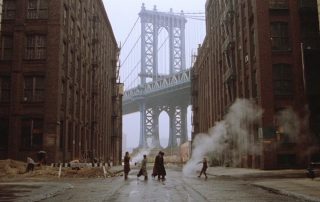
best film:  Once Upon a Time in America from Sergio Leone. This is both Leone’s final film (what a magnificent swan song) and first film in thirteen (13) years (1971’s Duck, You Sucker!). It is hauntingly beautiful in one scene-- and then crass and crude in the next resulting in a spectacular contrast (1900 by fellow Italian Bertolucci is similar). It is a gangster epic but colliding with the violence and sadism are lyrical passages full of atmospheric indulgences. This masterpiece is sentimental and dense. Leone would die in 1989 at age 60. masterful twin shots from Leone's

19842022-03-21T22:35:50-04:00

The Tin Star – 1957 Anthony Mann

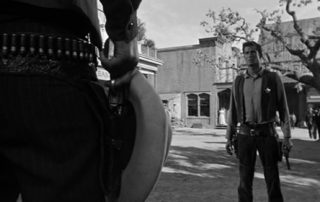
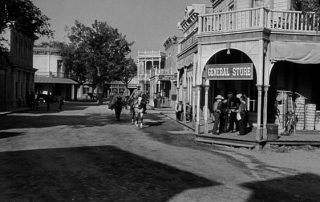
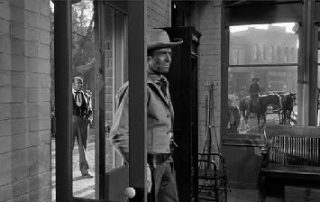
It would take a closer look at Winchester 73’ and The Naked Spur especially, but The Tin Star may be Anthony Mann’s greatest work. For Mann, his resume has always been about the accumulation of the work (he made some fantastic noirs as well) more than the standing of one (or any) masterpieces. In 1957 this is Mann in the same year as Men in War, after his collaborations with Jimmy Stewart in the early and mid-1950s. For Fonda (still just two years removed from his big comeback in 1955—he spent 1948-1955 doing theater) this is the same year

The Tin Star – 1957 Anthony Mann2021-07-25T16:52:39-04:00
Go to Top