About Drake

This author has not yet filled in any details.
So far Drake has created 2061 blog entries.

Xala – 1975 Sembene

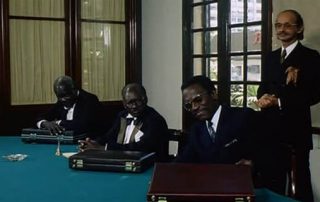
This is Ousmane Sembene’s (from Senegal- he’s sort of the father of African cinema) fourth feature. The title translates to mean “impotence” and stars Thierno Leve as the corrupt businessman El Hadji Aboucader Beye. He and the other members of the chamber of commerce have taken over from their white oppressors (“our independence is complete”) but they are nearly as crooked and one of the white stooges sort of hangs around the new President all the time perhaps serving as some sort of puppet master. Starts with a voice-over that trails off… Semebene also turns on the water for
Xala – 1975 Sembene2021-07-24T12:35:56-04:00

The New World – 2005 Malick

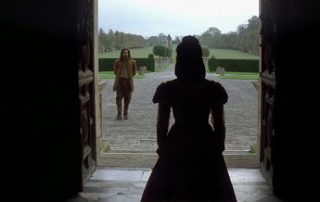
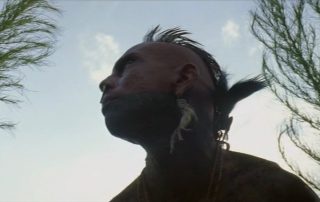
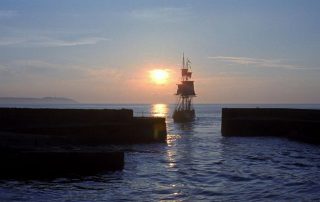
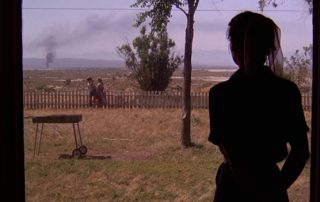
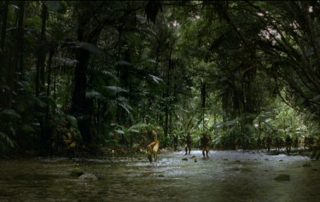
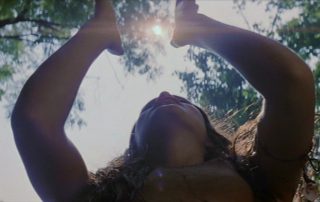
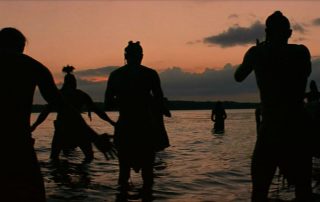
  The New World is still only Malick’s fourth film to date in 2005 even if it is a whopping thirty-two (32) years since his debut Badlands. The themes and aesthetics are the same. Though perhaps not quite as dogmatically rigid as Days of Heaven with the natural lighting and magic hour photography- The New World (complete with Emmanuel Lubezki on board as director of photography) would measure up here with just about any other film ever shot. The exterior location shooting (largely in Virginia, but certainly in England as well as the story dictates) is as much

The New World – 2005 Malick2021-06-19T13:13:42-04:00

Amour – 2012 Haneke

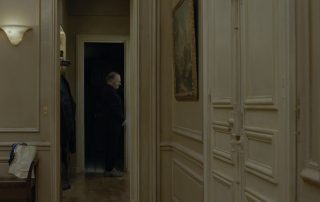
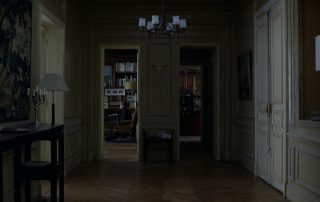
Michael Haneke’s Amour is his first film after 2009’s unbridled masterpiece The White Ribbon. Though the subject is severe (Georges, played by Jean-Louis Trintignant, cares for his long-time wife Anne, played by Emmanuelle Riva, as her health rapidly declines), it is, in many ways, his most plainly told, warm, and accessible film to date. The warmth I allude to comes from the title, and genuine love between Georges and Anne. These are two (2) masterfully written and acted characters. The film is frosty (Haneke’s signature) in other ways (Haneke does not want your pity or sympathy), but that bond

Amour – 2012 Haneke2026-02-01T07:46:58-05:00

1983

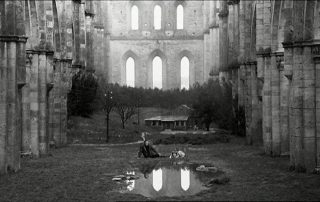
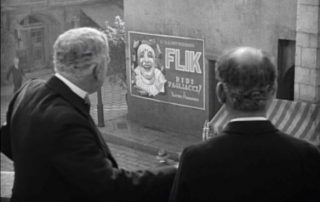
best film:  Nostalghia from Andrei Tarkovsky The narrative is not easy—it’s up there with Mirror for being his most opaque Uncontestably stunning camera movements and achievements in décor and mise-en-scene that interrupt quiet and stillness (usually with water running somewhere and a German Shepard in the mix) A magnificent cinematic painting of an ending—truly one of cinema’s great images to close a film For Tarkovsky it is the first of two collaborations with longtime member of the Bergman trope of actors- Erland Jospehson Open in mist and fog—lovely opening shot. The car moves out of frame and then back
19832025-06-11T06:53:44-04:00

Come True – 2020 Scott Burns

Anthony Scott Burns’ debut film starts with a long tracking shot through the fog with multiple doors being pushed open. It turns out this shot (repeated at least a half-dozen times) is the dream of Sarah (Julia Sarah Stone). Come True has 1980s iconography all over (Weekend at Bernie’s poster, Terminator poster, Garfield the cat, a Planet Hollywood t-shirt) along with some very lo-fi electronics (looks like an Apple IIe). The Jeremy (Landon Liboiron looking like Harry Potter) character has a dream that looks like a version of the “Take on Me” music video from a-ha. The story is

Come True – 2020 Scott Burns2021-07-22T00:41:36-04:00

JFK – 1991 Stone

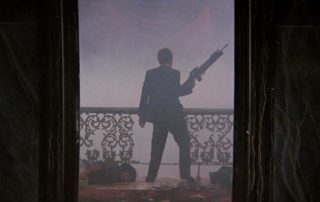
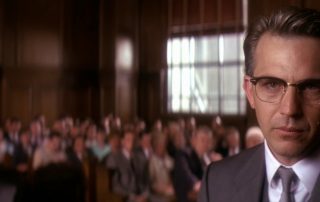
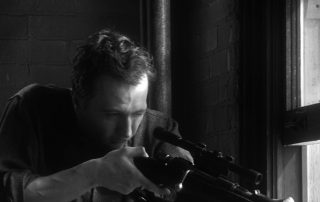
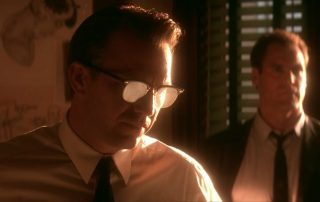
JFK is one of the most ambitious films of the 1990s. I’ve seen it mentioned that that there are 3000+ shots that comprise the film The cast is massive (at least six Oscar winners by my count), the running time is 3+ hours, it features the work of both John Williams and Robert Richardson, and… oh yeah… Oliver Stone is essentially making a controversial argument about one of the most important events in the United States in the 20th century. I almost wish the film were not about JFK—but about a fictitious (President/Monarch/leader) and it was a work of

JFK – 1991 Stone2021-07-20T13:19:45-04:00

Magic – 1978 Attenborough

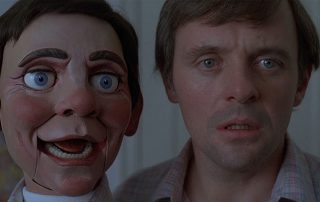
Do not be fooled by the look at the wooden ventriloquist dummy- Magic is no small-scale B-picture. This is a well-produced, character-driven effort. Richard Attenborough is at the helm behind the camera. He is more of a custodian than artist as a director- but he still presides over some fine films. The screenplay is written by the great William Goldman (Butch Cassidy and the Sundance Kid, All the President’s Men) and based on his book. The score is by Jerry Goldsmith (Chinatown, The Omen). That’s an all-star crew right there- quite a pedigree. Anthony Hopkins is obviously a long

Magic – 1978 Attenborough2021-06-17T20:51:35-04:00

Will Success Spoil Rock Hunter? – 1957 Tashlin

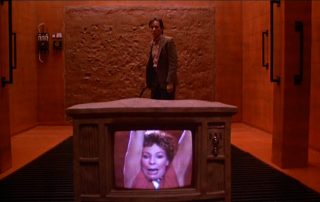
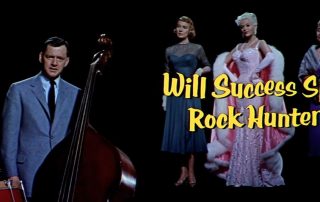
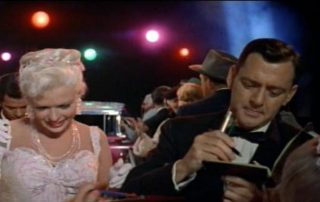
Made by the former cartoonist Frank Tashlin who directed many comedies (Bob Hope and Jerry Lewis vehicles) during the 1950s and 1960s. He was admired by the French New Wave—specifically Godard. Color by DeLuxe, nice use of the CinemaScope wider frame. But the color influence on Godard isn’t Tashlin (like many misappropriate)- it is Nicolas Ray. The story is about celebrity, lampooning Hollywood, the media, and especially the television generation and the advertising industry as a whole. Indeed, a softer critique of the post-WWII so-called American Dream than say The Sweet Smell of Success (also 1957). It opens

Will Success Spoil Rock Hunter? – 1957 Tashlin2021-07-18T14:54:03-04:00

The Last Detail – 1973 Ashby

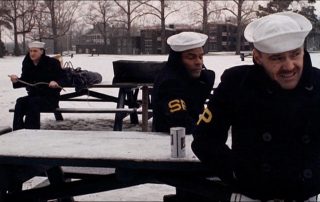
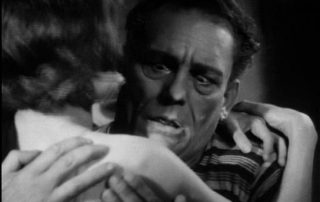
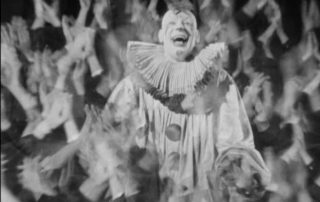
The Last Detail is a feather in the cap for the writing/acting team of real life buddies Robert Towne and Jack Nicholson. Nicholson could do no wrong at this time in the early 1970s (he even turned down The Sting to make this). You feel privileged watching him here- his level of confidence in 1973 surprises. I mean he really came on the scene in 1969 with Easy Rider- so for him to have the ability to just take over here, just a few years later... quite a feat. Robert Towne is one of those writers talked about often,
The Last Detail – 1973 Ashby2021-07-17T13:19:24-04:00

The Thin Red Line – 1998 Malick

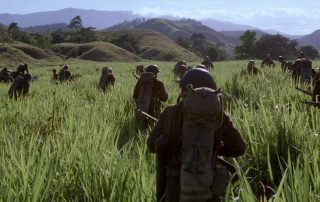
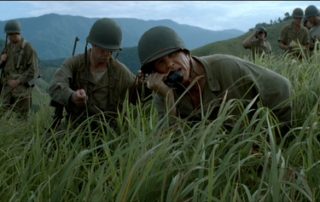
After a twenty-year hiatus, cinema’s J.D. Salinger, Terrence Malick, made his glorious return. It is easier to do now after the fact, but the expectations and anticipation for his return had to be palpable among cinephiles in 1998. With that long of a stretch after Days of Heaven, what does Malick open with? He opens on a crocodile slipping into the water with Hans Zimmer’s score (along with The Lion King this is his best to date in 1998, and the one that changed his style) welcoming us back. Malick is fascinated by the dichotomy--the beauty of nature- and

The Thin Red Line – 1998 Malick2026-02-17T07:20:56-05:00

Sympathy for Mr. Vengeance – 2002 Chan-wook Park

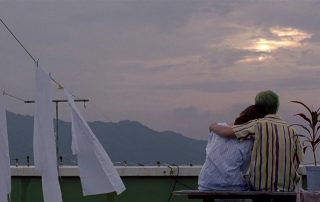
It takes a truly innovative mind to still be coming up with creative revenge films in the 21st century. Sympathy for Mr. Vengeance is a key film (and Chan-wook an important auteur- “audacious" may be the most commonly used word to describe him) in the Korean New Wave movement. This is part of the 2002-2005 “Vengeance Trilogy” with Oldboy coming in 2003 and Lady Vengeance in 2005. It opens with Shin Ha-kyun as Ryu with his green hair (a crucial color for the film). Ryu is deaf, his blood type does not match his sisters (who needs a kidney

Sympathy for Mr. Vengeance – 2002 Chan-wook Park2023-04-07T16:58:18-04:00

Laugh, Clown, Laugh – 1928 Brenon

Laugh, Clown, Laugh is another worthy Lon Chaney vehicle from the silent era (this here at the very end of the silent era- The Jazz Singer is 1927). Chaney plays a clown that finds and adopts a young girl who will grow up (sort of) to become Loretta Young. If people know of this film, it is either because of Chaney’s work, or Young’s shocking age at the time of the release (fifteen). Chaney’s character adopts her, and then falls in love with her ...rough.  Young does not look fifteen- which I suppose is part of the point, but

Laugh, Clown, Laugh – 1928 Brenon2021-06-11T20:21:22-04:00
Go to Top