
About Drake

This author has not yet filled in any details.
So far Drake has created 2061 blog entries.

1982

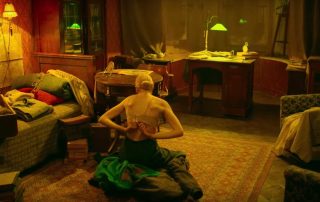
best film:  Blade Runner from Ridley Scott Blade Runner is one of the greatest ten films of all-time and the second best film of the entire 1980s (Raging Bull).  Ridley Scott’s masterpiece is one of cinema’s greatest showcases of production design and mise-en-scene. He uses elements of shadow and lighting like a noir (or like Bertolucci’s The Conformist) and has some of cinema’s greatest establishing shots. There is also a slow-motion glass breaking sequence that has photography that still blows my mind, a brilliant Vangelis score, and a performance by Rutger Hauer to bring everything together during the epic

19822022-03-21T22:32:34-04:00

And Justice for All – 1979 Jewison

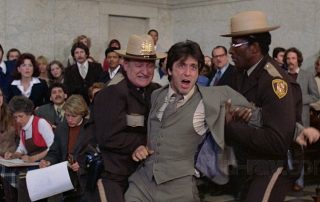
Undoubtedly, many more cinephiles know the famous “You’re out of order!” Al Pacino line than the movie itself. Norman Jewison is at the helm here and he had directed some very fine films over the course of his career. He directed Denzel a few times (including The Hurricane in 1999), Moonstruck with Cher is perhaps his most popular (1987) but his best work was in the 1960s (The Cincinnati Kid, In the Heat of the Night, and The Thomas Crown Affair were all 1965-1968). Jewison probably takes third place here though in terms of credit for And Justice For

And Justice for All – 1979 Jewison2021-07-14T17:35:56-04:00

Star Wars: Episode IX – The Rise of Skywalker – 2019 Abrams

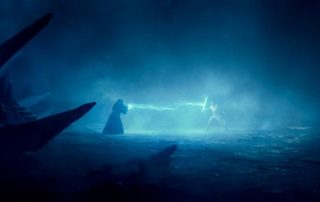
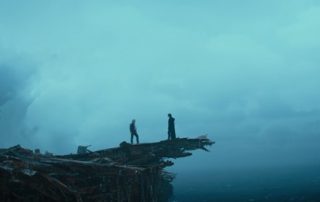
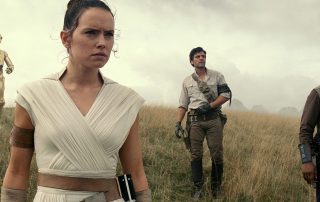
There are more than enough redeeming moments here that make it worthy of the archives Adam Driver continues his great work- both in the trilogy and outside of it. Certainly 2019 will be remembered for Marriage Story far more than this effort. The best scenes in Rise of Skywalker usually involve him and Daisy Ridley (man, is she good here, too). The scene with Driver and Harrison Ford is worthy of praise, too (strong imagery of them across from each other on the ship in a long shot). A strong shot from Abrams at the 38-minute

Star Wars: Episode IX – The Rise of Skywalker – 2019 Abrams2021-07-13T22:44:44-04:00

Beautiful Boy – 2018 van Groeningen

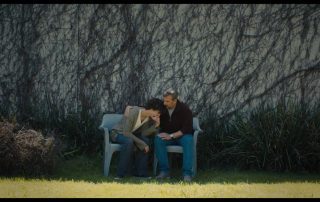
Beautiful Boy is a painful story of drug addiction. Steve Carell plays the father, David Sheff, a writer, with his son Nic (Timothée Chalamet). The narrative structure here is an interview style with Carell’s David talking to Timothy Hutton’s character and then infusing the flashbacks (“one year earlier”). Young Nic (Jack Dylan Grazer) is a spot on younger-looking Chalamet- great casting. They could have done without the Hutton character altogether though. Between this and The Broken Circle Breakdown (2012) it seems that Felix van Groeningen has certainly carved out a little subgenre here with gut-wrenching tales of family strife.

Beautiful Boy – 2018 van Groeningen2021-06-08T21:19:39-04:00

Days of Heaven – 1978 Malick

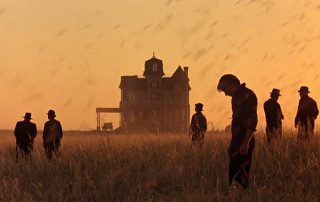
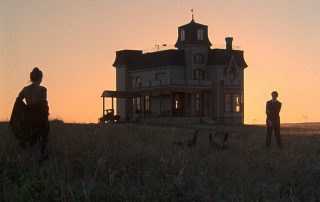
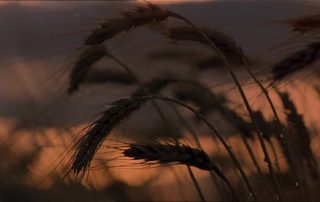
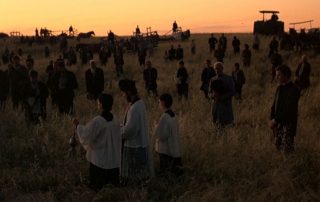
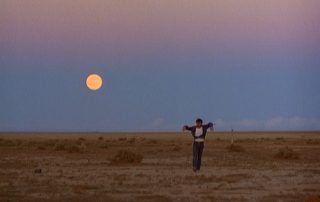
Badlands hinted at the brilliance of Terrence Malick (and for almost every other filmmaker in history it would easily be their finest hour), but Days of Heaven feels like the full realization of a master in complete command of his craft, in only his sophomore effort. The high watermark for the term “magic hour” photography and perhaps cinematic photography (exteriors especially) in general. Malick would purposefully shoot almost the entire film at dusk- the best moment for photography. This had to be painstaking to achieve in natural lighting. But the consistency shows—if you collect and look at the individual

Days of Heaven – 1978 Malick2021-06-09T20:29:06-04:00

The Phantom Carriage – 1921 Sjöström

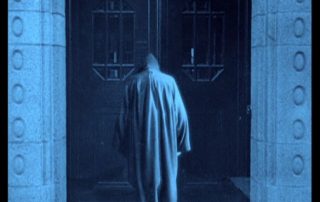
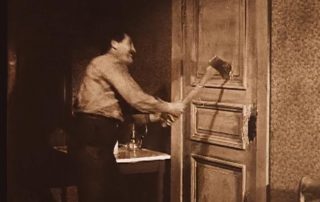
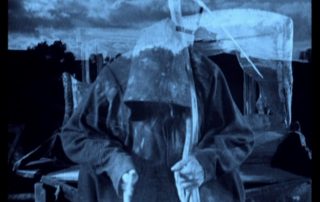
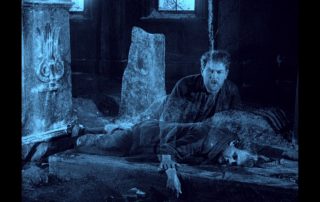
The Phantom Carriage is both a tour de force technical achievement and a groundbreaking film for narrative form. It is the story of David Holm- again played by Victor Sjöström himself- a powerful story of reform. It borrows from Charles Dickens, but also certainly influences 1946’s It’s a Wonderful Life. We need a Bordwell study on the flashback within a flashback nesting doll strands. There’s the slow unveiling of Holm’s character-- often the different time flashback threads unfurl at the same time to quite an effect. The shot of death at the 18-minute mark- scythe and cloak. Fritz Lang’s

The Phantom Carriage – 1921 Sjöström2021-06-10T21:25:59-04:00

The Outlaw and His Wife – 1918 Sjöström

Victor Sjöström stars in his own The Outlaw and His Wife- a tale of “ill fate” told over seven chapters. It is set in 19th century Iceland— and based on a true story about a man (played by Sjöström) who can’t escape his past. Benefits from a 2015 restoration Unlike A Man There Was (1917) there are just pages and pages of dialogue here— Sjöström does not need this crutch. Sjöström is certainly capable as a director and could tell these sections of the dialogue in pictures. Also, he is also skilled enough actor, as is Edith Erastoff, who

The Outlaw and His Wife – 1918 Sjöström2021-07-11T13:03:58-04:00

A Man There Was – 1917 Sjöström

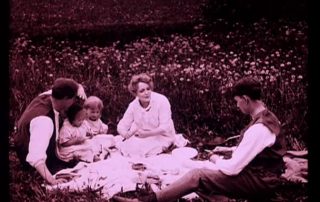
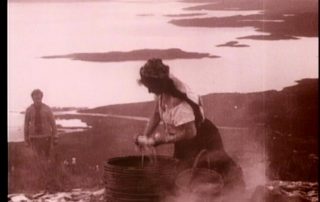
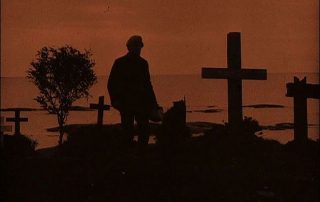
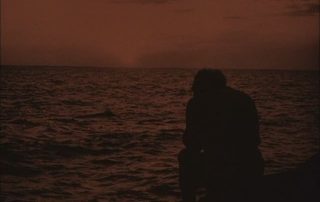
A Man There Was- or Terje Vigen (Victor Sjöström’s character’s name in the film) is the earliest film from the silent Swedish master I could lay my hands on. But at this point, Sjöström (best known as the lead actor in Bergman’s Wild Strawberries (1957) or as the director of The Wind (1928)) had already been directing for a handful of years It is a short work, an adaptation of Henrik Ibsen (19th century Scandinavian playwright—known as the “father of realism”) broken into four acts Sjöström uses color shading brilliantly- and orange hue for the sunny exteriors, blue for

A Man There Was – 1917 Sjöström2021-07-11T12:59:47-04:00

Beanpole – 2019 Balagov

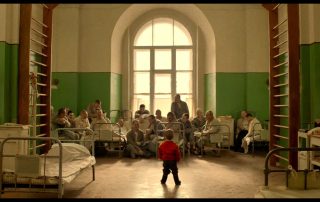
It is not often in the history of cinema that a director under the age of thirty (30) creates a work  on the level of Beanpole. Kantemir Balagov looks to be one of the most exciting young auteurs of his generation—or at least he has one major film here that sets up for that. Beanpole is set in Leningrad—and it is almost unspeakably bleak: the drama takes place in a hospital during the war. There is depression, a ghastly murder, assisted suicide, and lines like “there’s nothing left inside you to make life.” Viktoria Miroshnichenko plays Iya. She’s striking.

Beanpole – 2019 Balagov2021-06-06T11:51:21-04:00

Tomorrow is Another Day – 1951 Feist

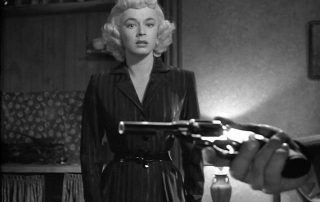
Ruth Roman and Steve Cochran star in this modest, but promising little Warner Brothers’ noir that unfortunately falls apart in the last ten minutes. Cochran plays an ex-con who was sentenced for murdering (it sounds like justifiably) his awful father when he was thirteen (13)—and he has been locked up for eighteen (18) years and finally gets out. In true noir tradition, the outside world is pretty much as bad as being in prison. Ruth Roman is introduced from the legs up - she’s a platinum blonde here. There is a great frame at the 26-minute mark- a pivotal

Tomorrow is Another Day – 1951 Feist2021-06-06T12:20:45-04:00

The World Changes – 1933 LeRoy

1932 reteams the director/actor duo of Mervyn LeRoy and Paul Muni coming off their wonderful 1932 film- I Am a Fugitive from a Chain Gang. This here isn’t as strong a film- but it is certainly worthy of the archives. Scarface is also 1932 for Muni- so he is white hot at this point. The World Changes has a young Mickey Rooney here early in the film in a small role—this isn’t his debut, but it is his first archiveable film. This is the year before Manhattan Melodrama and of course by 1937 and 1938 with Captains Courageous and

The World Changes – 1933 LeRoy2021-06-05T12:17:16-04:00

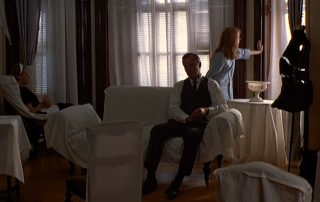
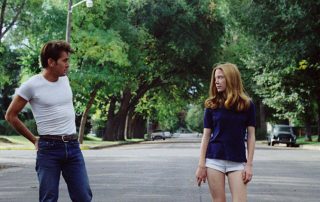
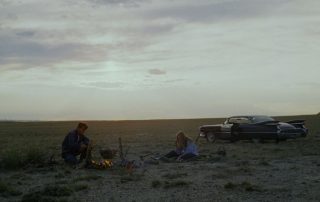
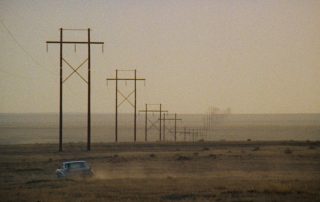
Badlands – 1973 Malick

Terrence Malick’s Badlands announced the arrival of one of cinema’s greatest new voices in 1973. It is Malick’s true debut at thirty (30) years old. Badlands opens on an empty alley lined with garage in South Dakota. Malick moved quietly. This has a different, more poetic or lyrical vibe (though not half that of some of Malick’s later works) than Arthur Penn’s Bonnie and Clyde (just six years before in 1967) or the members of the Movie Brat or New Hollywood movements. This film and Scorsese’s Mean Streets debuted at the New York Film festival in 1973—yamma- what a

Badlands – 1973 Malick2022-09-04T13:26:38-04:00
Go to Top