About Drake

This author has not yet filled in any details.
So far Drake has created 2061 blog entries.

Clemency – 2019 Chukwu

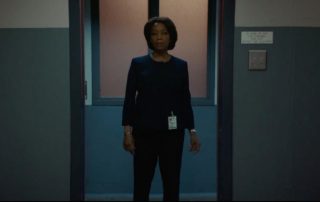
Clemency has both a strong lead performance (veteran Alfre Woodard has never been better) and a color design in the mise-en-scene throughout from relative newcomer Chinonye Chukwu Chukwu and Woodard are on the same wavelength here with mood and pacing. The pauses let you soak up the detail in the visual design (a clear dedication to this specific greenish/blue tealish color) and nuance of the performance (especially in that sustained final close-up). Chukwu’s second (2nd) feature, I have not seen 2012’s AlaskaLand- her debut Woodard has been in archiveable films going back to the late 1970’s- but her best work
Clemency – 2019 Chukwu2026-02-05T07:13:24-05:00

La Chinoise – 1967 Godard

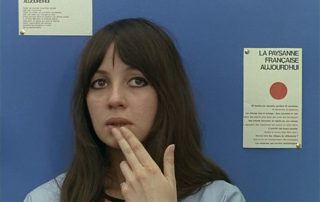
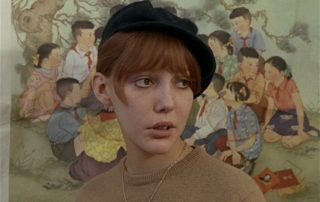
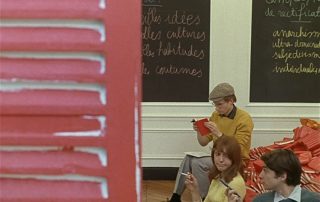
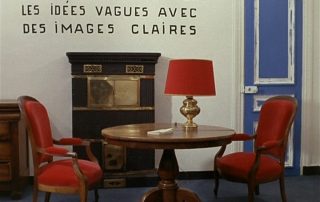
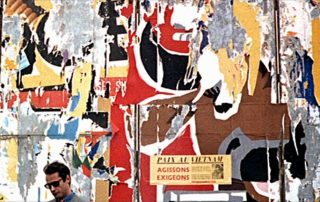
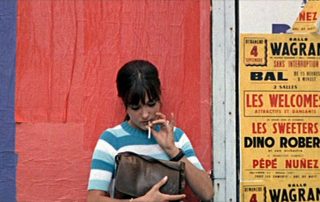
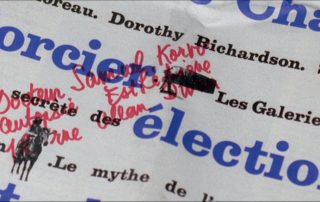
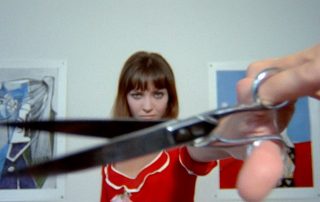
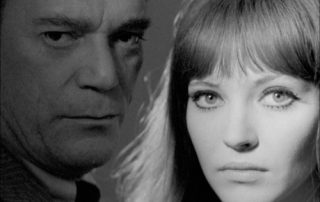
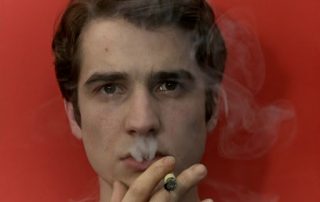
Godard’s last feature before Weekend (and 14th overall) is a blast of politics, color, references and postmodern reflexivity It stars Anne Wiazemsky and Jean-Pierre Léaud (above) Wiazemsky is in in the middle of this three year run working with Bresson (Au Hasard Balthazar in 1966), Godard (here of course) and Pasolini (Teorema in 1968) primary colors yet again for Godard-- even if he's decided to tighten up the frame to a boxier ratio Godard is contradictory and unsubtle—he’s literally writing messages on the wall here—he’s angry, intellectual, but still playful The

La Chinoise – 1967 Godard2021-05-17T13:44:55-04:00

Ben is Back – 2018 Hedges

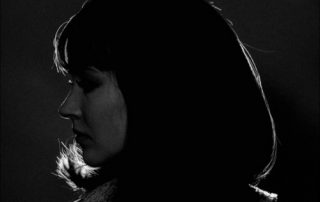
Peter Hedges (writer/director from Pieces of April - 2003) has his handheld, sort of verité style, with plenty of room for great work by Julia Roberts and his real life son, Lucas Hedges Lucas Hedges plays Ben, the son of Roberts, a recovering drug addict. There a fascinating  web of lying (by Roberts character as well). Lucas Hedges downplays some of the drug addition tropes and clichés and that’s refreshing. He is a fine actor and that confidence comes through. There’s more meat on the bone for Julia Roberts and her full range of emotions are on display. Ben
Ben is Back – 2018 Hedges2026-01-26T07:20:06-05:00

2 or 3 Things I Know About Her – 1967 Godard

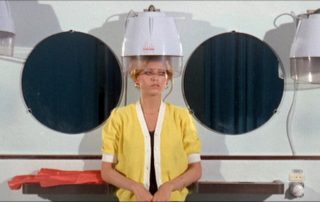
Shot simultaneously with 1966’s Made in U.S.A. (one by Godard during the morning, one in the evening) this is much more in Godard’s cinematic essay style than Made in U.S.A.’s postmodern take on genre. Godard’s movement away from character-driven stories (though he never cared much for plot) to essay doesn’t have a clean break—but if you did point to one film, at least so far in my study, it would be 2 or 3 Things I Know About Her Like all of his previous color films—Godard has these lovely large flashing red, white and blue titles It is really

2 or 3 Things I Know About Her – 1967 Godard2021-06-03T18:35:05-04:00

Made in U.S.A. – 1966 Godard

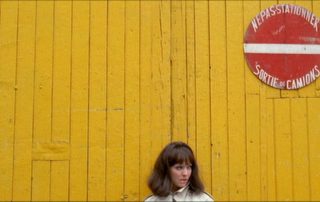
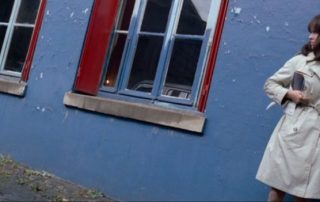
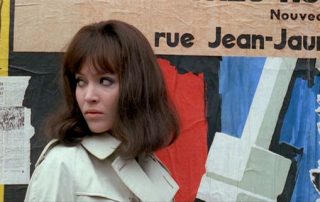
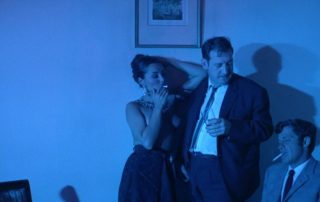
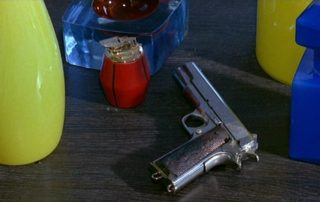
For Godard’s 12th feature he takes on updating The Big Sleep- making it his own of course with a splattering of cutaway collage-- it is self-reflexive and highly referential. The Big Sleep is famous for not only being a great film—but for being an incomprehensible plot—perfect for Godard’s subterfuge Godard taps Anna Karina on the shoulder to be his Bogart—she’s sublime, she’s brooding, whiskey drinking, gun twirling, all in her trademark heavy blue eye shadow and a colorful sweater. Like WKW would do decades later with Chungking Express and Fallen Angels- Godard shot Made in U.S.A. at

Made in U.S.A. – 1966 Godard2023-10-10T17:40:12-04:00

1975

best film:  Barry Lyndon from Stanley Kubrick There are a few films that may be equal to Barry Lyndon’s visual beauty (from Days of Heaven, In the Mood For Love, others– including works from the great Kubrick himself) – but none that are comfortably superior. Many aspects of Kubrick’s masterpiece are worthy of praise, but I want to get to the main point quickly - the film is driven by a rigorous, formal, visual approach using technology (the zoom lens) on masterful compositions. The Shining is largely driven by tracking shots (through the advent and development of the Steadicam) and here it is the

19752025-06-09T18:55:20-04:00

Masculin Féminin – 1966 Godard

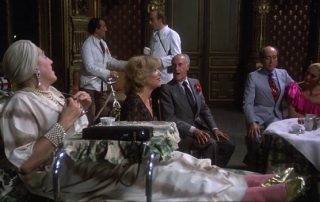
One can view Jean-Luc Godard’s unprecedented run through the sixties as postmodern genre revisionism. He tackled the gangster film (Breathless, Pierrot le Fou), the musical (A Woman is a Woman), science fiction (Alphaville) and so on—the first that really sticks out from that mold is Masculin Féminin- Godard’s 11th. I think you could view it as the first in his new hybrid essay format- though the cutaway style still has much in common with Pierrot Le Fou from the year before It has a very slow start. Jean-Pierre Léaud (in his first non-cameo collaboration with Godard- he’s in Pierrot

Masculin Féminin – 1966 Godard2021-06-03T10:26:53-04:00

Todos a la cárcel – 1993 Berlanga

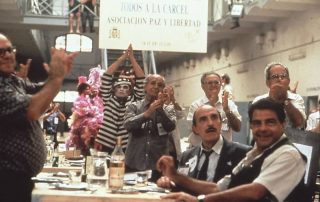
Berlanga’s 16th film and it starts with just pages and pages of title card prologues (not a good sign usually if you have to explain that much) Still, it is clearly made in the Placido (1961- his best work) tradition breakthrough style—it is auteur cinema-- a roving ensemble comedy, political, capturing frenetic dialogue in longer takes One example is at the 34-37 minute mark, there are at least 14-15 people talking, a total of 40 or more in the frame in one shot, characters usher each other around blocking each other—dialogue flying Literally uses toilet humor- haha, and it

Todos a la cárcel – 1993 Berlanga2021-03-24T22:37:06-04:00

National III – 1982 Berlanga

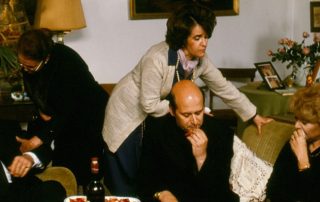
The third and final film in Berlanga’s National Trilogy (The National Shotgun, National Heritage) Like almost all of Berlanga’s work, it is a political satire- I see some Altman but probably more Armando Iannucci. “No one in our family has ever worked and it was worked out great” in a long take that goes from the 5-minute to the 9-minute mark Berlanga does not like to cut, the camera will sit in a medium shot for 3-4 minutes at a time, some characters will usher others back and forth, rapid-firing dialogue (again, not as witty as it was in

National III – 1982 Berlanga2021-03-23T13:26:39-04:00

Pierrot le Fou – 1965 Godard

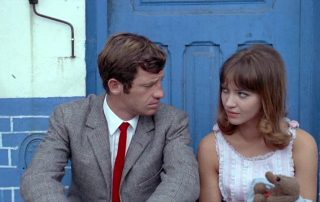
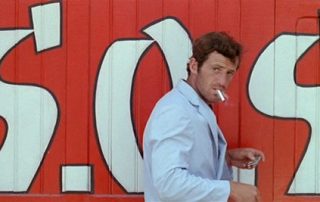
Pierrot le Fou is Godard’s ninth (9th) archiveable film, fourth masterpiece, sixth film with wife (divorced in 1965) and muse Anna Karina, third film with Jean-Paul Belmondo. It is also his third film in color (all three masterpieces actually) making up an unofficial trilogy of red, white, blue splattered films (A Woman is a Woman, Contempt). This sort of recap of Godard’s run to date in 1965 may be better served on Godard’s page, but it is worth noting that for many great auteurs—nine archiveable films (seven worthy of being in the top 10 of their respective years) and

Pierrot le Fou – 1965 Godard2026-03-07T14:17:02-05:00

National Heritage – 1981 Berlanga

Berlanga’s 12th film – a satire on the aristocracy It has a slow start, after a flat opening twenty minutes, highlighted with a flatulence joke—it seems like Berlanga was a shadow of his former early 1960’s self, but there are enough traits here to recognize this as the auteur behind Placido (1961) Longer takes - just like Placido (nothing five minutes or more, but still a higher ASL- average shot length) loaded with Berlanga’s dialogue (not half as witty as it was in the 1950’s or 1960’s). Characters walk and talk in the frame- often moving out completely, Berlanga

National Heritage – 1981 Berlanga2021-05-09T12:38:38-04:00

Alphaville – 1965 Godard

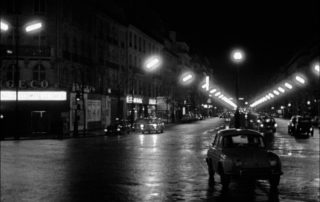
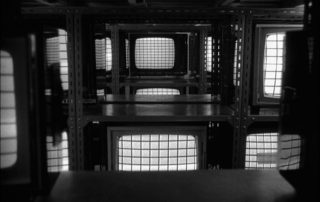
Godard’s work in the sixties can largely be seen as postmodern genre revisionism—and Alphaville is no exception. It is a reworking or deconstruction of the science fiction genre—but it has far more in common with a Bogart hard-boiled detective film. Godard’s love for these films bleeds through. Godard's ninth film, his debut just a few years earlier in 1960 Godard’s world building futurism in Alphaville is really just Paris 1965 at night—bleeding lights, modern architecture—and the making of the film should be an instructional how-to book on creating a film on a budget – especially expressionism
Alphaville – 1965 Godard2021-05-08T11:36:17-04:00
Go to Top