Black Jack – 1979 Loach

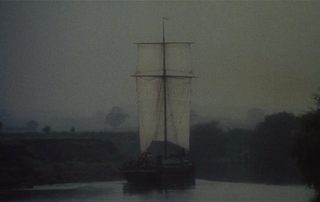
Black Jack is a decade after Ken Loach’s landmark Kes (1969). This has some connections to realism, but it is a period film (set in the mid-18th century) and shot on grainy 16mm (Kes is 35mm). Loach is so tied to sociopolitical cinema in the contemporary era--- it just takes a second to recognize Loach here in costume. Loach’s titular character, Black Jack (played by the towering Jean Franval), is really secondary to the Tolly character (young Stephen Hirst). Like Kes, Tolly seems to be a genuinely good soul—a child trapped in a pretty ugly world. Tolly is an
Black Jack – 1979 Loach2021-09-15T12:54:54-04:00

Despair – 1978 Fassbinder

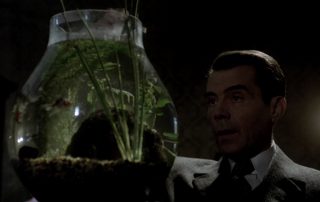
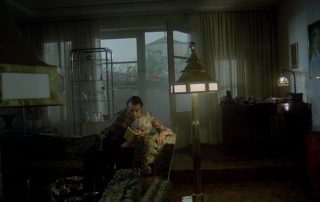
Fassbinder was moving so fast in the 1970s that some the projects can bleed into each other upon recollection - but not Despair. This is auteur cinema: the inevitable self-destruction of the protagonist paired with the marvelous visual style is pure Fassbinder. But this does feel like a different size scale than most of his work. This is easily the biggest budget Fassbinder was given to play with (it is said it was more expensive than all of his many films made prior combined) and the only film he did not write up to this point in his career

Despair – 1978 Fassbinder2025-12-30T17:20:20-05:00

The Suicide Squad – 2021 Gunn

  Give it up to James Gunn - the action director (and comedian) has gone from Marvel to DC and has not lost his identity. This is a James Gunn film through and through and makes for a great companion piece to 2014’s Guardians of the Galaxy. Gunn loves his needle drops from John Cash’s “Folsom Prison Blues” to Jim Carroll’s “People Who Died”. The Suicide Squad is a film about excess- laughs and violence. These are ensemble films about outcasts on a mission (Seven Samurai, The Dirty Dozen, Inglourious Basterds). A strong reflection shot off a puddle of

The Suicide Squad – 2021 Gunn2026-01-18T10:28:07-05:00

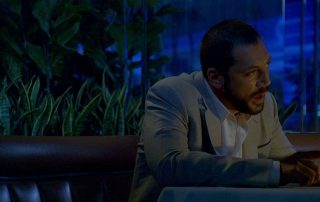
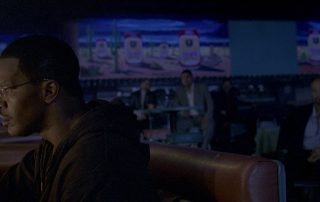
Cruising – 1980 Friedkin

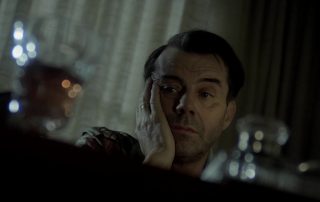
Cruising is a difficult film to remove the story surrounding the film: the controversy, the sensationalizing, the subject matter. Cruising marks the promising pairing of William Friedkin (who wasn’t riding quite as high in 1980 as he was in the early part of the 1970s with The French Connection and The Exorcist) and Al Pacino (not exactly white-hot himself anymore like he was either). Sadly, this was not the bounce back film either of them were hoping for heading into the new decade. It is 16-minutes before Pacino shows up—and the premise is he’s going undercover (this is Serpico

Cruising – 1980 Friedkin2021-09-12T13:05:58-04:00

Sylvia Scarlett – 1935 Cukor

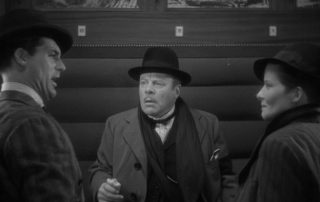
Sylvia Scarlett is notable for the talent involved (Katharine Hepburn, Cary Grant and George Cukor) and for touching the aspects of gender identity in 1935. Hepburn (name above the title - she is a big star even before the age of 30) is Sylvia who is often called Sylvester in the film as she quickly cuts her hair short and disguises herself. Hepburn plays Edmund Gwenn’s daughter. This is more than a decade before Gwenn plays Kris Kringle in Miracle on 34th Street (1947) and it is fun to see him as a fallen gambler and swindler here. Wipe

Sylvia Scarlett – 1935 Cukor2026-01-18T10:28:29-05:00

Inception – 2010 Nolan

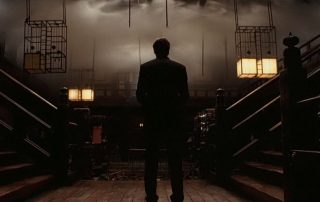
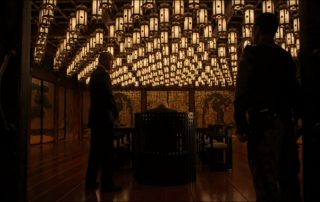
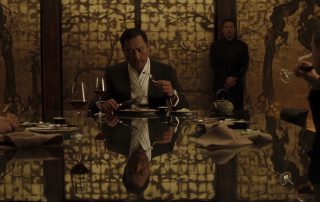
There are many ways to attempt to tackle Christopher Nolan’s Inception. It is one of the boldest films of the 21st century. Nolan pushes the conceptual and visual boundaries—he disorients, then reracks and compiles often through his greatest weapon: parallel editing. Hans Zimmer’s hammering score helps open the film—throwing down the gauntlet early (along with the breathtaking visuals of Saito’s (Ken Watanabe) place) for this elaborate work of cinema. Zimmer will mirror Nolan’s intricate narrative by marrying this score to Edith Piaf ‘s “Non, Je ne regrette rien” - pure genius https://www.youtube.com/watch?v=YB-wuKo9rW0 . Inception is undoubtedly auteur cinema.

Inception – 2010 Nolan2021-08-12T14:00:55-04:00

Pig – 2021 Sarnoski

Nic Cage looking like bloody Santa (a Zen bloody Santa) and the simple premise of a stolen, beloved pet (the titular pig) may make you think this is a low budget revenge tale version of John Wick. However, Michael Sarnoski’s Pig (writer/director- his debut) has as much in common with the bizarro world gangster films Brick (2005) and Blow the Man Down (2019). This world here is the cutthroat world of fine foods and eateries in Portland. Cage is a former chef, his pig is a prized truffle hunter. They are shown to be in some sort of idyllic

Pig – 2021 Sarnoski2021-09-09T14:38:42-04:00

Public Enemies – 2009 Michael Mann

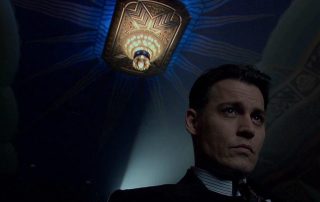
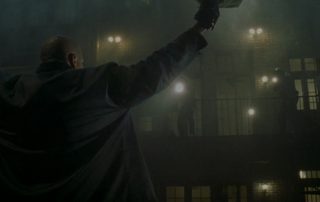
The dialogue-free opening prison break at Michigan City is both a hell of a set piece to start the film, and an effective way to introduce Johnny Depp’s John Dillinger character. Public Enemies is a crime saga that starts in medias res, pitting cop (Christian Bale’s Melvin Purvis) against thief just like Michael Mann’s magnum opus Heat. Mann’s first time with long-time collaborator Dante Spinotti since The Insider (1999). Talented production designer Nathan Crowley (The Dark Knight, Inception, Dunkirk) does his best work outside of his collaborations with Christopher Nolan. I am sure Nolan made Crowley study Mann when

Public Enemies – 2009 Michael Mann2021-08-09T16:40:31-04:00

The Hot Rock – 1972 Peter Yates

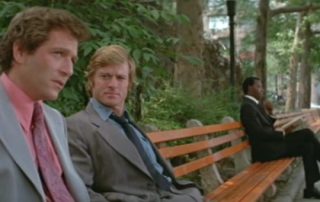
The Hot Rock is a lighter fare- an affable caper film with a sense of humor. It does not live up to some of the works before (Bullitt 1968) and after (The Friends of Eddie Coyle 1973) from Peter Yates. One of the numerous pairings of screenwriter William Goldman and Robert Redford (as much a shrewd seeker of good material as a talented actor) that includes Butch Cassidy and the Sundance Kid, All the President’s Men, The Great Waldo Pepper, A Bridge Too Far. Some of Yates biggest cinematic flourishes are early in the film. He has a very

The Hot Rock – 1972 Peter Yates2021-09-07T14:16:03-04:00

Panic Room – 2002 Fincher

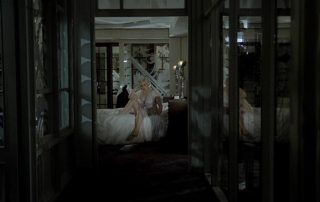
David Fincher’s films do not have stylistic highlights or stand out compositions so much as they are wholly dipped in his trademark lighting design and coloring pattern. It starts with the green tint of the buildings during the opening credits. There is the green Mayflower truck (not a coincidence) and the details do not let up for the entire running time - the dedication to the visual consistency of Fincher’s world pervades throughout. close-ups with lingering shadows behind in Fincher's Panic Room do not even try to watch a Fincher film during the day or with

Panic Room – 2002 Fincher2026-01-18T10:27:56-05:00

Miami Vice – 2006 Michael Mann

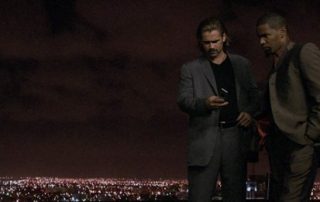
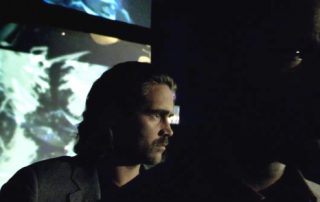
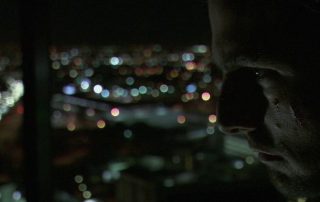
Michael Mann updates the 1980s TV series but without the showy colors. This is a crime story- a film focused really on one case (outside of the in medias res opening to show you how this team works). Opens on Jay-Z’s collaboration with Linkin Park (this needle drop 100% works)—but Mann seems destined to struggle here with music in his work post-Heat. It is not that all of the music he uses is terrible in the vacuum—it is just inconsistent. In one eight-minute stretch he goes from like jazz to Cuban to rock music (lots of Audioslave here). Mann

Miami Vice – 2006 Michael Mann2021-09-05T14:04:48-04:00

Collateral – 2004 Michael Mann

After licking his wounds a bit from Ali – Michael Mann returns to the crime genre, returns to duality on both sides of the law (Tom Cruise’s Vincent vs. Jamie Foxx’s everyman Max) and returns to Los Angeles (where he made Heat). Mann also forgoes the sprawling biopic for one lean, well-oiled machine of a gun-splattered night here as the backdrop. One of the first big films shot on digital—Mann made a point of this at the time of release talking about how most of the other digital efforts up to that point were trying to simulate the film

Collateral – 2004 Michael Mann2021-08-04T20:28:53-04:00
Go to Top