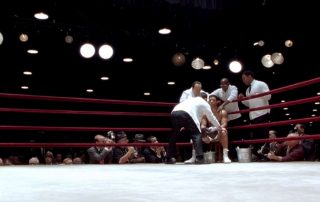
Ali – 2001 Michael Mann

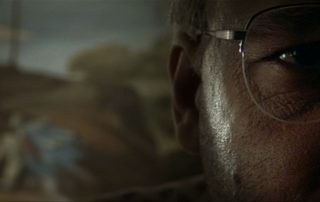
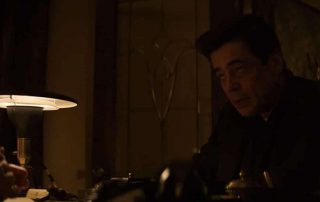
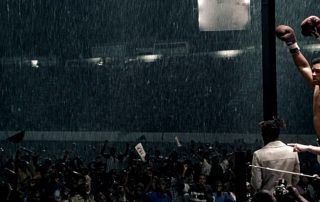
Michael Mann’s Ali was one of the most anticipated releases of 2001, and sadly, it mostly does go gentle into that good night. It is perplexing that the end results were not better. Mann is on a marvelous run at this point in his career- five of his last six films have ended up as must-see top five of the year quality films or masterpieces. Emmanuel Lubezki is the director of photography here. The subject matter is ripe- Ali is one of the seminal figures of the second half of the 20th century in the United States. Also, the
Ali – 2001 Michael Mann2021-08-03T03:00:17-04:00

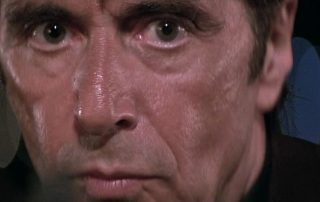
The Insider – 1999 Michael Mann

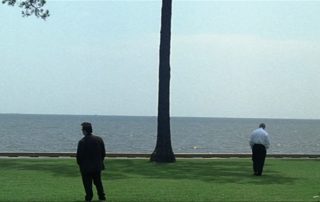
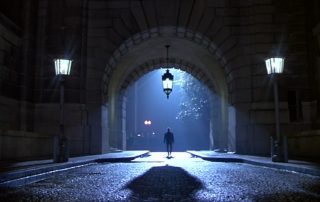
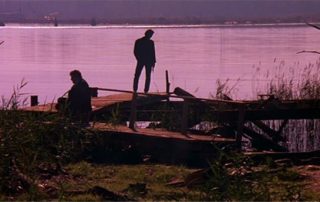
He probably cannot quite touch the work of Scorsese, Kieslowski, or The Coen Brothers- but Michael Mann stakes a strong claim to being the greatest auteur of the 1990s rounded out by 1999’s The Insider. There is real fear in The Insider and a scene with a gun, but really for the first time, Mann’s work does not include physical violence. This is the story of 60 Minutes producer Lowell Bergman (Al Pacino teaming up with Mann again after Heat) and one of his stories (Mann effectively actually weaves in and out of a few) surrounding former tobacco scientist
The Insider – 1999 Michael Mann2021-07-31T12:58:01-04:00

A Ghost Story – 2017 Lowery

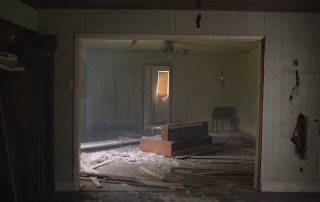
A Ghost Story is a strange bird - it is a somber film where maybe 75 minutes of the 90-minute running time are spent watching a grown man wear a bedsheet over him like a ghost. It can also be described as an art-house version of 1990 film, Ghost, a story of the afterlife told from the deceased perspective. This is David Lowery’s fourth film and his greatest to date in 2017. Here he is dedicated to the long take, and it is one of a slew of films to feature the rise of the boxy 1.33:1 frame (from

A Ghost Story – 2017 Lowery2026-01-22T18:07:30-05:00

La promesse – 1996 Dardenne

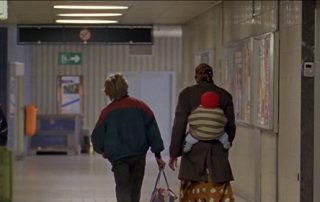
Though not their debut, 1996’s La promesse was the artistic breakthrough film for Belgium realists Luc and Jean-Pierre Dardenne. It is certainly fitting that the first image in their first major film is Jérémie Renier – the most recognizable Dardenne actor (along with co-star Olivier Gourmet here). In true neorealist lineage tradition (Bicycle Thieves), Renier (playing Igor) steals a purse from a old nice lady. Renier is 15-years old here, Roger (played by Gourmet) is his mentor and father. The are hustlers. Roger is a lout, criminal, and terrible influence. There is a bit of Dickens' Oliver Twist here

La promesse – 1996 Dardenne2021-07-30T00:42:29-04:00

No Sudden Move – 2021 Soderbergh

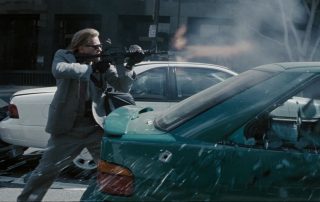
Soderbergh keeps going- and here’s to hoping he makes one a year like No Sudden Move for as long as he can. This is his eighteenth (18TH) archiveable film. Like Out of Sight (1998- and one of his best) this is shot and set in Detroit. Soderbergh shoots fast and is a big part of his own crew (he’s his own DP and editor- both using pseudonyms) but David Holmes (Ocean’s Eleven, Out of Sight, Haywire) is back to do the energic. jazzy score. There are quick little scale splashes like Bernard Herrmann’s famous Taxi Driver Soderbergh does not

No Sudden Move – 2021 Soderbergh2021-08-30T13:12:46-04:00

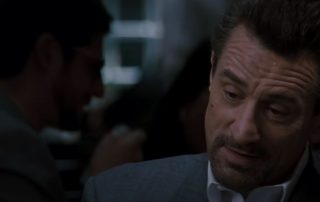
Heat – 1995 Michael Mann

Heat is both the summation of Michael Mann’s previous efforts, and an artist at his clear peak. After his biggest financial success in 1992’s The Last of the Mohicans, he had the juice to go back to his urban jungle—cops vs. thieves—and do it with the long-awaited meeting of Al Pacino and Robert De Niro on screen (the two had been dancing around each other for decades after working together, but separately, in The Godfather: Part II). Mann here does not look to tell a cop versus thief story—he looks to tell THE cop versus thief story—on an epic

Heat – 1995 Michael Mann2021-08-29T12:48:27-04:00

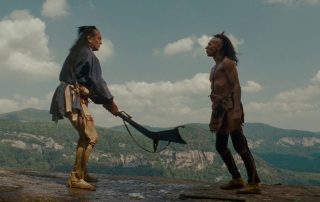
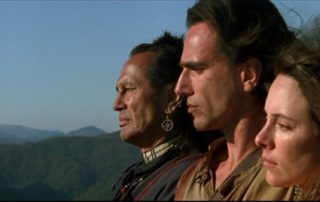
The Last of the Mohicans – 1992 Michael Mann

It is remarkable how well Michael Mann made the transition from high art contemporary urban crime films (Thief, Manhunter) to historical action epic. Whatever genre or subgenre you classify The Last of the Mohicans as, it undoubtedly, is one of that genre’s finest. Mann and his go-to (Manhunter, Heat, The Insider) cinematographer Dante Spinotti chose to use natural light for an extremely high percentage of the photography. Especially since large portions are shot at night, this gives the film a lot of rich golden colors and browns. The Fort William Henry scenes (amazing set piece- Oscar winner best sound

The Last of the Mohicans – 1992 Michael Mann2021-08-29T00:03:27-04:00

Seven Beauties – 1975 Wertmüller

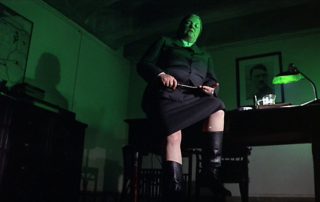
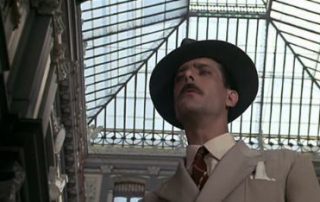
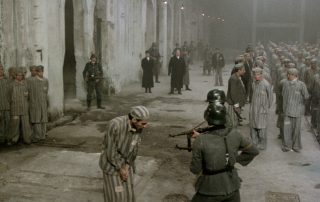
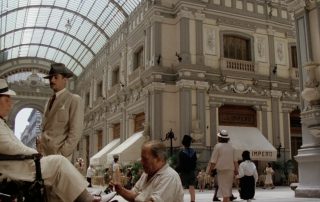
Lina Wertmüller opens Seven Beauties with World War II and Hitler documentary footage. She is interested in creating a wildly engaging tale (the imagination behind the original screenplay is hers as well) of humanity’s ugliness. Lina Wertmüller is famously the first female director to be nominated for an Academy Award (the film was nominated for foreign language film, her writing, and Giancarlo Giannini for best actor was as well). Giannini plays Pasqualino Frafuso and the story oscillates between a flashback to Pasqualino’s days in Italy, and his trials and tribulations after as a prisoner, in an insane asylum, in

Seven Beauties – 1975 Wertmüller2021-08-27T13:30:58-04:00

You Only Live Once – 1937 Lang

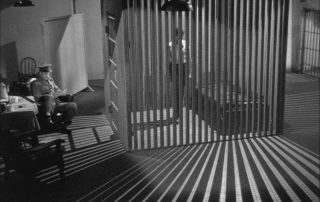
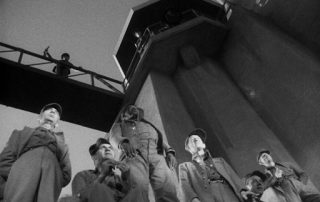
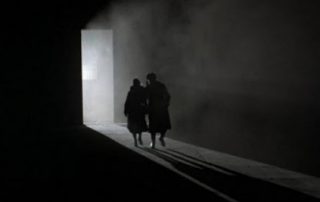
It is a tad stiffer than 1945’s Scarlet Street and 1953’s The Big Heat, but You Only Live Once has an argument to be called Fritz Lang’s greatest American film. You Only Live Once stars Sylvia Sidney (top billing as Joan Graham) and Henry Fonda (as Eddie Taylor). Fonda’s Taylor is an ex-con and an unfortunate victim of circumstance in a cruel world (Lang’s world). They end up as lovers on the run -preceding Gun Crazy, Bonnie and Clyde, Badlands, Natural Born Killers, and all the others. This was a big film for Fonda- it is not his debut,

You Only Live Once – 1937 Lang2021-08-26T14:46:33-04:00

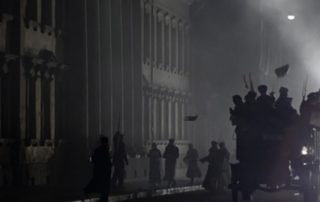
Reds – 1981 Beatty

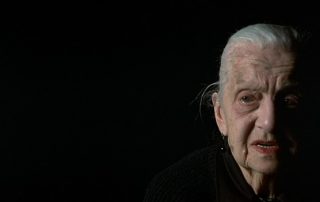
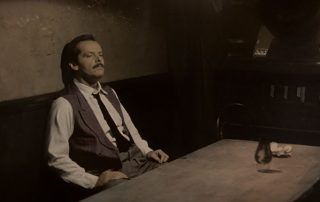
With just the handsomeness of the production and the fine writing and acting throughout, Warren Beatty’s Reds would have been one of the stronger films of 1981. However, Beatty, brilliantly, chose to weave in interviews those who knew John Reed (played by Beatty himself) and Louise Bryant (Diane Keaton). These “witnesses” help create a fabulous formal structure (one that inspired Rob Reiner’s When Harry Met Sally). There is a simple but beautiful consistency to the visual design of their sections of the film. This is Beatty’s most ambitious project behind the camera. There is all this talk about Heaven’s

Reds – 1981 Beatty2021-08-25T12:41:04-04:00

Tampopo – 1985 Itami

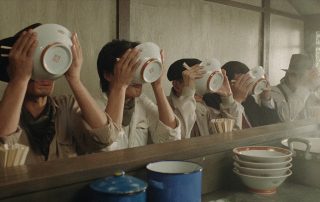
Tampopo is not a film you want to go into with an appetite. “Lukewarm ramen is not ramen”- this is a great food film. Jûzô Itami’s film has a fairly simple premise: Goro and Gun (a young Ken Watanabe) try to help Tampopo – she owns a noodle shop- teacher/student. There are little vignettes (all dealing with food) throughout- some of them are siloed, and some of them (like Koji Yakusho’s gangster in the white suit) run throughout. The gangster says “you’re at the movies, too?” to the audience breaking the fourth wall to open the film. With the

Tampopo – 1985 Itami2021-07-23T17:00:07-04:00

Manhunter – 1986 Michael Mann

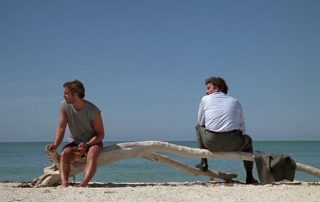
Michael Mann’s Manhunter confirms the promise of 1981’s Thief. It makes him one of the most exciting cinematic voices to emerge from the 1980s. The opening is a marvelous shot—Mann starts with the blue sky, and tilts the camera down to Dennis Farina (as Jack Crawford) on the right facing the beach, and a sun-kissed William Petersen (lead, as Will Graham) facing the camera on the left. We have a great camera movement and character blocking right there in the first shot. The film’s greatest single frame may actually be the shot of Kim Greist (as

Manhunter – 1986 Michael Mann2021-08-23T13:12:50-04:00
Go to Top