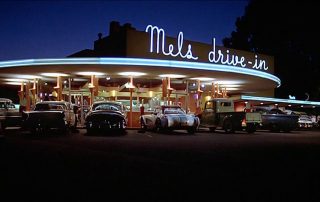
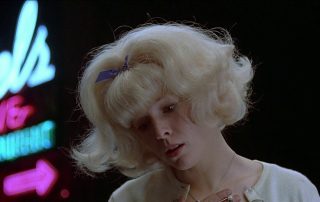
American Graffiti – 1973 Lucas

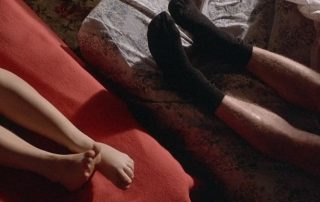
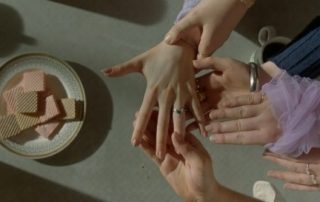
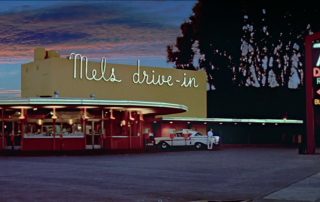
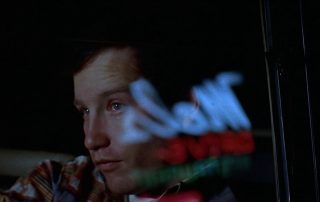
Lucas pivots from the Kubrickian artistic asceticism of his debut THX 1138 for an all-time nostalgic, hang-out film with his second effort Lucas is always the gambler- here, he bets on a slew of unnamed actors and no plot—and then runs up a big budget curating some of the greatest songs of the late 1950’s and early 1960’s era. “A brilliant work of popular art, it redefined nostalgia as a marketable commodity and established a new narrative style, with locale replacing plot, that has since been imitated to the point of ineffectiveness.” – brilliantly from David Kehr- https://www.chicagoreader.com/chicago/american-graffiti/Film?oid=1150459 Wolfman


American Graffiti – 1973 Lucas2021-06-20T12:50:53-04:00

THX 1138 – 1971 Lucas

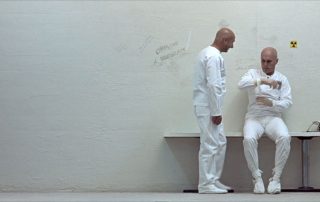
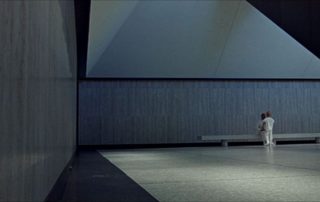
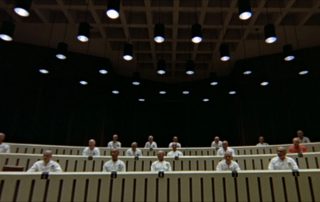
27-year-old prodigy George Lucas debuted with THX 1138 in 1971- a remarkable achievement of sight and sound It is a bleak film, Orwellian—Empire Strikes Back is also gloomy but this is as cold (sort of like Lang or Kubrick) as Lucas would ever be. He served as his own editor- and it is a fantastic feat of montage. The crew surrounding Lucas is noteworthy as well. Lalo Schifrin did the score—I’m not sure how Lucas got the backing of Lalo Schifrin (Cool Hand Luke in 1967) as an unknown in 1971. Walter Murch is the co-writer and does the

THX 1138 – 1971 Lucas2021-06-19T12:32:41-04:00

The Nest – 2020 Durkin

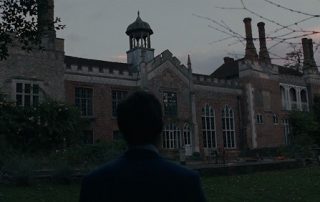
The Nest is the long-awaited sophomore effort from Sean Durkin. Durkin was last seen directing Martha Marcy May Marlene in 2011. The story here revolves around Carrie Coon’s Allison and Jude Law’s Rory O’Hara and their two children. It is set in the Reagan/Thatcher 1980’s. Plenty of room for the Thompson Twins, Heart and The Cure on the soundtrack mixed in with some nice jazzy intervals. Durkin uses a silent reverse zoom 3-4 times (maybe like a quarter version hold of what Pakula does) along with some brief dissolves. Neither are sustained or held enough to create any real

The Nest – 2020 Durkin2021-06-18T12:31:29-04:00

The Great Escape – 1963 John Sturges

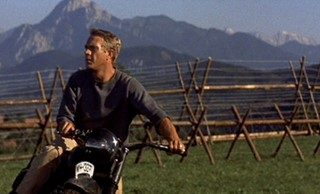
Genre definitions are always difficult but whether you consider John Sturges’ The Great Escape an action film, a war film, a prison film, or all of the above- it is a fabulous example of big budget Hollywood genre filmmaking. It is impossible to talk about The Great Escape (1963) without talking about The Magnificent Seven (1960) as a companion piece. This is the stronger film, slightly, but both films have an ensemble cast headlined by Steve McQueen (they both also include Charles Bronson, James Coburn) and feature unforgettable scores by Elmer Bernstein. They both also have the big, bold

The Great Escape – 1963 John Sturges2021-05-06T14:06:05-04:00

Alice in Wonderland – 1951 Geronimi. Jackson, Luske

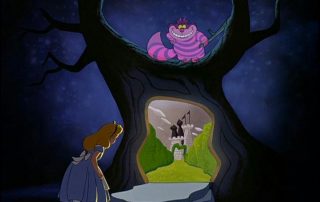
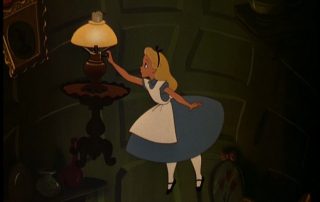
An admirably aspiring project for Disney in the early 1950’s. This adaptation of Lewis Carroll allowed for the animators to fill the void left in cinema: to and draw creative the unfilmable- imagine this film as a 1951 live-action). The surrealism and anarchy (hello Marx Brothers) would go on to be embraced (like Carroll himself of course) by the drug culture of the 1960’s (chasing the white rabbit- Jefferson Airplane and their 1967 song). Kafta seems like another related text. The is a 19th century novel- before the publishing of the book "The Wizard of Oz" for all the

Alice in Wonderland – 1951 Geronimi. Jackson, Luske2021-06-16T12:48:27-04:00

At the Circus – 1939 Buzzell

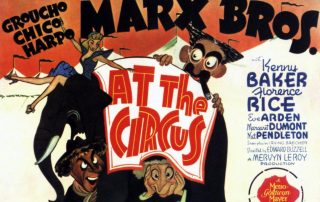
MGM was smart enough to riff on the name of The Marx Brothers most successful box office efforts: A Night at the Opera (1935) and A Day at the Races (1937) for their 1939 effort—but by then, the best work of the brothers was behind them. There are still some very good skits here—but unlike their best films, there are stinkers mixed in. For starters, there is far too much Kenny Baker (looking and sounding like Art Garfunkel’s long lost relative but with shorter hair) and Florence Rice. There are two musical numbers (including these two doing a simply

At the Circus – 1939 Buzzell2021-06-16T12:50:36-04:00

The Music Room – 1958 Satyajit Ray

Brimming with confidence coming off the success of the Apu Trilogy (this was actually made in the middle of the famous trilogy—before The World of Apu in 1959 but after Aparajito  in 1956) - Satyajit Ray lands with his single greatest 95-minutes of cinema in The Music Room. The great Chhabi Biswas plays Huzur Biswambhar Roy at the center of The Music Room – it is a role and performance that every actor, regardless of generation or language, must envy. It is a remarkable fable, a sort of novella that could’ve been a story passed down in oral history

The Music Room – 1958 Satyajit Ray2021-04-26T21:19:18-04:00

Promising Young Woman – 2020 Fennell

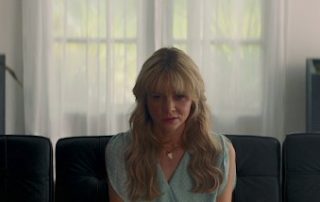
Promising Young Woman is one of those rare films that you immediately look forward to watching again after you're done- there is much to unpack. It marks the debut film for Emerald Fennell who wrote and directed (winning an Oscar for the screenplay). She is an actress as well. It is a choice role for Carey Mulligan.  I think on a per-minute basis she is better in Steve McQueen’s Shame (2011)—but it is tough to compare because she is in almost every frame here in Promising Young Woman as she plays Cassandra. Fennell’s film starts with some strong slow-motion

Promising Young Woman – 2020 Fennell2022-03-15T16:29:48-04:00

Detective – 1985 Godard

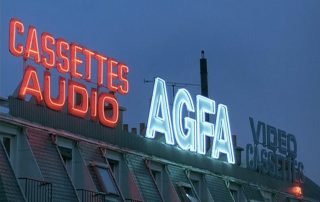
Detective, like much of Godard’s work, for better or worse, is built in the editing room. He makes a mash of actors, dialogue, music and settings (a billiards hall, a hotel room, a hotel balcony, a hotel lobby, the sign for a building) and splices them together into one sustained, 95-minute, question mark. It isn’t uninteresting, though to forgive it you must first try to forget that this was the  talented auteur that created masterpiece after masterpiece in the 1960’s. Just a head scratcher all around- dedicated to Ulmer, Cassavetes and Eastwood—not sure. Godard is sort of spoofing computers

Detective – 1985 Godard2021-04-25T22:07:59-04:00

Rocky – 1976 Avildsen

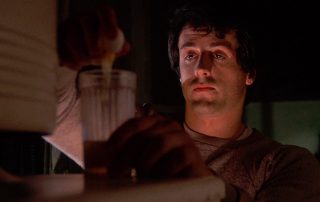
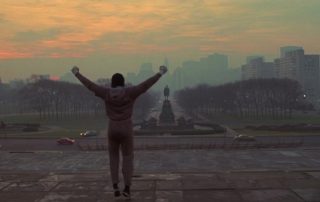
  Rocky certainly tapped into the zeitgeist in 1976 winning not only the box office crown for the year (by a wide margin) but also three Oscars including best picture, best director and best editing. It is difficult to fathom today that an unknown (Stallone) could come out of obscurity (I think he’s best known as one of the accosters on the subway in Woody Allen’s 1971 Bananas at this point) to achieve such success. Director John Avildsen had been around—directing archiveable films like 1970’s Joe and 1973’s Save the Tiger (Jack Lemmon’s Oscar win). The film opens with

Rocky – 1976 Avildsen2021-04-24T12:50:18-04:00

Algiers – 1938 Cromwell

There is an argument to be made that in a world where Pépé le Moko (1937) from Julien Duvivier and Jean Gabin exists, there’s no need for Algiers. And certainly, if you haven’t seen the Duvivier film, that needs to be seen first. Algiers is not on that level—everything from Cromwell’s film is copied, or inferior, or both- with the exception of Hedy Lamarr in the Gaby role. And I think there is enough there with Lamarr’s work and some of the chemistry with Charles Boyer, to archive the film. Lemarr is breathtaking here at 24 years old—she’s often

Algiers – 1938 Cromwell2021-06-10T20:11:01-04:00

Sweetie – 1989 Campion

Sweetie is the debut film for 35-year old New Zealander Jane Campion (The Piano) It is a sort of family relationship comedy/drama mixed with quirky romance about Karen Colston’s Kay (her voice-over is our guide). Her sister “Sweetie” (Geneviève Lemon) comes bounding into the film about 20-minutes in interrupting the life, and fragile relationship, of Kay and her boyfriend Louis (Tom Lycos). There’s a bit of Renoir’s Boudu Saved from Drowning (1932) going on here for sure with Lemon playing the Michel Simon character (also getting the title). From the opening shot you can see Campion is quite

Sweetie – 1989 Campion2021-06-11T17:36:23-04:00
Go to Top