Placido – 1961 Berlanga

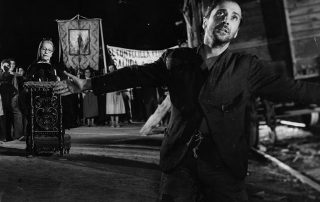
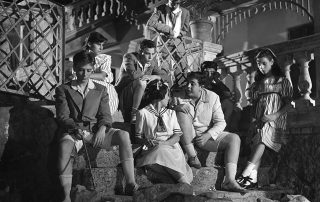
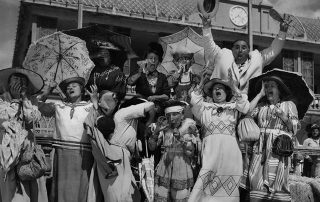
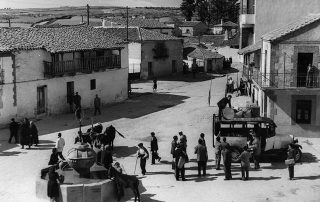
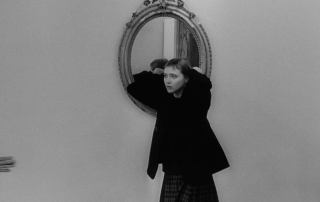
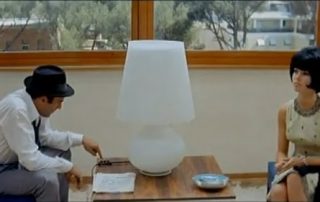
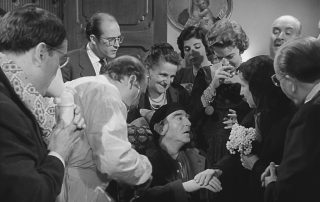
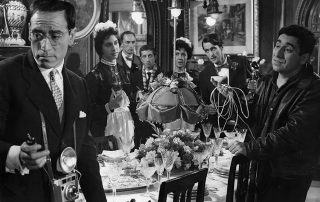
Placido is Luis García Berlanga’s sixth film—he was cranking them out from 1953 (his debut) to 1957 but there is four years off between Miracles of Thursday (1957) and Placido- his strongest work to date. He was met with government censorship issues over the political satirical content. Placido is the name of the film, and also the name of the lead character played by Cassen. The film is all about subtext, on the surface almost nothing happens—Placido spends the first 70 minutes trying to pay a bill and getting the runaround from everyone--- and the last 15 trying to
Placido – 1961 Berlanga2021-03-18T17:18:55-04:00

Wildlife – 2018 Dano

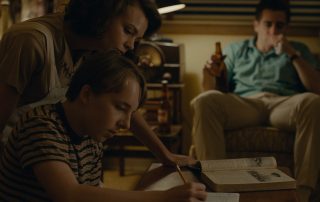
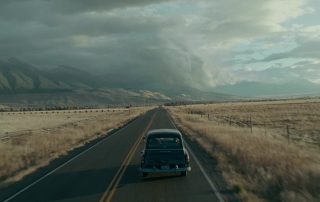
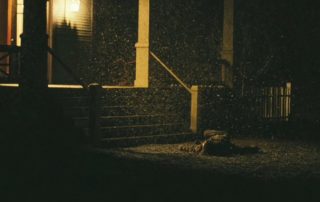
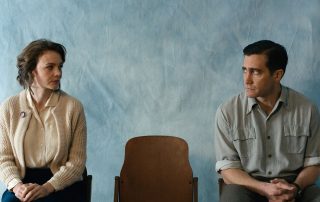
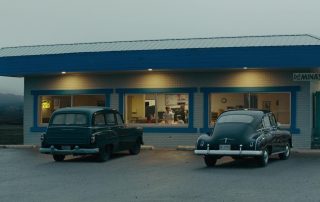
Actor Paul Dano (There Will Be Blood, Little Miss Sunshine) directs (his debut) and co-writes Wildlife. Opens with a static camera of a Montana ranch (the entire film shot mostly on location in the pacific northwest) with father and son playing catch with the football shot on location in Montana and the Pacific Northwest It looks like the early 1960’s, Dano has an eye for details- period clothing, cars, advertising, wallpaper Very observational – a great scene of Carey Mulligan’s Jeanette helping her son with his homework while her husband (Jake Gyllenhaal) finishes a beer and

Wildlife – 2018 Dano2021-05-03T14:08:08-04:00

The Salesman – 2016 Farhadi

Narrative brilliance from Asghar Farhadi once again with his engrossing moral dramas where awful things happen but it is never one person’s fault Starts with a strong montage opening of the stage set Shahab Hosseini is back from A Separation - and he plays Emad. Emad is staging Arthur Miller's The Death of a Salesman- a strong subtext for Farhadi's narrative Beautiful opening two-minute handheld (Farhadi's use of handheld is important to his style- authenticity- realism) tracking shot both technically brilliant and the metaphor for the building crumbling is spot on and perfect Farhadi post-traumatic stress, Hosseini's character is consumed with this

The Salesman – 2016 Farhadi2025-06-15T20:22:55-04:00

Miracles of Thursday – 1957 Berlanga

Berlanga’s fifth film was controversial in Spain- censored. Like his previous efforts, it is an ensemble comedy, he’s really riffing on Italian Neorealism (in a much lighter way than say Bunuel) Like both Welcome Mr. Marshall! and The Rocket from Calabuch there is a voice-over narration introducing you to the small town- in this case it is the village of Fontecilla—“the train passes through without stopping” It is Berlanga’s most accomplished film visually to date in 1957. There’s a shot at the 2-minute mark of various cups and bowls and basins catching the leaking rain – they’re staggered throughout

Miracles of Thursday – 1957 Berlanga2021-03-17T14:05:50-04:00

The Rocket From Calabuch – 1956 Berlanga

Berlanga’s fourth film, he brings back the wry voice-over and the small town just like his debut Welcome Mr. Marshall! (1953). He even gives us the number of the people living in the village (928) again. Stars British actor Edmund Gwenn (dubbed here). Gwenn's work is strong. Berlanga uses his kind face and disposition just like Miracle on 34th Street (even Hitchcock played off this with The Trouble with Harry in 1955). Gwenn plays a missing nuclear scientist trying to leave the world of politics and war behind. This is an ongoing theme for Berlanga- his dislike of politics

The Rocket From Calabuch – 1956 Berlanga2021-04-30T10:31:41-04:00

Boyfriend in Sight – 1954 Berlanga

Berlanga’s third film, brimming with nostalgia for youth, romance and summer. Set in “Europe 1918” Berlanga’s trademark quick wit—“the highest he ever got in the army was draft dogger”. Under 90 minutes Breezy, Monsieur Hulot's Holiday (1953 just the year before) and Amarcord (1973) come to mind as comparisons. Boyfriend in Sight, like Welcome Mr. Marshall! is an ensemble comedy. The romance for 15-year old’s, cute, the end of innocence (Berlanga wants to extend this—he spoofs “adult life”- politics, war—here half the jokes are about war and the “war games” of the kids vs. the adults is a big

Boyfriend in Sight – 1954 Berlanga2021-03-16T15:59:36-04:00

A Separation – 2011 Farhadi

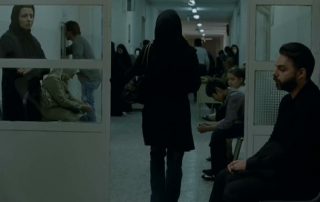
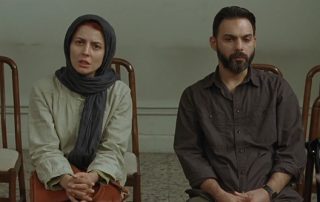
Asghar Farhadi’s fifth film is a profound meditation on divorce (every bit on the level of Kramer vs. Kramer, Marriage Story) and class (every bit on the level Parasite) Opens with a three-minute shot of Simin (played by Leila Hatami) and Nader (Payman Maadi) discussing their failing relationship. They are talking to the camera with the unseen judge. “He is a good decent person”. Farhadi goes to the “A Separation” title after and then the “written and directed by” long after the rest of the credits—bit of a diva move who can begrudge him after such a fantastic

A Separation – 2011 Farhadi2021-04-26T23:06:52-04:00

Welcome Mr. Marshall! – 1953 Berlanga

The debut film from Spanish auteur Luis García Berlanga Welcome Mr. Marshall! is made in the vein of Preston Sturges. An average small village in Spain prepares themselves for the arrival of American visitors—and comedy ensues 78-minutes that fly by, very low ASL- average shot length. It is like Capra’s It Happened One Night (1934) in that way- Berlanga doesn’t let any one shot or scene linger Fernando Rey provides the hilarious voice-over narration. He even freezes the frame to stop time, changes the story and says “It’s easy- just like that”—Berlanga manipulating form – “I’ll introduce him later”.

Welcome Mr. Marshall! – 1953 Berlanga2021-03-16T14:12:48-04:00

Aladdin – 1992 Clements, Musker

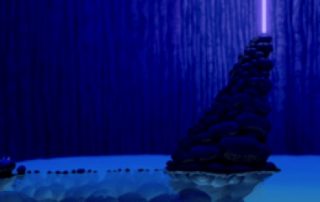
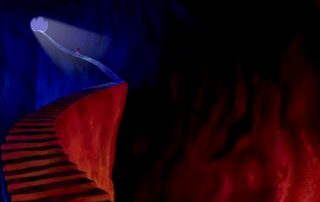
Aladdin fell smack dab in the middle of Disney’s renaissance or boom of hand-drawn animated musicals during the late 1980’s and early 1990’s—a run of six years that started with The Little Mermaid (1989), went to Beauty and the Beast (1991) and ended with The Lion King (1994). Eight-time Oscar winner Alan Menken (who is the original composer of the music for all except The Lion King) is as much the reason for this boom as anyone Great establishing shot of the city of animated city of Agrabah Stunning animation using blue day for night of the sand dunes

Aladdin – 1992 Clements, Musker2021-04-25T12:30:52-04:00

Band of Outsiders – 1964 Godard

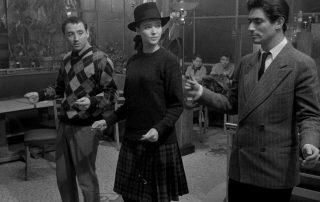
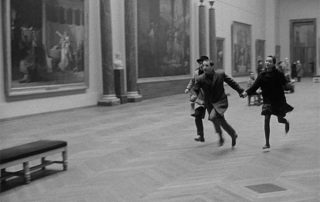
Band of Outsiders or Bande à part makes for a worthy companion to Breathless. These may be the two most accessible works of Godard’s career (not that he is an auteur where accessibility is a major focus). It is 95-minutes, far less heavy than the films between this and Breathless (Band of Outsiders is his seventh film overall). He’s back in the crime genre, though this is more of a Godardian postmodern riff on the heist film where he takes the air and suspense out of it completely. Though they are all playful and reflexive in their own ways,

Band of Outsiders – 1964 Godard2022-03-30T11:43:45-04:00

True Grit – 2010 Coen

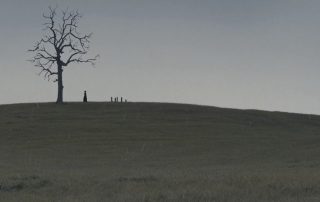
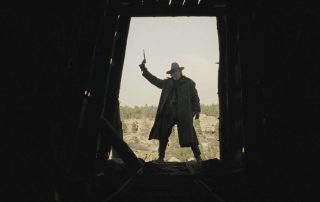
For their fifteen film the Coen brothers chose to adapt the work of Charles Portis (author of True Grit) in their first outright western (certainly No Country For Old Men is a western in many ways). It is also a remake of the successful 1969 Henry Hathaway John Wayne vehicle (in his Oscar-winning role). Both films are very worthy of study. The opening shot of the 2010 Coen’s brother film is one of the greatest single shots in the brothers’ oeuvre. This is their 10th collaboration with the masterful Roger Deakins (it is one of his best single shots

True Grit – 2010 Coen2021-04-24T14:47:47-04:00

Contempt – 1963 Godard

Godard at the peak of his powers. Astoundingly, this is Godard’s sixth film—all since his debut in 1960 of course. This is Godard’s second film in color with the wider format (after A Woman is a Woman), his largest budget, and biggest financial success (which he could not have cared less about probably- haha) CinemaScope process, aspect ratio 2.35 : 1 Narrator speaks the credits, starts with showing the director of photography Raoul Coutard (who worked on all of Godard’s important films) tracking along and a Bazin quote After that it opens with a nude, bottoms up Brigitte Bardot—red,

Contempt – 1963 Godard2021-04-23T15:07:50-04:00
Go to Top