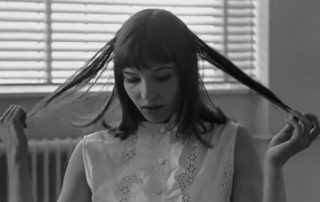
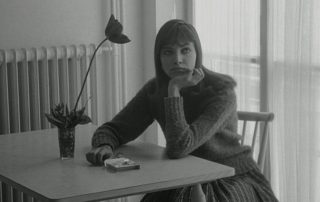
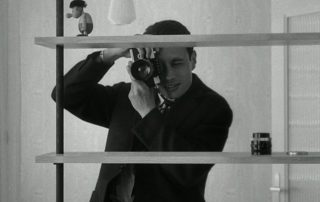
Le Petit Soldat – 1963 Godard

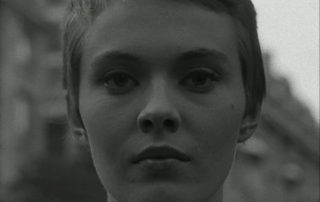
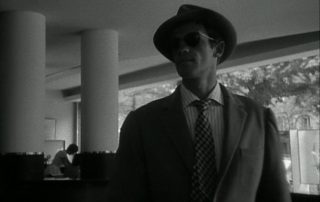
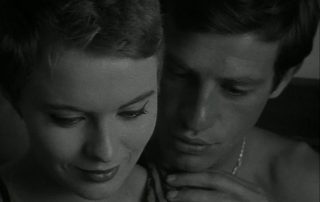
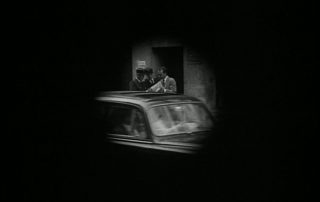
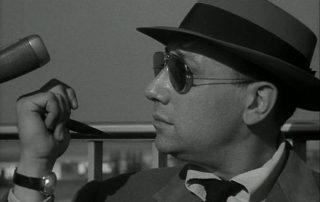
Le Petit Soldat is actually the second feature Godard made. He shot it in 1960 after Breathless with the intent of releasing immediately- but French censors pushed it to 1963 making it at that point his fourth feature. It also makes for a very busy 1963 from a release standpoint for him with this, Les Carabiniers, and Contempt Shot on location in Geneva. Much of it in cars. It is shot in 35mm, black and white, largely handheld camera The voice-over is about as dry as it gets At 88-minutes, and with the jump cuts (they are there, just
Le Petit Soldat – 1963 Godard2021-02-28T14:09:55-05:00

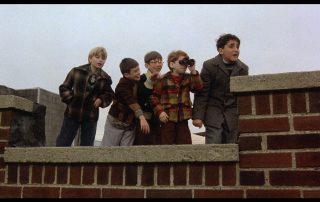
Sling Blade – 1996 Thornton

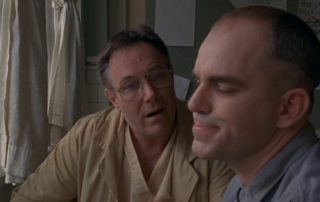
Billy Bob Thornton had been around prior to Sling Blade. He co-wrote and acted in 1992’s Once False Move. He’s in Tombstone, Indecent Proposal, and Jarmusch’s Dead Man. However, he got his big break and became a name in 1996’s Sling Blade which he directed, wrote, and starred in. If it weren’t for Damon and Affleck in Good Will Hunting the following year we’d be talking about this (both films by Miramax) as the big Stallone-like story where an actor bets on himself by only selling his screenplay if he can star in the film. Billy Bob is pretty

Sling Blade – 1996 Thornton2021-04-06T12:43:01-04:00

Rocks – 2019 Gavron

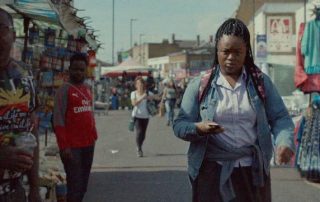
Rocks is made in the mode of realism- a break from Sarah Gavron’s previous effort Suffragette (2015) which is more a traditional period drama. This story tracks non-professional actor Bukky Bakray playing “Rocks”. Gavron makes the strong formal choice of grounding the film in realism with the smartphone/iphone footage opening and closing a harrowing tale of abandonment, survival, and ultimately friendship this is made in Mike Leigh’s lower income, working class UK- housing projects handheld camera often, and like The Dardenne brothers- the specific situation/crisis arrives pretty quickly here: Rocks’ mother abandons her and her younger brother the school

Rocks – 2019 Gavron2021-02-26T19:09:43-05:00

Breathless – 1960 Godard

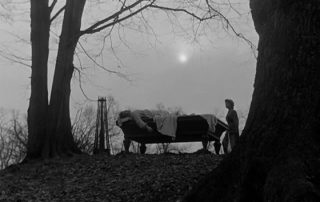
The story goes that Cahiers du Cinéma writer/critic turned first-time director Jean-Luc Godard had a finished film that he felt was 30 minutes too long. Instead of cutting out individual scenes (like pretty much every film not made by Godard before or since have)- he cut out what he deemed to be the uninteresting parts within the scenes and kept the total number of scenes overall in. What follows is a 90-minute jump-cut revelation masterpiece that may be only behind Welles in terms of cinema’s all-time great debuts (co-father of the French New Wave Truffaut may have the other

Breathless – 1960 Godard2021-04-04T11:53:55-04:00

Cast a Dark Shadow – 1955 Gilbert

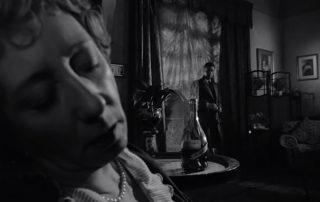
A superb little thriller that Hitchcock would be proud of It serves now as the first archiveable film director Lewis Gilbert (though not his debut) and second archiveable film for star Dirk Bogarde. Gilbert would direct Alfie in 1966, You Only Live Twice in 1967 and one of the best James Bond films of all - The Spy Who Loved Me in 1977. Still- I’m not sure this isn’t his best work The nod to Hitchcock isn’t just because of the genre- visually Gilbert evokes the great master by putting the alcohol glasses jarringly in front of the frame

Cast a Dark Shadow – 1955 Gilbert2025-06-11T21:13:55-04:00

Mad Love – 1935 Freund

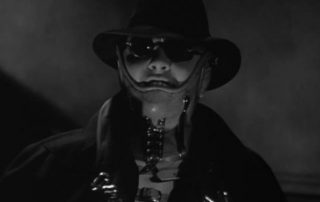
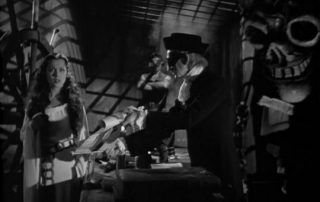
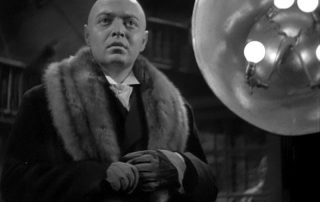
A notable work for both Peter Lorre and director Karl Freund—two Austrian/Hungarian talents with roots in German expressionism (Lorre was discovered by Lang and starred in M of course) and Freund worked with Lang (he was his DP) on Metropolis. Both were in Hollywood now- this is Lorre’s first film in English—and this is sadly Freund’s last as director (he did The Mummy in 1932). He’d go on to be a cinematographer for decades longer (doing work like Key Largo). This film is also semi-famous for Chaplin declaring Lorre the “greatest living actor” after seeing it. Lorre is

Mad Love – 1935 Freund2021-04-02T00:05:14-04:00

Nomadland – 2020 Zhao

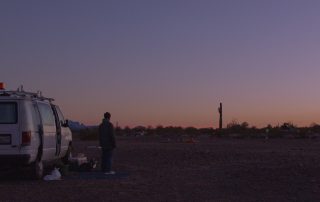
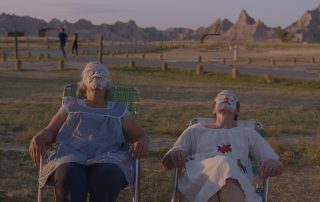
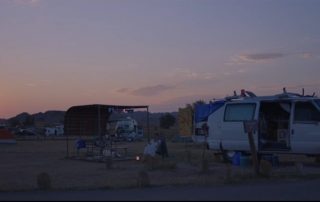
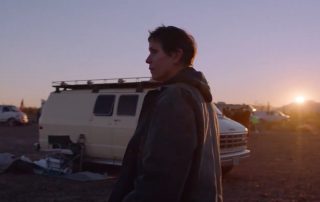
The third film of Chloé Zhao. Nomadland is a work that is both enhanced by 2017’s The Rider and makes The Rider a stronger film as part of a larger vision from Zhao. Starts grounded in realism with titles about the zip code the town of Empire being eliminated- the former home of Frances McDormand’s Fern. Fern now lives in her van, going from state to state working. Zhao is largely a realist. The Rider had all non-professional actors. Here only McDormand and veteran David Strathaim are professionals—they are the only two actors not playing versions of themselves. And both

Nomadland – 2020 Zhao2021-03-31T15:34:35-04:00

Native Son – 1951 Chenal

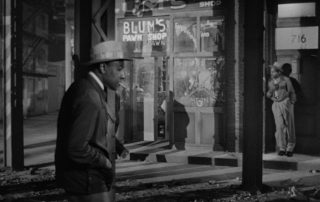
Richard Wright’s 1940 novel, Native Son, is canon. It is taught often in schools everywhere when reviewing the best of 20th century literature. The 1951 film of the same name is certainly not canon—it is an odd experiment—totally uneven-- but not without some redeeming characteristics First off, Wright himself plays Bigger Thomas and that’s a huge miss. He’s not an actor and that is abundantly clear from the first scene. It is peculiar to see a man play a character he created (imagine watching Fitzgerald or Steinbeck play Nick Carraway or Tom Joad)—let alone a man of 43-years trying

Native Son – 1951 Chenal2021-02-23T21:09:23-05:00

Les Enfants Terribles– 1950 Melville

Les Enfants Terribles is a fascinating collaboration two of the most talented figures in French cinema at the time of release: Jean-Pierre Melville and Jean Cocteau. Melville is known for hard-boiled gangsters, war, cold nihilism. Cocteau is a surrealist—I guess it is sort of like Spielberg coming to do Kubrick’s A.I. project or something- a meeting of two seemingly opposite personalities (though near equally gifted). The results are scrambled- it probably didn’t end up being the quality of film either would have made on their own but there are moments of greatness here that surpass even superior overall films

Les Enfants Terribles– 1950 Melville2021-02-23T13:57:44-05:00

Palm Springs – 2020 Barbakow

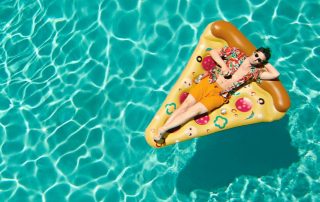
Andy Samberg has been making everybody laugh for ten to fifteen years- but 2020’s Palm Springs, a take on 1993’s masterful Groundhog Day, is the best thing he’s been a part of It isn’t just Samberg who impresses here (he can make the sound of opening a beer funny), this is the feature debut for Max Barbakow, Cristin Milioti is hilarious (who plays Sarah here- she’s DiCaprio’s first wife in Wolf of Wall Street), and Andy Siara’s screenplay is both clever in structure and well-written in scene (particularly some of the speeches several characters are given). Standouts include Samberg’s

Palm Springs – 2020 Barbakow2021-03-29T19:28:37-04:00

Kaagaz Ke Phool – 1959 Dutt

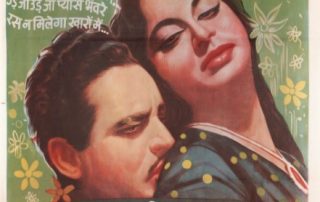
Guru Dutt’s final film as director. He would pass away in 1964 at the age of 39. This is his follow-up to the astonishing 1957 film Pyaasa. These two films make for a sublime pair—fluid camera movements—like the best of Renoir. Depending on sources it is either the first or second widescreen film from India- this uses the CinemaScope process, aspect ratio is 2.35 : 1, and is in black and white. With Satyajit Ray also producing most of his major works in the last 1950’s—it is a bit of a wonder the “Indian New Wave” or something comparable

Kaagaz Ke Phool – 1959 Dutt2021-02-22T19:48:24-05:00

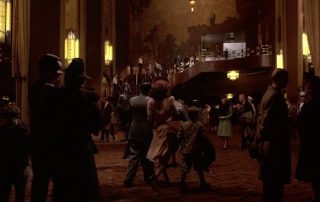
Radio Days – 1987 Allen

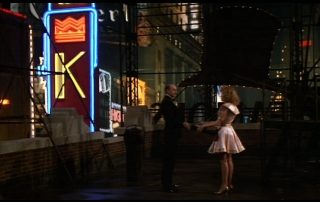
Much is made of Woody Allen’s admiration for Ingmar Bergman—and rightly so—but Federico Fellini seems like just as strong an influence. If you think about it at this point in 1987 Allen has already made his 8 ½ (1980’s Stardust Memories). Well, Radio Days is clearly his Amarcord. It is one of Allen’s most autobiographical and nostalgic works. It is told in one setting (New York, of course--here the Rockaways) and filled with period (late 1930’s to early 1940’s) music. There is no forward-moving story- just a series of anecdotes and interconnected vignettes (the radio programs, actors behind them,

Radio Days – 1987 Allen2021-03-27T14:22:24-04:00
Go to Top