Anna Karenina – 1948 Duvivier

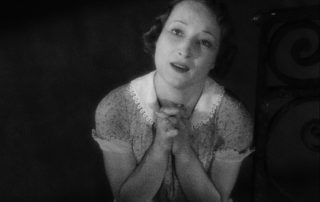
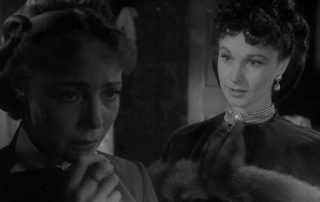
There have been many adaptations of Tolstoy’s Anna Karenina and a few, including Duvivier’s attempt here, are admirable, but none are transcendent. The most famous adaptation is probably Clarence Brown’s 1935 version with Garbo. Joe Wright did solid work on 2012’s version as well. Duvivier is back in the UK (Panique was at home in France in 1946) here The lyrical camera style of Duvivier’s is actually very similar to Joe Wright’s style Inspired use of train miniature in the opening At the 34-minute mark, just subtle little camera movements like Duvivier pulling back the camera and descending the

Anna Karenina – 1948 Duvivier2021-02-12T13:49:55-05:00

The Baker’s Wife – 1938 Pagnol

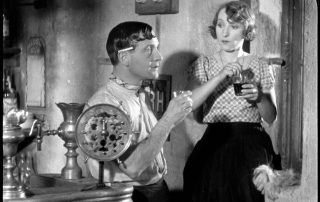
Playwright and director Marcel Pagnol returns with a modest, but charming tale set in rural France Much of the same cast from the Marseille trilogy is back including Raimu as Aimable Castanier (again Welles once said he was the greatest actor) and Fernand Charpin as Le marquis. I could watch these two act (with great writing at their disposal) for hours- which is good- because that is basically what Pagnol’s approach is as director A simple story of adultery and the ensuing melodrama—explored for dramatic and comedic purposes in each measure (Pagnol certainly uses “cuckold” in every film I’ve

The Baker’s Wife – 1938 Pagnol2021-02-11T17:06:03-05:00

The White Tiger – 2021 Bahrani

With the kinetic energy, pop soundtrack blend, and rags to riches coming of age story set in India- it is tough not to at least mention Slumdog Millionaire when discussing Ramin Bahrani’s (Chop Shop) The White Tiger- a thoroughly engaging story Bong’s Parasite from 2019 is also an important text and potential influence- this is a story and study of poverty and the class (or caste) system. Adarsh Gourav (playing Balram) is also the driver for this wealthy family. The story here uses the rooster coop metaphor instead of a parasite Voiceover narration- Balram is writing a letter to

The White Tiger – 2021 Bahrani2021-09-10T03:55:38-04:00

Zero Dark Thirty – 2012 Bigelow

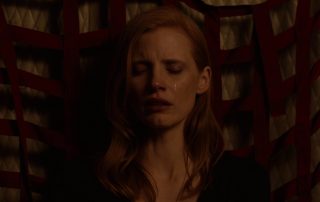
Kathryn Bigelow is pretty measured with her projects. Zero Dark Thirty is just her ninth (9th) film in 31 years (debut in 1981). This is her second Mark Boal collaboration (writer) after the 2009 Academy best picture winner (though it is a 2008 film) The Hurt Locker. This story covers Maya (Jessica Chastain) tracking down Osama Bin Laden (via his courier- her “lead”) for roughly a decade. It is a saga- 157 minutes- a film about the monomaniacal pursuit. Maya (a terrific Chastain) does not care if she ruffles a few feathers in that pursuit—reminiscent of All the President’s

Zero Dark Thirty – 2012 Bigelow2025-12-11T07:16:07-05:00

Panique – 1946 Duvivier

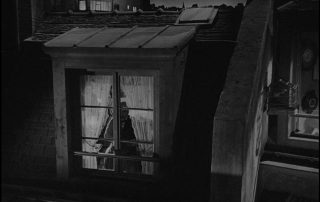
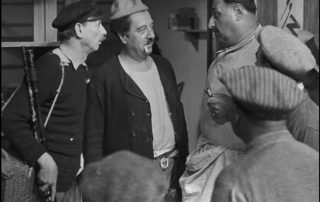
Duvivier directs with such cinematic energy – it is almost a bonus to have a narrative this strong This is a story of a murder -opening short tracking shot showing the body and Michel Simon as witness. It has elements of Hitchcock (it could easily be called Rear Window- though this is eight years before that film of course) and mob violence like The Ox-Box Incident (1942) or Fury (1936 from Lang). It is quite a compliment to say that both Lang and Hitchcock could have made this movie (and if they were aware of it- I’m sure they

Panique – 1946 Duvivier2021-03-06T12:34:44-05:00

César – 1936 Pagnol

The third and final film in The Marseille trilogy – the only one directed by Pagnol himself though that doesn’t make a big difference either way. All three films are led by the writing and performances—the stereotype exists that writers do not make very good directors as they are not being overly concerned with cinematic style—from Pagnol to Aaron Sorkin—it seems natural. Billy Wilder once said something like “The best director is the one you don't see” Great scenario writing here- and lines like “did you sin long?” (the priest asks) and the answer is “five or six minutes”-

César – 1936 Pagnol2021-03-07T14:56:56-05:00

Fanny – 1932 Allegret

The middle film in The Marseille trilogy from Marcel Pagnol. The story picks up right where the first film (Marius – 1931) left off with Fanny fainting as Marius leaves for a long trip as a sailor to Australia Set in the Bar de la Marine --- Raimu plays César—and he is a very good actor (apparently Welles called him “the greatest actor who ever lived”)—when he and the Fanny character embrace you can feel his pain the anger simultaneously The dialogue is always sublime—“the boy couldn’t measure a drink (he was a bartender) and now he’s measuring the

Fanny – 1932 Allegret2021-02-08T20:08:42-05:00

Marius – 1931 Alexander Korda

Though Korda (Austrian/Hungarian director who is about to go to England after this and make a reasonably-sized splash) is behind the camera- this is Marcel Pagnol’s (his play, screenwriter) work. This is the first leg of the The Marseille Trilogy (Marius in 1931 directed by Korda, Fanny in 1932 directed by Marc Allégret and César in 1936 directed by Pagnol himself). The direction here is mostly point and shoot- a few nice dissolves as we get closer to the bar (main setting) in the port city of Marseille. 1.2 to 1 almost total box aspect ratio- different than the

Marius – 1931 Alexander Korda2021-03-04T16:30:09-05:00

Possessor – 2020 B. Cronenberg

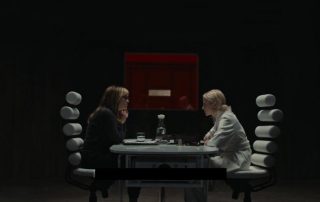
The last name and reality-bending premise may make you do a double take—yes—Brandon Cronenberg (son of David) is taking up the family business—mindf*ck cinema, disturbing and brainy. Possessor starts with a dialogue-less action sequence- blue jumpsuits against the golden background of a posh hotel Certainly even without the last name it is hard not to think of Videodrome, eXistenZ (technology tied to the body)—but I don’t think others like Inception (corporate espionage, memory-blending) or even De Palma’s Mission Impossible are out of place as a comparisons either. Brandon Cronenberg’s work is darker (and eerier) than Nolan—sexualized and

Possessor – 2020 B. Cronenberg2021-03-03T14:45:01-05:00

Kiss the Girls – 1997 Fleder

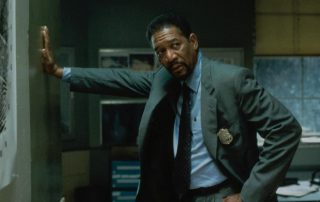
There are some moments when it is up to the source material and direction not to let a talented actor down. In 1997 Morgan Freeman is still in his absolute prime. He’s a late bloomer in general (he’s 60 years old here). Though he has been acting since the 1960’s (an extra in Lumet’s The Pawnbroker in 1964) it wasn’t until 1987’s Street Smart that he had his first real archiveable film and worthy performance. In 1989 it was Driving Miss Daisy and Glory. In 1992 he had Unforgiven, in 1994 Shawshank, in Seven in 1995. Here in Kiss

Kiss the Girls – 1997 Fleder2021-02-21T13:37:36-05:00

Misery – 1990 Reiner

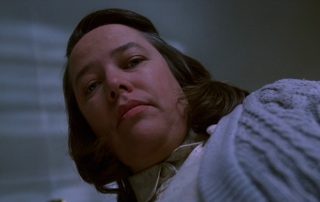
Rob Reiner is responsible for two of the very best Stephen King adaptations- 1990’s Misery and 1986’s Stand by Me. Both are part of Reiner’s phenomenal streak of good movies going from 1984’s This is Spinal Tap to 1992’s A Few Good Men As if Reiner and King weren’t enough already—they loaded up on the talent involved and tapped the shoulder of William Goldman to write the screenplay (Butch Cassidy and the Sundance Kid, All the President’s Men) and they get a herculean effort from Kathy Bates (Academy winner for 1990). Bates had been around for a decade (she

Misery – 1990 Reiner2021-02-28T14:50:34-05:00

Lydia – 1941 Duvivier

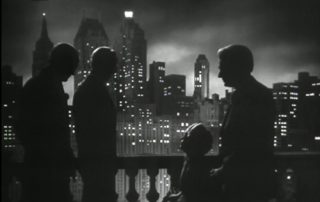
Julien Duvivier’s Lydia can’t quite be called a remake of Un Carnet de Bal (also known as Christine from 1937). Duvivier remade a number of his silent films into talking films—but this is more a spiritual remake—instead of ten men we have three here (well four really), and the lead female isn’t a widow, she ran a school for blind children instead of marrying any of these men. But all the dialogue, scenarios, roles, have changed. The great Ben Hecht had a hand in the screenplay (as he did in hundreds of films during the era) A very fetching

Lydia – 1941 Duvivier2022-09-11T17:45:42-04:00
Go to Top