Force Majeure – 2014 Östlund

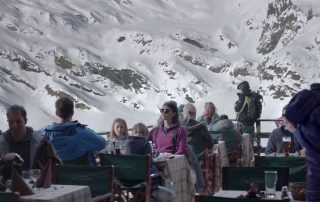
Force Majeure centers around a 3-minute shot that starts at the 11-minute mark. This Swedish family is sitting at an outdoor restaurant at a ski resort when an avalanche starts heading towards them. The man Tomas (played by Johannes Kuhnke) leaves his wife Ebba (Lisa Loven Kongsli) and their two kids. In the few minutes before the shot, and certainly the 90+ minutes that follow—we track the difficult conversations, awkward dinners, and nuances of a relationship after the fallout. The moment looms so large when hearing about it, it causes other people to debate and fight Östlund stretches out
Force Majeure – 2014 Östlund2021-02-28T12:51:11-05:00

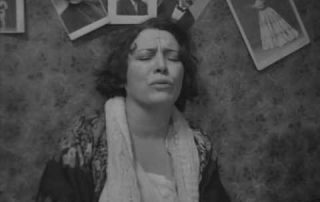
Un carnet de bal – 1937 Duvivier

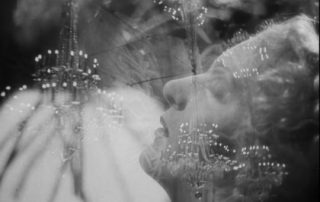
With Pépé le Moko coming out earlier in 1937—it certainly appears that this is at least the brightest of Julien Duvivier’s star—the moment he had the most clout and stature The narrative plays out similarly to Jim Jarmusch’s 2005’s Broken Flowers- Marie Bell plays Christine (another common title for the film)—it is a step by step episodic structure- Christine, now a widow, is going back to all of the old dancing partners and crossing them off on a list (10 total- but Duvivier doesn’t show all 10). Heavy wipes in transitions Floral arrangement in the frame of Christine’s mansion—I

Un carnet de bal – 1937 Duvivier2021-02-28T17:19:29-05:00

The Rise and Fall of Legs Diamond – 1960 Boetticher

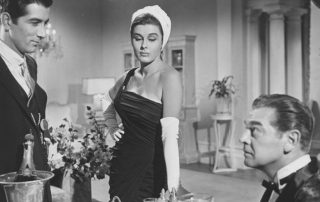
Budd Boetticher is only one year removed from his best work- 1959’s Ride Lonesome. So, you would figure working with talented DP Lucien Ballard (The Wild Bunch) would yield better results The Rise and Fall of Legs Diamond is a solid film (otherwise it wouldn’t be here in the archives)- but it does make you wish Boetticher had stuck to the western where he was most comfortable. Lead actor, Ray Danton doesn’t help. The handsome Danton plays Jack ‘Legs’ Diamond—and he just can’t act. Luckily (or perhaps BECAUSE of Danton)- there isn’t much to Diamond as a character- he’s

The Rise and Fall of Legs Diamond – 1960 Boetticher2025-06-15T20:21:52-04:00

Pépé le Moko – 1937 Duvivier

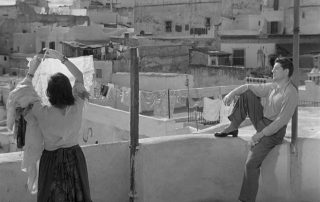
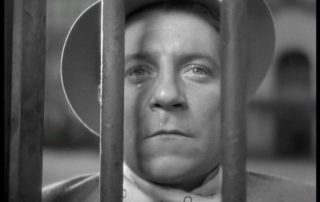
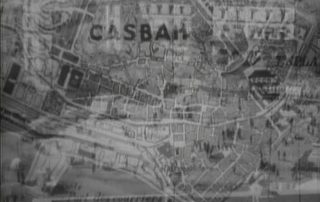
Pépé le Moko succeeds on three separate levels. First, Jean Gabin is undeniably commanding as the titular hero, gangster, and lover (this is largely a romance after all). The atmosphere of the Casbah of Algiers (some on-location exhibition shots, most shot on the studio lot) is material—it is cliché, but the setting is certainly a character in the film. Lastly, Julien Duvivier’s (who also gets credit for the aforementioned atmosphere) roving camera adds a kinetic element to the film that you couldn’t get if the acting, screenplay, and scenery were in the hands of  a lesser director. Duvivier does

Pépé le Moko – 1937 Duvivier2021-02-26T15:09:09-05:00

La tête d’un homme – 1933 Duvivier

La tête d'un homme, also known as either A Man’s Neck or A Man’s Head is a superb seedy crime story. Duvivier’s camera is constantly floating around—Murnau-like mobility (this is before Ophuls and Duvivier is a peer with Renoir) with Hitchcock’s keen focus on the details (Duvivier is telling you with the eyeline of the camera exactly what particulars of the crime he wants you to look at). Julien Duvivier is one of the “big five” of classic French cinema (Renoir, Carne, Clair, Feyder) The film starts on Willy (Gaston Jacquet) – and tracks with him as he strolls

La tête d’un homme – 1933 Duvivier2021-02-24T13:33:26-05:00

Martin Eden – 2019 Marcello

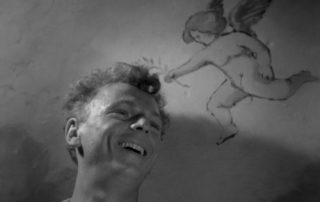
Martin Eden is a sweeping biopic transposing Jack London’s novel and setting it in Italy Pietro Marcello, like Kelly Reichardt and others, uses 16mm here. We’re at an interesting point in history when some are using 16mm like the 1960’s again. The film stars Luca Marinelli as the titular character—broken into two distinct halves. First it is about his origins- his struggle becoming a writer, lovestruck, romantic, ambitious, poverty-stricken. The second half of the film he has arrived, he is a renowned author, rich, but beaten down by life. His hair is now bleached his teeth are rotting. He’s

Martin Eden – 2019 Marcello2021-02-18T14:20:36-05:00

Poil de carotte – 1932 Duvivier

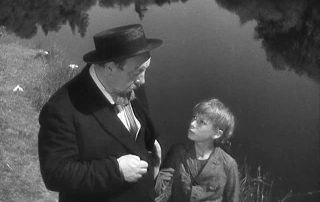
Julien Duvivier remade his own silent film here for Poil de carotte—Harry Baur is back again as Monsieur Lepic—the father of the title character (carrot top)—his son, who is an unloved child-- ignored by Baur’s Lepic and abused by the mother (played by Simone Aubry) Like most of Duvivier’s work it is an unhappy fiction for the most part His always-active camera opens on a tour of the house—floating around lyrically from side to side Duvivier uses the montage, the close-up, the dissolve and the camera movement—here he leans in and out of the family pictures of the individuals

Poil de carotte – 1932 Duvivier2021-02-01T17:41:41-05:00

David Golder – 1931 Duvivier

A biopic filled with cinematic bravado that would make for a good double-billing with Welles’ Citizen Kane made a decade later The first sound film for Julien Duvivier – already a veteran with 10+ silent films under his belt—the first film with star Harry Baur as well—a talented big actor – sort of Emil Jannings (more subtle) meets Rod Steiger The first sound film and Duvivier isn’t scared at all by the new technology- he’s showing off in the opening montage—train whistles, loud, heavy dissolves with the noise- very busy- a “Golder is a scoundrel” and “Golder is a

David Golder – 1931 Duvivier2021-02-20T13:01:53-05:00

The Dig – 2021 S. Stone

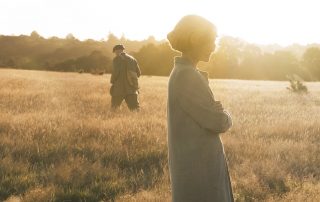
Simon Stone’s The Dig features stellar performances, magic hour photography, and some reoccurring overhead shot choices Clearly Stone is an admirer of Malick- sun flares on the lens, the camera pushing through the blades of grass and shots at just the right time of day (magic hour)--- this is the most sunshine I’ve seen in a British film- haha Set in 1939—based on a true story of an archeological dig and find just as the outbreak of war against the Nazis looms--- certainly the backdrop of war adds to the story’s immediacy Stone goes to the overhead angle several

The Dig – 2021 S. Stone2026-02-11T07:22:44-05:00

Judas and the Black Messiah – 2021 S. King

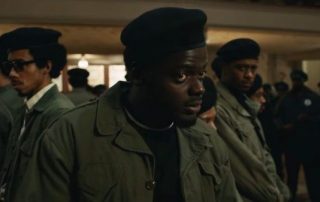
With Daniel Kaluuya, LaKeith Stanfield and even to a lesser degree here Jesse Plemons- Judas and the Black Messiah features three of the most talented male actors under the age of 35 It is based on a true story- set in the late 1960’s Chicago. Kaluuya gives a powerhouse performance as the Black Messiah, Black Panther Fred Hampton. The film is probably more of a achievement for him than his co-stars (or anyone else involved). Kaluuya can “sell salt to a slug” as Stanfield’s character says. Kaluuya’s charisma and gift for speech-making is apparent throughout. In particular, the “I

Judas and the Black Messiah – 2021 S. King2021-04-18T10:41:58-04:00

Memories of Underdevelopment – 1968 Gutiérrez Alea

It is fascinating that the two words in the title “Memories” and “Underdevelopment” describe the two distinct facets of Tomás Gutiérrez Alea’s work. You can draw a direct line between Alain Resnais’ Hiroshima Mon Amour (1959) and the “memories” portion of this film. Hiroshima is clearly a massive influence- that’s half the film. The other half is a documentary blending – a sort of essay film- on early 1960’s Cuba. Handheld camera at the club opening- a freeze on the final shot of the opening credits Splice editing remember his wife and a past lover without dialogue—Resnais’ influence Documentary

Memories of Underdevelopment – 1968 Gutiérrez Alea2021-02-05T16:30:11-05:00

Vitalina Varela – 2019 Costa

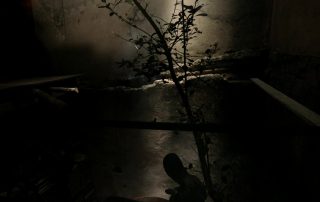
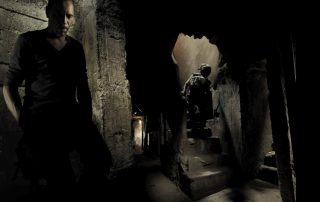
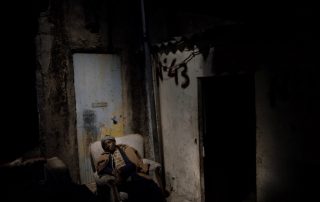
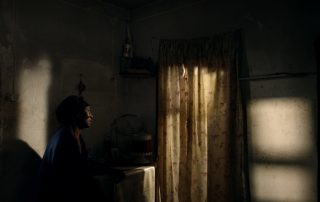
Pedro Costa’s Vitalina Varela is one of the most visually accomplished films of the of the 2010s. With Horse Money in 2014 he shifted to higher definition video photography (Vitalina is pristine – immaculately crisp), this sort of sullen surrealism and structured control in the performances and mise-en-scene. These are drastic changes from the fuzzy-pixelated, observed-reality docudrama style of In Vanda’s Room and Colossal Youth. The subject (immigrants from Cape Verde to Lisbon- the Fontainas section-- immense suffering and poverty) is the same, but the approach is very different. Vitalina Varela goes even farther than Horse Money in design

Vitalina Varela – 2019 Costa2026-01-20T07:28:07-05:00
Go to Top