Horse Money – 2014 Costa

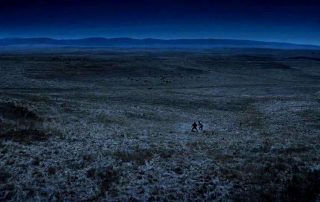
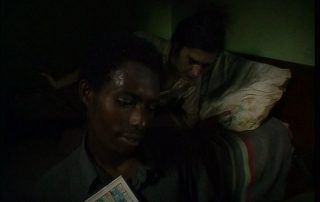
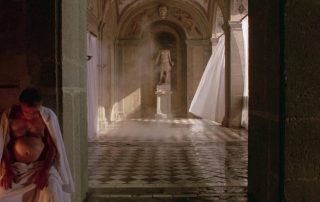
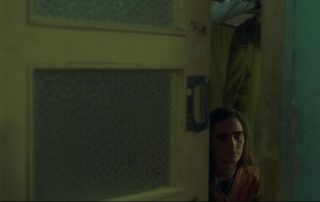
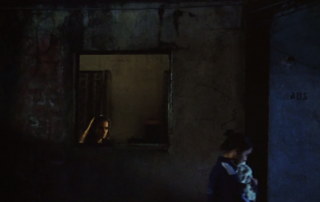
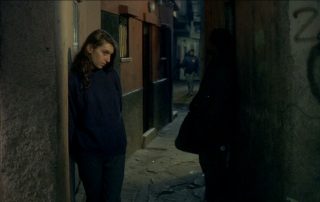
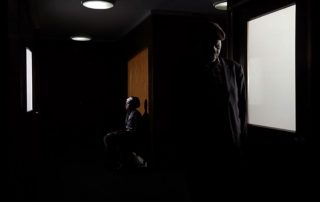
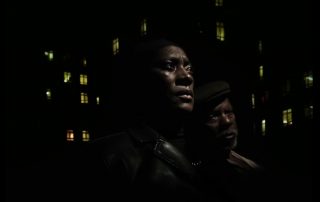
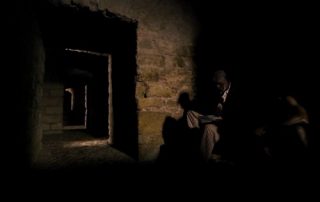
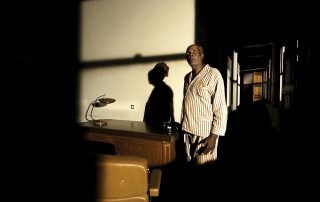
Horse Money is easily Pedro Costa’s greatest triumph to date in 2014 In many ways it is similar to his previous work—his Fontainhas trilogy (which has now been expanded beyond a trilogy because all of his films from 1997 are about similar subjects and set in Fontainhas)- Ossos, In Vanda’s Room, Colossal Youth. Horse Money is clearly the work of the same, single-minded (and that is a compliment) auteur. Costa is concerned with the Cape Verde Immigrants, poverty, regret, suffering and sorrow. Characters play themselves (Vanda isn’t in this one but Ventura is) and setting (darkly lit) is as
Horse Money – 2014 Costa2021-02-14T12:53:05-05:00

The Big Country – 1958 Wyler

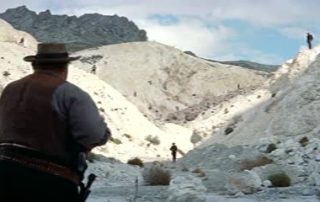
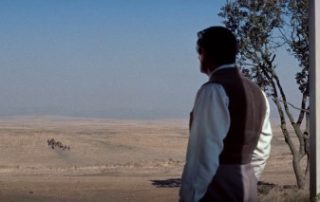
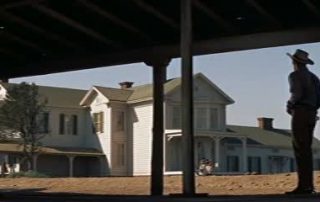
The Big Country is a fitting name for Wyler’s audacious, expensive, open-air western. It is closer to Stevens’ Giant (1956) in terms of expanse (beyond actually)- especially in comparison with Boetticher’s work or Anthony Mann during the same strech. This is an epic, Wyler is working on a massive canvas, 166-minutes, almost all exterior landscapes, 25-50 immaculate long shots with man almost swallowed up by the size of the country Wyler is working on a massive canvas Even the performances are big- the dueling (albeit in a pretty stiff casing) baritones of Gregory Peck (Peck’s 1946 Duel
The Big Country – 1958 Wyler2021-01-27T15:54:37-05:00

The Incident – 1967 Peerce

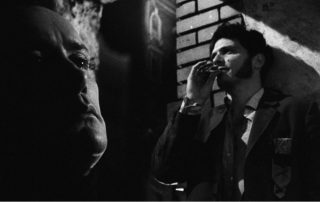
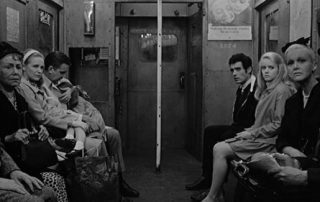
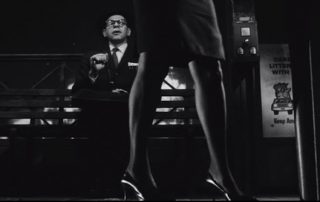
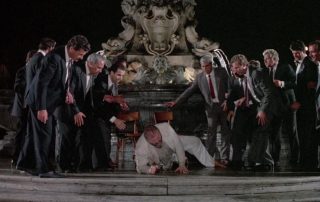
The Incident almost plays out like a sociological study (or an exercise in sadism) more than a story. Two thugs, Martin Sheen (in his debut—that haunting laugh) and Tony Musante basically take a subway car hostage and torture them for an hour+ (the first sections of the film are introducing the all the players) The Incident almost plays out like a sociological study- or an exercise in sadism Larry Peerce (mostly television work before and after- the 1960’s shows Batman and Branded (if you know Lebowski that should make you smile)) shot it in a gray black

The Incident – 1967 Peerce2021-02-10T15:16:09-05:00

1917 – 2019 Mendes

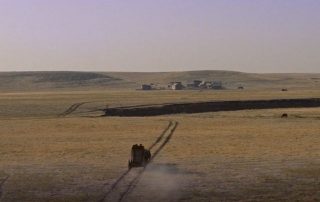
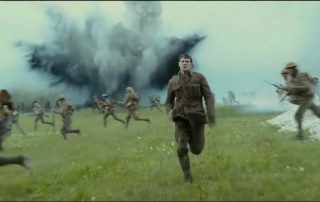
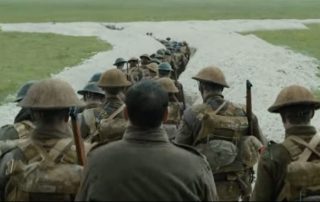
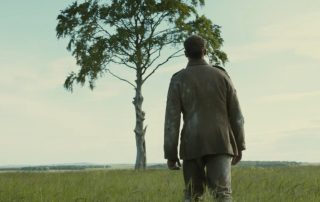
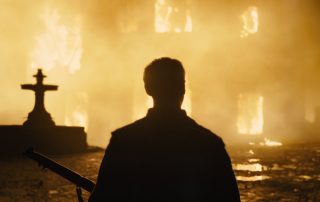
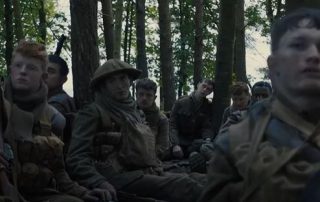
1917 is a major work from Sam Mendes - a director whose resume now seems even more fully rounded out The camerawork by Mendes and Roger Deakins is front and center in the praise (and oddly enough the boldness of their endeavor actually turned some critics off somehow) – this is muscular filmmaking—ambitiously cinematic--- but there is plenty of warranted praise deserved for the narrative (some of the quieter moments are the strongest), for the writing, acting, and the visceral effect on the viewer. I’m not here to evaluate the evaluators- but much of the criticism may be from the

1917 – 2019 Mendes2026-01-16T07:21:44-05:00

In Vanda’s Room – 2000 Costa

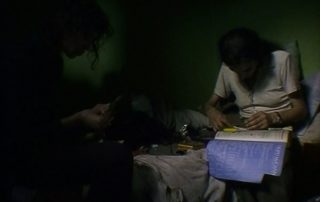
There’s an interesting case to be made that In Vanda’s Room is a documentary. Much of Kiarostami’s work, including Close-Up, is similar. There’s actually a forward-moving narrative in Close-Up (though that isn’t the reason a film is or isn’t a documentary). Here the actors (including Vanda) are playing themselves, there’s no story, it is shot on location and we’re capturing hours of authentic conversations. The lighting, the coloring, and setting is “controlled” (or chosen) by Costa and that is far and away his greatest triumph No musical score, observational Sort of Dogma 95 (this is Costa’s first work on

In Vanda’s Room – 2000 Costa2021-02-05T21:38:47-05:00

The Belly of an Architect – 1987 Greenaway

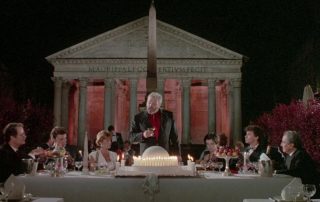
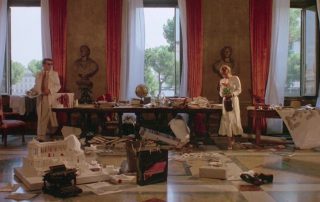
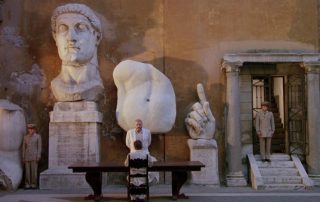
Between 1985 and 1989 there may have been no greater auteur in world cinema than Peter Greenaway. Certainly Kieslowski made Dekalog during this time, you have Cronenberg (The Fly, Dead Ringers), Gilliam (Brazil, The Adventures of Baron Munchausen), and Woody Allen (Purple Rose, Hannah and Her Sisters, Radio Days, Crimes and Misdemeanors). Of course, I have the benefit of selecting the specific date range for Greenaway’s argument here-- but still- to be the best over any five-year stretch in the artform's short history should not be ignored. I haven’t been able to locate Drowning By Numbers (1988) but Greenaway

The Belly of an Architect – 1987 Greenaway2021-02-05T14:36:24-05:00

12 Angry Men – 1957 Lumet

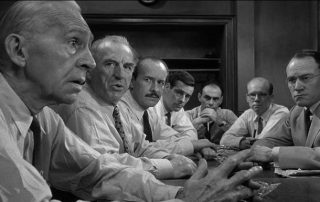
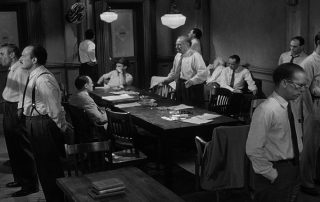
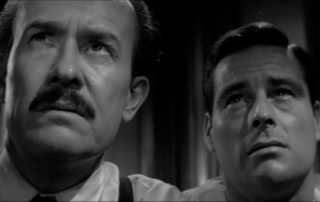
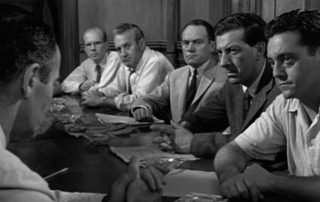
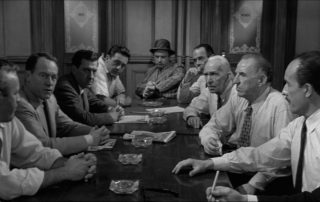
The great achievement of Sidney Lumet’s 12 Angry Men is that despite being based on a play, set in a total of three locations (with 98% of it coming in one room), and peppered with pages and pages of dialogue—it is absolutely cinematic—ambitiously strategized and executed One of the great debuts of the 1950’s--- from the era obviously the guys from the French New Wave are going to blow everyone’s socks off in a few years but there aren’t many better than Lumet’s. At this point Lumet had years of television experience. There are many aspects to praise here.

12 Angry Men – 1957 Lumet2021-02-04T19:21:38-05:00

Swallow – 2019 Mirabella-Davis

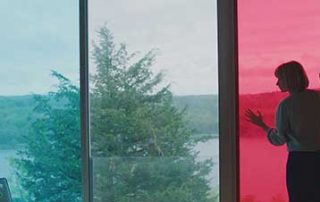
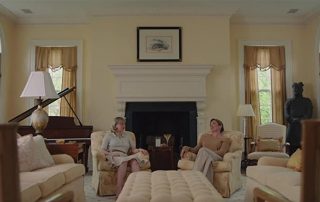
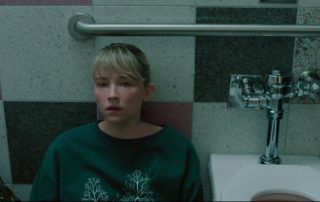
Carlo Mirabella-Davis’s Swallow is one of the most promising debuts in recent years (this side of Columbus or Hereditary maybe). Haley Bennett plays Hunter - a housewife (and soon to be mother) dealing with (or rather not dealing with) a psychologically complex past and trapped in a suffocating life/marriage she can’t get out of. It is clear from the outset with Mirabella-Davis’ meticulously designed and cleaned interiors (they’re stunning) and overhead shots of an unhealthy amount of detail put into the meal preparation-- that she is ailing The film seems like a spiritual cousin (nephew maybe given the generation

Swallow – 2019 Mirabella-Davis2026-01-22T18:06:36-05:00

The Silent Partner – 1978 D. Duke

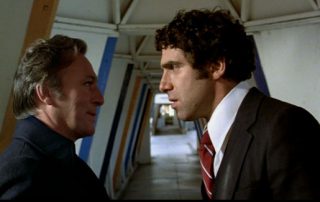
Decades before L.A. Confidential Curtis Hanson wrote this very clever screenplay It is a game of cat and mouse between the crafty, yet peculiar Elliot Gould character, and the menacing Christopher Plummer character. Gould’s character isn’t one you see often in these types of films (the entire film zigs when you think it is going to zag)- it is refreshing- he’s no victim and he’s not macho either. He reads the principles of chess and collects exotic fish. Plummer’s eyes (complete with mascara, eyeliner)—terrifying- in several long scenes he makes a point of not blinking—in a few scenes

The Silent Partner – 1978 D. Duke2021-01-24T14:31:09-05:00

One Night in Miami… – 2020 R. King

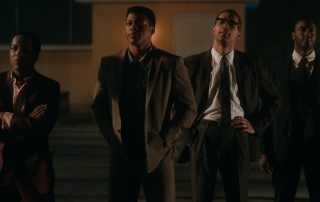
Phenomenal veteran actress Regina King (Jerry Maguire, Ray, If Beale Street Could Talk) has her directorial feature debut – One Night in Miami... Kemp Powers adapts his own stage play for the screenplay (he’s having a big 2020 with this and Soul – which he also co-directed) It is a fictional work but based on a true meeting between four (4) of the most important (and talented) figures of the second-half of the 20th century: Malcom X (Kingsley Ben-Adir), Jim Brown (Aldis Hodge), Cassius Clay (Eli Goree), and Sam Cooke (Leslie Odom, Jr.) It takes place, like the title

One Night in Miami… – 2020 R. King2026-02-23T07:24:36-05:00

The Cameraman – 1928 Keaton, Sedgwick

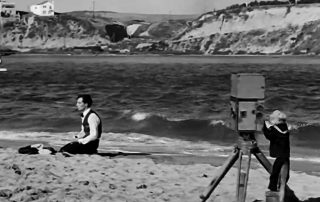
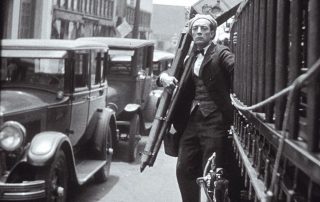
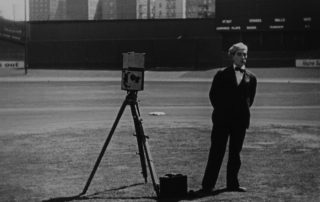
Buster Keaton’s 76-minute comic romance is his last hurrah. In total he’d work for 50 years in movies, have 150 credits or so to his name, but the sun really shined brightly on him and his work between the years 1923 and 1928—six short years Edward Sedgwick is credited but by all accounts Buster took over behind the camera after many failed attempts by Sedgwick The film was lost in 1951—so the restored version (the 4k transfer is awesome) we have today is missing three minutes It may be the closest film to a Chaplin narrative- Keaton plays the

The Cameraman – 1928 Keaton, Sedgwick2021-01-20T13:48:16-05:00

Ossos – 1997 Costa

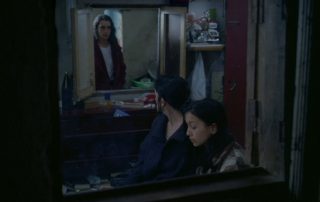
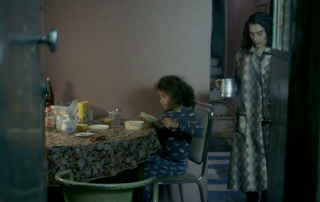
Ossos is Pedro Costa’s third film, and first in the Fontainhas trilogy – the name of a destitute section of Lisbon. Costa largely uses a stationary camera (he has one very long tracking shot of the father walking down the street), deliberately paced—often objects or people will move into the frame—not the other way around The DP is Emmanuel Machuel who worked with Bresson on L’Argent and Costa, like Bresson, uses non-professional actors (and mostly throughout his work—aside from Down to Earth) Heavy realism in the themes- suicide and poverty--- on paper it sounds like a Dardenne film (they

Ossos – 1997 Costa2021-06-11T17:31:40-04:00
Go to Top