Dekalog – 1989 Kieslowski

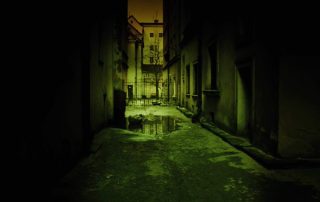
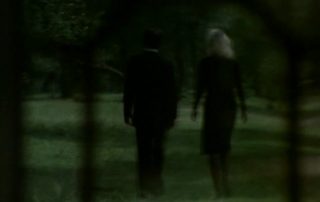
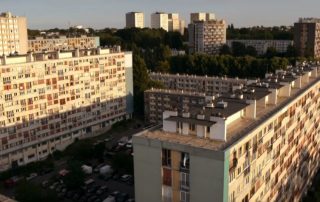
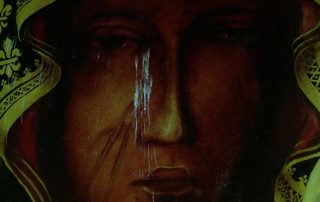
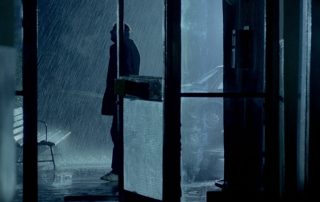
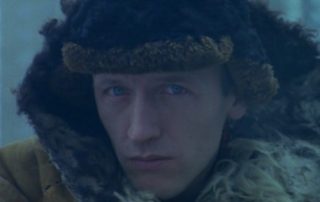
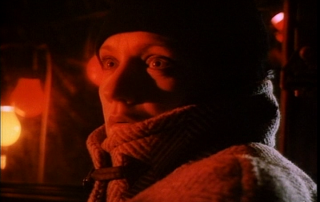
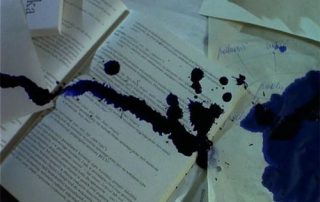
With Tarkovsky gone (died in 1986), Bresson’s last archiveable film behind us (1983) and with Bergman’s last major work in the rearview as well (1982-also, partially, through television)—the stage was clear for Kieslowski to take the mantle of religious cinematic artist. Dekalog (and the A Short Film About…connected projects) is Kieslowski’s first masterpiece. It is an updating of the Ten Commandments -- ten individual contemporary tales. Some of the commandments correlate to the episodes very literally while others ruminate the on aspects of the commandments or use them as a jumping off point and deviate. It is an almost
Dekalog – 1989 Kieslowski2021-06-15T23:20:02-04:00

A Short Film About Love – 1988 Kieslowski

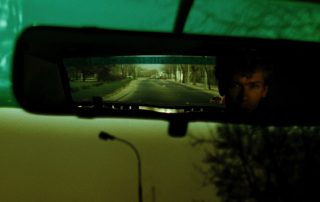
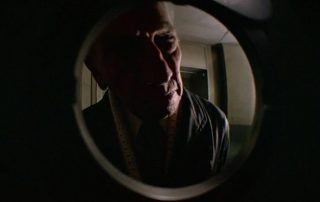
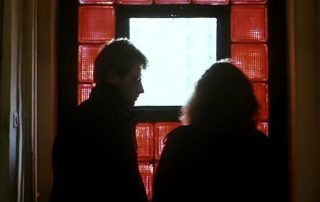
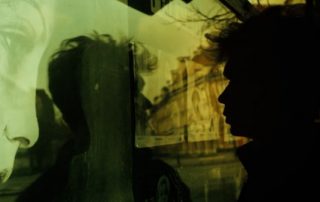
The sixth film in Kieslowski’s Dekalog – a series of ten moral tales about or surrounding each of the ten commandments. This is a companion to episode five- A Short Film About Killing and both were expanded from the normal 55-60 minutes to a longer 80-90 minute format. This is “thou shalt not commit adultery” This is a slow-burn film about a voyeur and an unhealthy obsession. It is nearly impossible to talk about cinema as voyeurism and not bring up Hitchcock (whether it is Rear Window, Vertigo (which leads you to Lynch and Blue Velvet), or Psycho or

A Short Film About Love – 1988 Kieslowski2020-10-17T13:28:33-04:00

A Short Film About Killing – 1988 Kieslowski

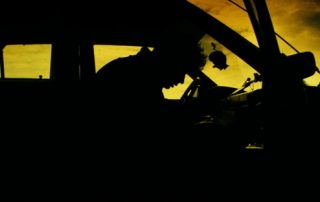
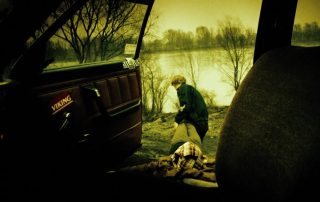
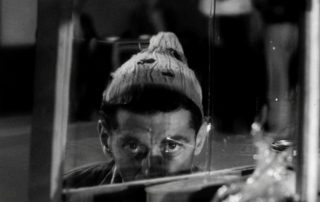
A severe 84 minutes shot through a hazy green/yellow filter with heavy shadows. It is some of the best 84 minutes of cinema in the 1980’s—pure and perfect. A severe 84 minutes shot through a hazy green/yellow filter with heavy shadows. It is some of the best 84 minutes of cinema in the 1980’s—pure and perfect. This is episode V in Kieslowski’s Dekalog series. It and episode VI (A Short Film About Love) were made into longer films. It works both as a standalone film and in the greater context of the series. Starts with a dead

A Short Film About Killing – 1988 Kieslowski2020-10-15T22:39:09-04:00

The Conjuring 2 – 2016 Wan

James Wan is very active with the camera in The Conjuring 2. He gives a tour of the Hodgson (where 75% of the film takes place) pulling in and out of these synthesized rolling tracking shots. It is effective- I think it makes not only for some beautiful shots, but connects to the eerie otherworldliness of the house married to the narrative Wan takes the same concept above for the house to Vera Farmiga’s Lorraine Warren character. She and the house both “shine” to use the concept from Kubrick’s horror masterpiece and it would make sense that Wan often

The Conjuring 2 – 2016 Wan2021-04-18T10:42:59-04:00

The Land of Steady Habits – 2018 Holofcener

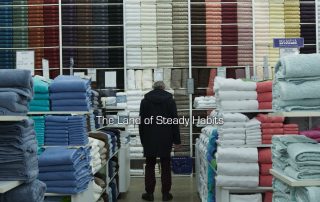
Nicole Holofcener has been doing this for 20+ years at this point—this is her sixth archiveable film and all six are in the archives. Five years off between this and Enough Said in 2013. This is her first feature I believe without Catherine Keener- her muse/surrogate/collaborator There is a really strong frame right in the opening (above). It is a color-coded wall at Bed Bath and Beyond (used for the poster). It is both beautiful to look at and tied to the narrative- Ben Mendelsohn’s plays this absolutely lost Anders character and the anal-retentive corporate attention to detail represented

The Land of Steady Habits – 2018 Holofcener2020-10-13T17:52:33-04:00

Walking and Talking – 1996 Holofcener

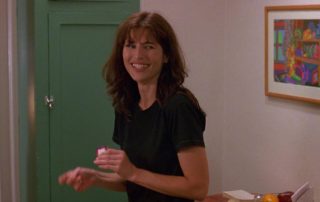
The debut film from Woody Allen acolyte Nicole Holofcener The Miramax logo, Billy Bragg on the film score, Liz Phair on the soundtrack--- yes- this is a 1990’s indie movie gabbing in a video rental place, a coffee shop, this is the year after fellow Woody acolyte Noah Baumbach’s Kicking and Screaming (the names are enough to make you think about together). Seinfeld is on. Anne Heche is a analyst and Keener’s character goes to one—certainly a Woodyism First archiveable film for star Catherine Keener—this is three years before Being John Malkovich- she’s excellent here Star 69 and diaphragm

Walking and Talking – 1996 Holofcener2020-10-10T12:27:32-04:00

Nothing Sacred – 1937 Wellman

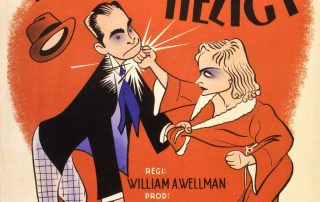
William Wellman may have directed but it is also a David O. Selznick picture (the reason it is in color) and a Ben Hecht screenplay (wrote Notorious and about 100 other titles either credited or uncredited that are all well written) and one of his finest Again- very rare for a film to be in Technicolor in 1937- this is the year of Snow White and the Seven Dwarfs – Becky Sharp is 1935—even rarer for a comedy. Being in color- we get Carole Lombard’s great red hair (and the camera dotes on her legs in every scene, too)

Nothing Sacred – 1937 Wellman2020-10-10T12:57:00-04:00

Bombshell – 1933 Fleming

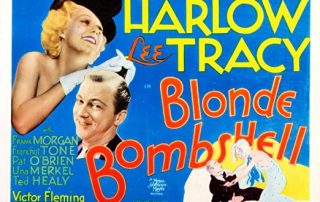
A fast-paced raucous comedy that would fit well in in any study of screwball comedy (we’re at the very origins of it here in 1933 as this is the year before It Happened One Night and Twentieth Century) or in a double-bill pairing with David O. Russell’s work It is an inside Hollywood picture (What Price Hollywood? is the year before), settings include the studio backlot, a Hollywood mansion, the Coconut Grove club--- based loosely on Clara Bow (they call her the “It” girl) and star Jean Harlow herself. There’s not really a plot. The jokes just fly at

Bombshell – 1933 Fleming2020-10-09T19:51:26-04:00

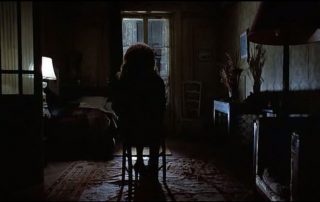
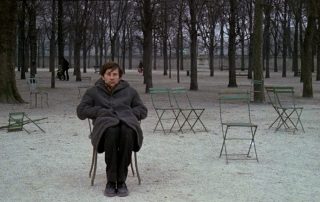
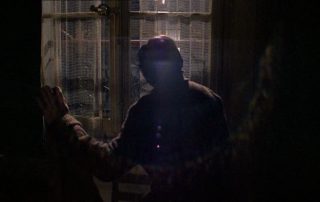
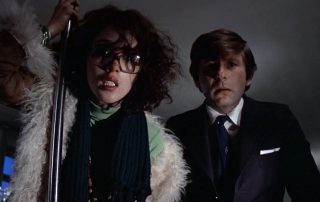
The Tenant – 1976 Polanski

A gigantic achievement - the final chapter of Polanski’s unofficial urban paranoia set of films best known as the apartment trilogy with Repulsion (1965), Rosemary’s Baby (1968)—and I am not sure all three aren’t masterpieces If Polanski is the most talented of Hitchcock’s acolytes (and there are others for sure- including the imposingly gifted De Palma)- then it is fitting to refer back to my comment on Vertigo where I talk about how that film is the greatest crystallization of Hitchcock’s exposed neurosis on screen--- this is certainly that for Polanski—a wild ride, indeed Polanski plays the Trelkovsky himself—a

The Tenant – 1976 Polanski2025-05-02T19:17:28-04:00

Cairo Station – 1958 Chahine

A superb film from Egyptian director Youssef Chahine—fast-paced, engaging, and turns into a wonderful thriller with an edge in the final act It is edited like a Capra’s It Happened One Night (we have a lot of fast motion photography here actually)- low average shot length, and dialogue just as witty—but the subject matter material turns into something much heavier- again, it starts off with the witty light dialogue but turns into a Hitchcockian or Peeping Tom-like thriller about obsession Set in the titular location- a busy train station that matches (and aids) the films energy— a bustle to

Cairo Station – 1958 Chahine2020-10-08T15:12:38-04:00

No End – 1985 Kieslowski

Kieslowski’s fourth feature (made after but released third ahead of Blind Chance)- and four for four in the archives. This is an important first collaboration with co-writer Krzysztof Piesiewicz who would go on to work with Kieslowski on his remaining (and best) work An impressive opening scene- the posthumous voice-over of Jerzy Radziwilowicz’s Anek staring at the camera (so he’s on screen as a sort of ghost, not like William Holden in Sunset Boulevard) with Grazyna Szapolowska’s Urzula, his wife, lying on the bed in grief and the scene transitions to her This isn’t the Patrick Swayze/Demi Moore Ghost

No End – 1985 Kieslowski2020-10-05T13:35:49-04:00

Les Misérables – 2019 Ly

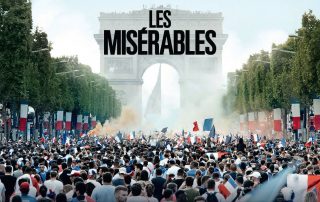
Not a direct adaptation of Hugo’s novel—a contemporary film that is certainly inspired by it- with the line “There are no bad plants or bad men; there are only bad cultivators” used in the finale The debut of Ladj Ly and one that shows promise—an exciting new voice—potent storytelling ability. Ly clearly can opera a crowd and has a skill for shooting on location. The opening is impressive- crowds gather, the flag prominently displayed (as clear as the Hugo line that ends the film), for a soccer rally--- a stunning frame with the flag on the Champs-Élysées The opening is impressive- crowds gather,

Les Misérables – 2019 Ly2020-10-05T13:15:01-04:00
Go to Top