

The Sweet Hereafter – 1997 Egoyan

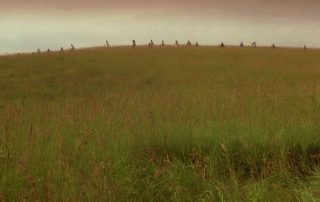
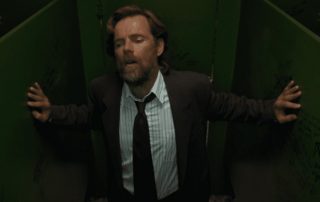
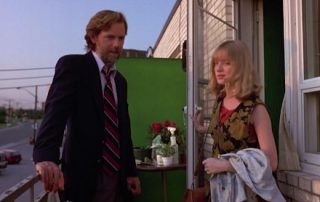
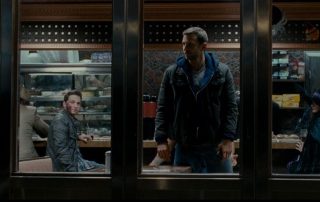
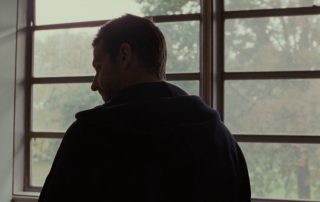
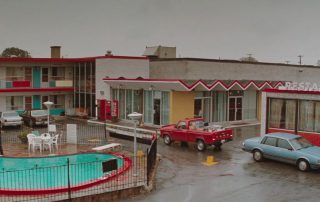
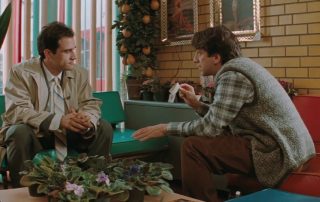
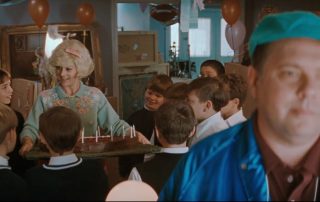
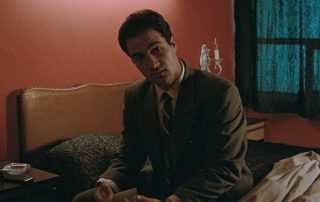
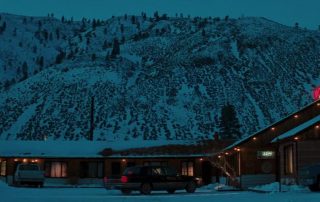
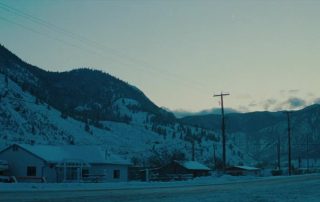
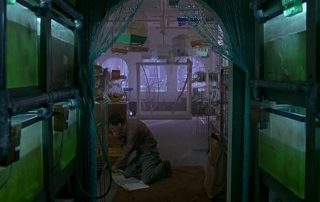
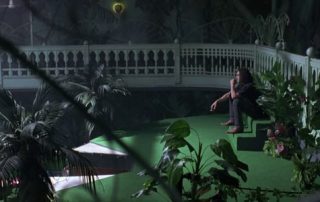
An emphatic follow-up to 1994’s Exotica—Egoyan proves himself to one of cinema’s finest directors during this stretch of time in the mid-1990’s—compiling now twin achievements of  pain and loss Like Exotica, this starts with a tracking shot during the credits laying out the color design that is going to fill the frame throughout the next nearly two hours. This is a washed out blue—almost like a sky blue- if you’re familiar with Steve McQueen’s work (McQueen debuted more than a decade after this film of course so this is a comparison, not influence)—it is the color in Shame. Egoyan
The Sweet Hereafter – 1997 Egoyan2020-09-21T13:46:06-04:00

Exotica – 1994 Egoyan

Egoyan’s Exotica is Altman’s Nashville or Sayles' Matewan- except for this ensemble mosaic has a jungle “exotic”-themed strip club meeting place as its linking device instead of a city Egoyan’s Exotica is Altman’s Nashville or Sayles' Matewan- except for this ensemble mosaic has a jungle “exotic”-themed strip club meeting place as its linking device instead of a city Egoyan’s sixth film- and strongest to date in my study It begins with these slow tracking shots during the titles, and then when we get into the club, Egoyan slowly pans the camera showing a line up of men’s

Exotica – 1994 Egoyan2021-09-07T20:28:02-04:00

Silver Linings Playbook – 2012 O. Russell

One of the great love stories of the 2010s featuring David O. Russell’s trademark rat-a-tat dialogue, the expansive, combative dysfunctional family (part actual family part surrogate), and some of the best acting of 2012. 10 characters standing in the small living—this is certainly the auteur from The Fighter – the tone, the chaos If you’re an actor and David O. Russell offers you a part- whether it is the lead or a supporting part with the ninth largest speaking part- take it- there is enough here for not only the brilliant Bradley Cooper and Jennifer Lawrence (this

Silver Linings Playbook – 2012 O. Russell2026-02-01T07:45:48-05:00

Calendar – 1993 Egoyan

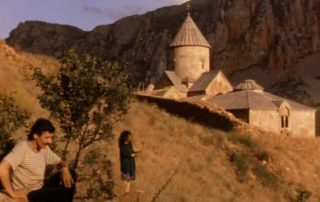
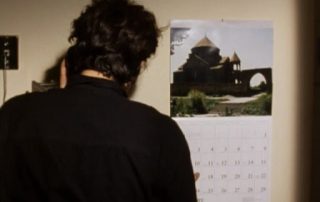
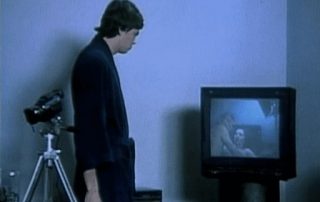
Egoyan’s fifth film is his greatest accomplishment in film form to date—this low-budget (he’s back to the 16mm/video oscillating like 1987’s Family Viewing), short film (74 minutes) casts a hypnotic structural spell The film bounces back and forth rhythmically between long static shots of beautiful churches and buildings in Armenia and a series of bad dates for our lead character (Egoyan himself) presumably after his marriage has fallen apart. So the static (great compositions) shots of the buildings (he’s making a calendar) are flashbacks of his marriage falling apart. In those segments he’s off camera with his wife and

Calendar – 1993 Egoyan2020-09-19T12:46:11-04:00

The Adjuster – 1991 Egoyan

From the opening titles, this, his fourth feature, is clearly a  step-up for Canadian auteur Atom Egoyan when it comes to budget and production value (for the first time no 16mm or video here) Egoyan is working again with his wife, actress Arsinée Khanjian, and again with the music of Mychael Danna—but this time Egoyan is working with Elias Koteas—a great actor, and an up and coming actor in 1991 – the most talented Egoyan has worked with It is challenging—not an easy film to wrestle with—the Koteas character takes his job seriously- philosophizing about grief and extending “help”

The Adjuster – 1991 Egoyan2020-09-19T12:07:18-04:00

The Seventh Seal – 1957 Bergman

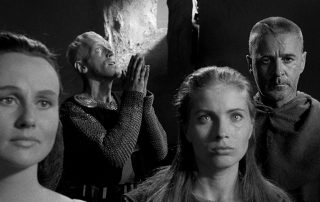
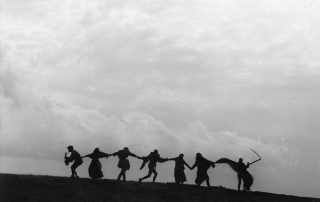
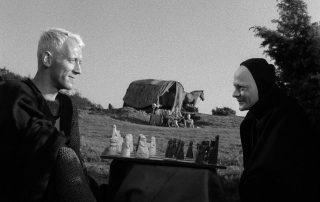
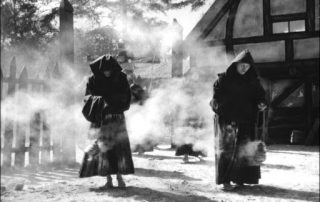
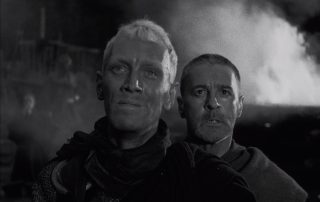
Bergman’s first masterpiece—and a landmark film in 1950’s cinema The title is from the Book of Revelations. This is a period film (complete with the plague, omens and judgment day) and Bergman made relatively few of these (Virgin Spring and he did not actually write that one- one of the few). So this is a bit out of the norm. Not saying he could not break it- but the mold is 1973's Scenes from a Marriage for Bergman. A gray film- severe in pictorial tint and mood—Bergman sets the tone with the choir reigning down during the opening as we set

The Seventh Seal – 1957 Bergman2022-03-28T19:26:36-04:00

The Rules of Attraction – 2002 Avary

Roger Avary’s The Rules of Attraction It is from Bret Easton Ellis’ second novel (between Less Than Zero and American Psycho) and lives in the same lexicon as Ellis’ work- Sean Bateman- played by James Van Der Beek here is the brother of Bale’s Patrick Bateman in American Psycho Starts with party— three intersecting lives and love stories (Van Der Beek, Ian Somerhalder, Shannyn Sossamon play the characters). Avary lines them all up in one shot actually at the party--- and then uses reverse photography (o great effect, and it is used throughout the film as a stylistic tool

The Rules of Attraction – 2002 Avary2020-09-18T18:00:23-04:00

Chinatown – 1974 Polanski

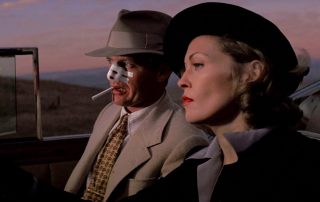
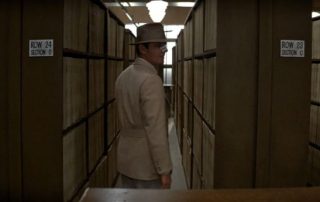
One of the greatest pure narrative films and screenplays in the history of cinema It is not simply a beautiful mechanism that is set-up and unravels--- it sprawls---nuanced and layered. You sometimes hear about a film being “a great novel but on film” and this would quality (though of course it is an original screenplay). A meditation on power, corruption—an intelligent political fog or labyrinth (featuring both incest and water rationing)-that updates (and improves upon) the best detective films of the studio system Hollywood era (superior detective films like Maltese Falcon). It is, first off- a stunning who-done-it.  It subverts

Chinatown – 1974 Polanski2025-12-22T07:37:54-05:00

Mâdadayo – 1993 Kurosawa

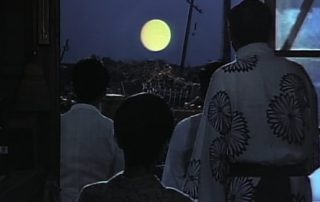
The final film from Kurosawa- 83 years old when he made the film-- one of the cinema’s greatest artists It is about a retired professor—he’s a simple man, a good man, sentimental (the cat stuff is a bit much)—like the old man in Dodes'ka-den he sort of welcomes burglars into his home- that sort of wisdom Hilarious little vignette about a horse staring him down while he buys horse meat from the butcher Lots of drinking and storytelling- a few acts turn into almost musical theater the group of his former students in a line like the funeral in

Mâdadayo – 1993 Kurosawa2020-09-16T16:03:00-04:00

Family Viewing – 1987 Egoyan

Like his debut Next of Kin in 1984- Atom Egoyan’s Family Viewing (second film) is a fascinating family drama – a sort of bizarre coming of age story about a seemingly disturbed young man coming to grips with an equally (or even more so) disturbed world. Works as sort of a family therapy---catharsis-- and a bit of a social critique and twisted thrilled Video plays a major role in the film and is largely the target of Egoyan’s critique (and the film oscillates between video and 16mm film—both ugly as hell) like Haneke’s Benny’s Video and Cronenberg’s Videodrome. Haneke’s

Family Viewing – 1987 Egoyan2020-09-15T13:18:06-04:00

Arizona Dream – 1993 Kusturica

Delightfully unpredictable-- Emir Kusturica’s English language debut is a blend of surrealism narrative stream-of-consciousness and (seemingly) improvisation Johnny Depp stars- and he’s good here, as are Faye Dunaway, Lili Taylor and Vincent Gallo (Jerry Lewis doesn’t fare quite as well) though this isn’t a major resume-builder for anyone involved. This is made during that stretch where Depp was an indie film god—taking on challenging films and roles, shunning his good looks, and working with auteurs who shared his creative spirit Iggy Pop song over the titles and a sort of a flight of a red balloon as Depp’s characters

Arizona Dream – 1993 Kusturica2020-09-14T18:08:33-04:00

Red Sun – 1971 Young

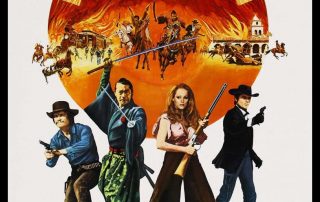
Red Sun features an impressive international star-studded cast consisting of Charles Bronson (US- the clear star of the film), Mifune (Japan), Delon (France) and Ursula Andress from Dr. No (Switzerland) and directed by early Connery Bond films director Terence Young (from England) It is a little sad to see Delon and MIfune especially play second fiddle to Bronson- but they all equip themselves well here- including Bronson (his is just by far the best written part/character). It is also a little strange to see Mifune in something so artistically light weight after all those years with Kurosawa. Young isn’t

Red Sun – 1971 Young2021-06-05T12:15:27-04:00
Go to Top