The Andromeda Strain – 1971 Wise

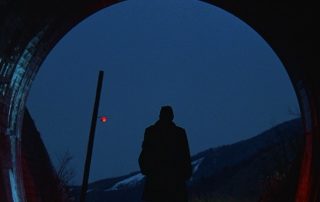
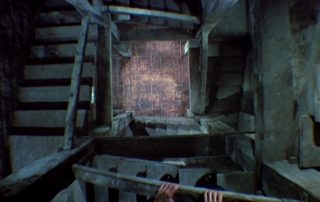
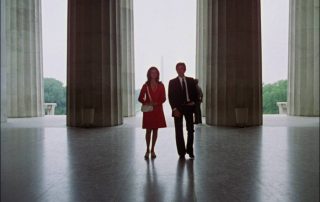
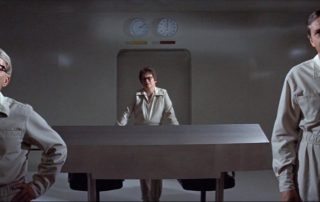
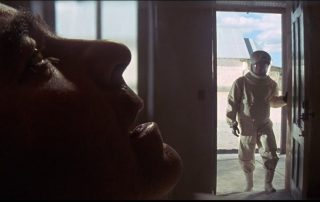
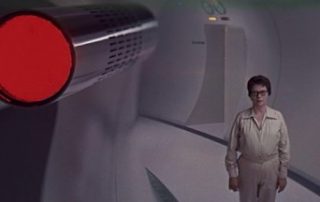
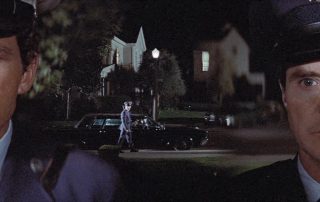
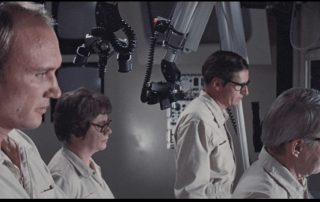
A buried treasure of a film- Robert Wise’s The Andromeda Strain is a not-so-distant cousin from Welles, Wyler and Kurosawa’s achievement in deep focus photography. Wise here uses the half convex glass attached to his lens—the split diopter—to an unprecedented artistic level Based on the 1969 Michael Crichton novel— with a special effects assist from Douglas Trumbull (2001, Blade Runner)- Wise is 10 years removed from West Side Story  and clearly inspired by Kubrick’s 1968 masterpiece Wise is known for his genre work—this is not his first foray into sci-fi—he did The Day the Earth Stood Still in 1951
The Andromeda Strain – 1971 Wise2020-09-13T12:16:42-04:00

The League of Gentleman– 1960 Dearden

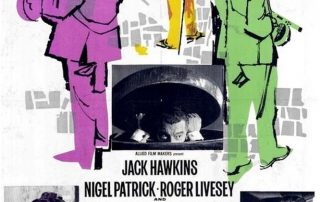
1960 may be the year of the heist film with The League of Gentleman in England and Ocean’s 11 on the other side of the pond. Basil Dearden (one of the co-directors of 1945’s Dead of Night) directs here-and he’d go on a nice little run after this including 1961’s Victim with Dirk Bogarde and 1966’s Khartoum Like Ocean’s – this has a rock solid cast- Jack Hawkins leads the ensemble, and then Nigel Patrick, Roger Livesey ( he is from (or rather is) Colonel Blimp) and Attenborough. If they make this film 10 years before – Livesey is

The League of Gentleman– 1960 Dearden2020-09-11T21:25:53-04:00

Dreams – 1990 Kurosawa

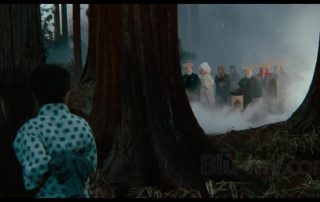
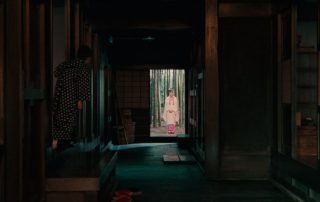
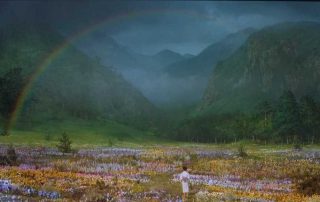
Like many anthology films—Kurosawa’s eight part Dreams is uneven--- the best sections are as good as anything he’s done since High and Low- but there are regrettable sections that may make you say “wow- this is bad” aloud. It is in the title- but it this is surrealism- and Kurosawa is playfully inventive for the most part—the first chapter makes me think of Hayao Miyazaki and some of the visuals recall Alejandro Jodorowsky’s best work Chapter one is the strongest— there are these gorgeous gargantuan trees. Kurosawa’s trademark depth of field composition (which we really haven’t seen much of

Dreams – 1990 Kurosawa2020-09-11T17:38:52-04:00

Vertigo – 1958 Hitchcock

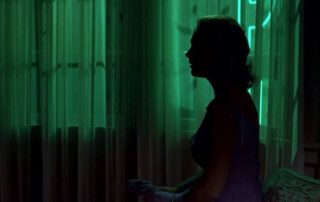
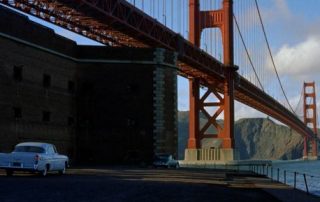
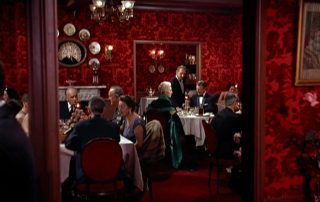
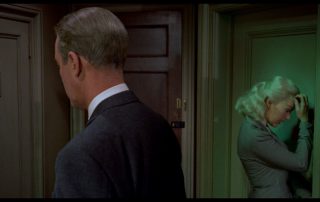
From Saul Bass’ gorgeous opening credits with Bernard Herrmann’s score (it has to be his finest, right?)—it is clear this film is different- even for Hitchcock—both his most ambitious film, the height of his perfectionism-- and the greatest crystallization of his exposed psychosis on screen it is clear this film is different- even for Hitchcock—both his most ambitious film, the height of his perfectionism-- and the greatest crystallization of his exposed psychosis on screen the opening credits are a work of art in and of itself The famous dolly zoom (used superbly in Jaws, Goodfellas

Vertigo – 1958 Hitchcock2020-09-10T15:13:59-04:00

I’m Thinking of Ending Things – 2020 Charlie Kaufman

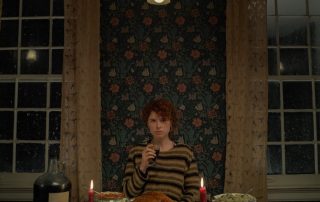
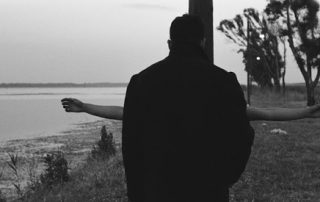
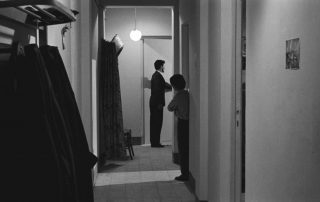
This is an intimidating film to try to say anything about with one viewing. It is a work of almost infinite creativity (Kaufman’s skills as a writer matched by the visual artist in this effort) and depth. I do intend to revisit it again soon- perhaps throwing in the works of Kaufman’s two previous directorial efforts prior if I can manage Upon first viewing, it feels like Kaufman’s greatest triumph behind the camera. Like his work that has proceeded it, it is densely layered, sprawling, and intelligent. Kaufman is clearly a singular artistic voice and genius. More referential than

I’m Thinking of Ending Things – 2020 Charlie Kaufman2021-04-18T10:44:05-04:00

An American Tragedy – 1931 von Sternberg

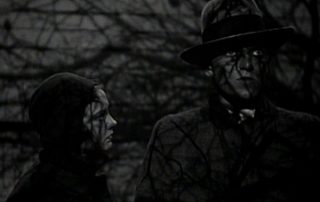
It does not come close to touching von Sternberg’s all-time of a year the year before in 1930 (The Blue Angel, Morocco)—but there are still enough elements to land it (barely) into the archives Based on Theodore Dreiser’s novel of the same name—and he sued. For the longest time after The Place in the Sun (1951—George Stevens, Liz Taylor, Montgomery Clift) this 1931 version/adaptation was impossible to find. It isn’t on the level of Stevens’ film A nice shot from von Sternberg early in a night club—the camera just drifts though almost like a patron who had had a

An American Tragedy – 1931 von Sternberg2020-09-06T13:11:03-04:00

The Window – 1949 Tetzlaff

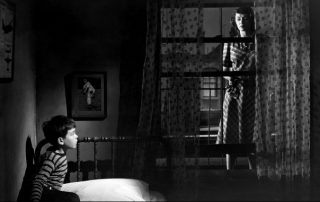
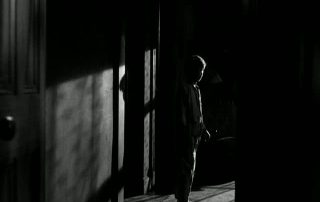
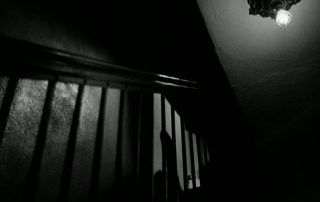
It is a brilliant premise- one of those films can sum up and get someone intrigued in thirty seconds—a young boy who is known for his tall tales, witnesses a murder through a window in his apartment building, and nobody believes him. There’s not much else, but not much else needed in this 73 minute taut little film It is a brilliant premise- one of those films can sum up and get someone intrigued in thirty seconds—a young boy who is known for his tall tales, witnesses a murder through a window in his apartment building, and nobody

The Window – 1949 Tetzlaff2021-07-02T03:30:24-04:00

Memento – 2000 Nolan

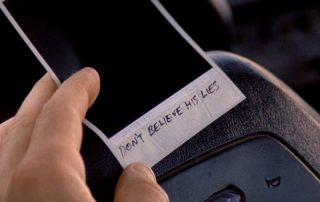
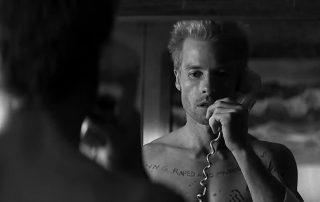
Memento is Christopher Nolan’s second film and his big breakthrough It showcases a mastery of editing- but different than the parallel editing high-wire acts he has become known for (and perfected in Dunkirk). This is a structural decision. The film is going backwards (which isn’t a cheap trick – it helps put you in the headspace of Guy Pearce’s Leonard and his condition) in color, forwards in the black and white interludes, and then they come together at the end at the 99 minute mark. a bold triumph of narrative restructuring -- the film is going backwards in color,

Memento – 2000 Nolan2022-09-18T23:50:23-04:00

The Europeans – 1979 Ivory

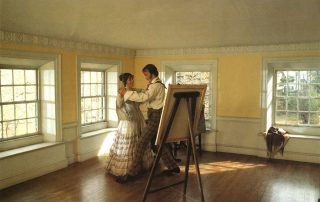
The first of three Henry James adaptations from the Merchant Ivory team Opens with these gorgeous titles—sketchings and drawings set to classical music- it is both exquisite, and exquisitely Merchant/Ivory- haha (always refinement and taste) Set in (and shot in) New England in the fall and it is beautiful- Ivory dotes on the foliage A well-deserved costume design Oscar nom- a long proud tradition for Merchant Ivory as well. A standout set – a stark yellow drawling room with wood floor It is about two European cousins, potential charlatans and seducers disrupting puritanical New England family—pleasure vs. propriety –

The Europeans – 1979 Ivory2020-09-03T21:13:35-04:00

The Seventh Cross – 1944 Zinnemann

It isn’t his debut (his third feature I believe), but the first Fred Zinnemann film I’ve seen and have in the archives It is largely a Spencer Tracy vehicle, a war film, but has some nice touches from Zinnemann with his DP, Karl Freund, and a supporting performance from Hume Cronyn It is Cronyn’s only oscar nom—but he’s certainly better in 1947’s Brute Force. Here, he and real wife Jessica Tandy play a married couple just like they do in Cocoon some 41 years later. A promising opening tacking shot. Zinnemann and Freund (also worked on Metropolis, Dracula) move

The Seventh Cross – 1944 Zinnemann2021-04-22T13:38:11-04:00

Rocco and His Brothers – 1960 Visconti

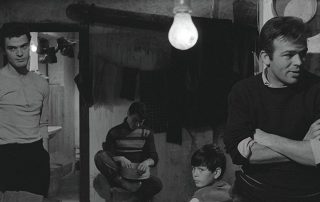
Rocco and His Brothers is one of the greatest directors of all time, Luchino Visconti, at the height of his powers. If this isn’t his single best work, it is his follow-up to this, The Leopard in 1963 is, so this stretch in his career is his peak (also the peak for so many other auteurs including fellow Italian countryman Antonioni and Fellini). It is a saga—a tragedy about five brothers – the Parondi brothers- it covers all five brothers with their own chapters (but they intersect of course a great deal) over the course of a decade. It

Rocco and His Brothers – 1960 Visconti2020-09-02T18:30:01-04:00

Scorpio – 1973 Winner

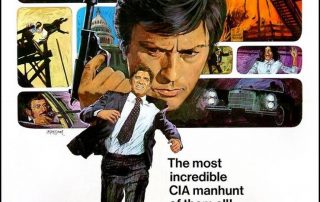
A camera-zoom heavy Cold War 1970’s spy film—pales in comparison Day of the Jackal  (also 1973) or Three Days of the Condor but an interesting picture nonetheless. It does feel like John le Carr. The two leads- Burt Lancaster and Alain Delon (aided by a talented Paul Scofield) back for a little 10 year reunion after 1963’s masterpiece The Leopard A great shot at the 39 minute mark—dust in Vienna (shot there and DC/Virginia) right when the street lights turn on with Lancaster’s broad shouldered back facing the camera. the cat and mouse spy narrative takes us from

Scorpio – 1973 Winner2020-09-01T22:16:43-04:00
Go to Top