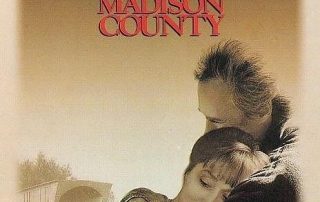
The Bridges of Madison County – 1995 Eastwood

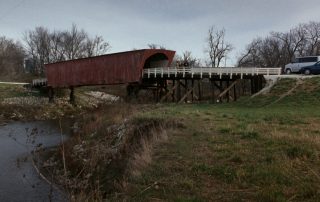
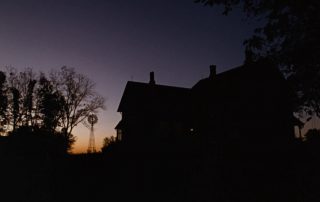
A patient, splendidly acted (by two of the great acting heavyweights: Streep and Eastwood) romance Set in Iowa (shot on location) in the 1960’s. Beautifully weathered covered bridges, perfectly rusty old trucks Set in Iowa (shot on location) in the 1960’s. Beautifully weathered covered bridges, perfectly rusty old trucks-- Eastwood doesn't linger though, there are only a handful of these shots at most A chance for Streep to add an Italian accent to her resume (she goes a different route here than the heavy New York/Jersey Goodfellas accent) A consistent mood, melodic minimal piano score. As I
The Bridges of Madison County – 1995 Eastwood2020-08-19T14:21:13-04:00

An Enemy of the People – 1978 Schaefer

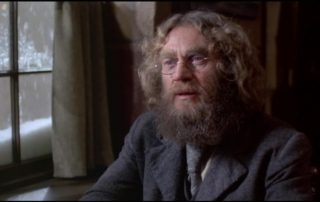
It was Steve McQueen’s big return to the screen after four years off from 1974’s The Towering Inferno (which was a massive hit). It surprised everyone that this was McQueen’s vehicle to return. It is a high-brow literary play (Ibsen by way of adaptation from Arthur Miller) McQueen would pass away just two years and two films later- way too early- in 1980 at the age of 50 The direction is nondescript- I will not be seeking out what George Schaefer made next or before this Not only is this a play- very political—but McQueen sporting a massive mane—Jeremiah

An Enemy of the People – 1978 Schaefer2020-08-17T13:53:06-04:00

Duma– 2005 Ballard

  To date, Carroll Ballard’s Duma is his final archiveable film. It is his fourth archiveable film overall (six films made total) and first since 1996’s Fly Away Home. Like his previous films, these are films about children and animals, simple tales- but never pandering or intelligent. This, like his others, feature some strong exterior photography work Opens with landscapes of location shooting in Botswana and South Africa—silent, montage of animals The voice-over of young Alex Michaeletos delivers the exposition—and like Malick’s work with voice-over (and exterior photography) it untethers Ballard’s camera Campbell Scott and Hope Davis play his

Duma– 2005 Ballard2020-08-17T13:32:19-04:00

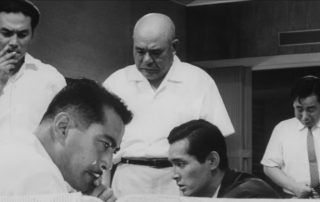
Red Beard – 1965 Kurosawa

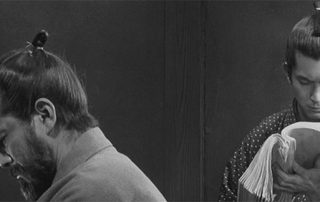
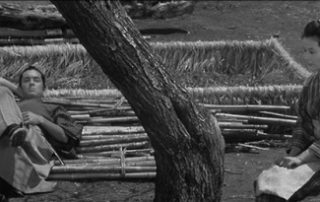
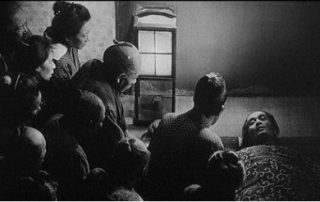
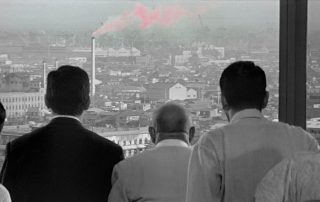
The end of an era for Kurosawa- his last film in black and white, his last film (sixteen total I believe) with Mifune, and last film of the 1960’s (it is my understanding there were a number of projects that never came to fruition for whatever reason in the back half of the decade) Since 1958’s The Hidden Fortress and every film since (a fertile artistic period, even for Kurosawa)- each has the superwide 2.35 : 1 Tohoschop aspect ratio and Kurosawa knows exactly how to design the entire frame Starts with the worst tour of all time- haha.

Red Beard – 1965 Kurosawa2020-08-07T14:33:15-04:00

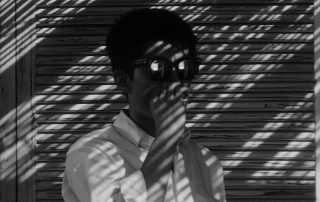
White Dog – 1982 Fuller

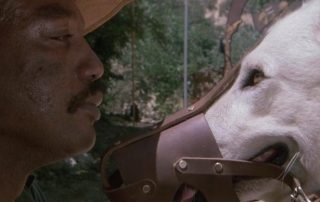
Not surprising that this wild tale is based on a true story (Fuller’s  modus operandi usually) --- it is violent and charmingly crude Never widely released in the US theaters – and it does have a movie of the melodramatic feel to it—but don’t be fooled- there is talent all over the place working on this film. It is, of course, directed by Sam Fuller- one of the greats (whose regular milieu was low-budget and the shocker “B” movie arena). It has a great score from Ennio Morricone (who worked a lot- lots of IMDB credits), co-written by Curtis

White Dog – 1982 Fuller2023-10-14T11:54:31-04:00

Celine and Julie Go Boating – 1974 Rivette

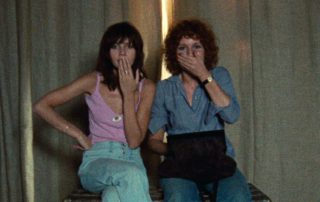
Rivette’s fifth (5th) film- a 193 minute comedy shot in a grainy crude 16mm Mixes the comic whimsy of Juliet Berto and Dominique Labourier (they have an undeniable chemistry), mystery and magic, and an airy self-awareness (they are having some laughs watching a film (albeit not a good one)) Repeated titles “but in the next morning…” There’s some debate on how much of the film is improvised Sloppily edited, and I don’t think this is the equivalent of Godard’s jump cuts skipping the fluff in Breathless- this is Rivette with a very long form Fragmented splice editing- sometimes a

Celine and Julie Go Boating – 1974 Rivette2026-03-01T08:36:02-05:00

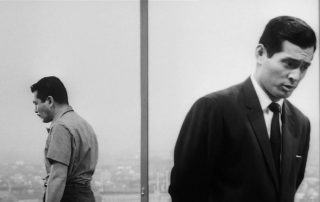
High and Low – 1963 Kurosawa

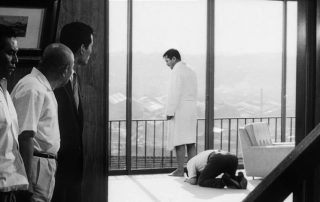
I may not be quite ready to make it yet, but I think there’s a legit argument to this being Kurosawa’s greatest single work—and his 1960’s being even stronger than his run during the 1950’s Opens with something as innocuous as stock prices and women’s shoes—but it is clear that this has something more going on – more so than even the brilliant kidnapping procedural—Kurosawa is making a dueling statement on an imbalanced social standing between the upper and lower class (choosing height specifically here for that comparison) as well as the inherit evil in the nature man (this

High and Low – 1963 Kurosawa2020-08-04T16:25:03-04:00

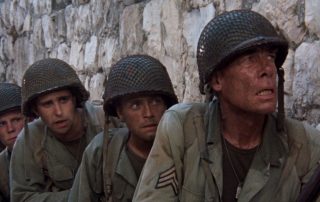
The Big Red One – 1980 Fuller

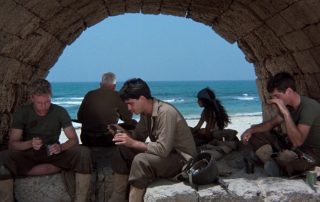
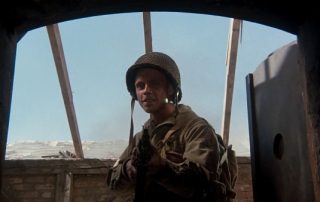
It is the film that meant the most (along with Park Row) to Fuller, and the one he was leading up to his entire life. War (Fuller was a WWII vet and much of this is autobiographical) and the war experience has always been important to Fuller, often throwing the big red “1” in his other films – even has far back as the 1950’s. So, it is at least somewhat disappointing that this film was 1) taken from Fuller’s control and 2) isn’t one of his best five films Fuller’s passion project- he was removed from The Deadly

The Big Red One – 1980 Fuller2020-08-02T14:49:46-04:00

The Adventures of Tintin – 2011 Spielberg

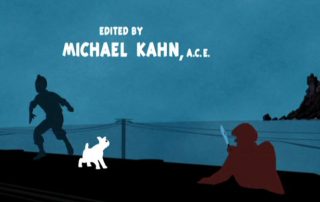
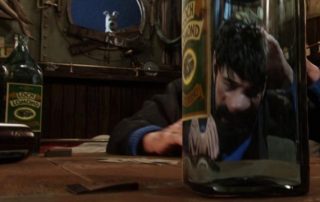
It certainly isn’t an essential part of the Spielberg canon- but enough elements worthy of praise to slip into the archives The credit sequence is certainly one of the greatest moments of the film—reminiscent of the brilliant Saul Bass-like work in Spielberg’s Catch Me If You Can The credit sequence is certainly one of the greatest moments of the film—reminiscent of the brilliant Saul Bass-like work in Spielberg’s Catch Me If You Can Feels a little long at 106 minutes (some of the chase sequences go on and on)- that’s never good an adventure yarn—it is a

The Adventures of Tintin – 2011 Spielberg2020-08-02T13:07:30-04:00

The Nun – 1966 Rivette

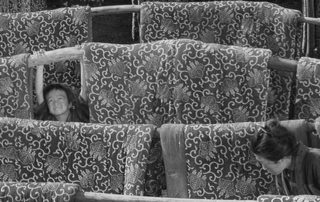
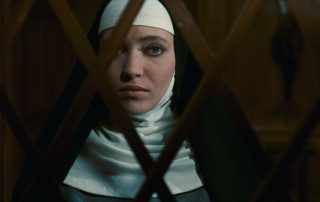
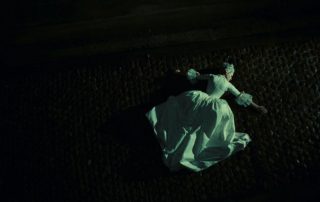
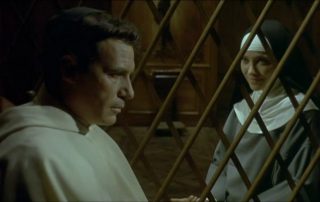
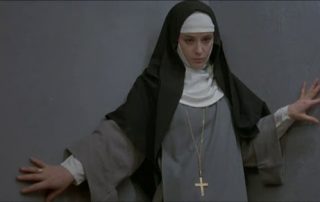
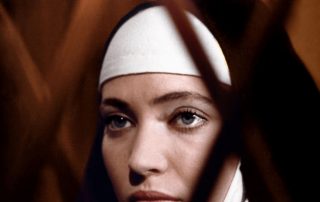
Rivette’s dedication to the visual motif of imprisonment, bars holding Anna Karina’s Suzanne is quite the formal achievement Rivette’s second feature after 1961’s Paris Belongs To Us. Godard had made 9 features in that time- haha. Rivette has always been the long-form artist of the New Wave- this clocks in at over 140 minutes as well handsome black and white drawings in the prelude, unlike most of the New Wave- this is an 18th century story—but certainly has a contemporary statement from Rivette It is a nice resume builder for Anna Karina. Proves she’s more than just a muse

The Nun – 1966 Rivette2020-07-31T13:55:42-04:00

Paris Belongs to Us – 1961 Rivette

The debut French New Wave auteur Jacques Rivette—a leisurely-paced, but fascinating paranoia-infused opaque mystery 142 minutes for a debut- indeed, even early, Rivette is the long-form voice from the New Wave A strong opening as we travel through Paris with the camera and fly in through the window to our unlikely (and uknowning) detective Anne- played by Betty Schneider A bizarre score, part guitar and part jazzy percussion  secrecy, conspiracy, “we’re a cog in a vast machine” in the text and Lang’s Metropolis in the text, Rivette uses Parisian architecture in the shadows to effect-- but this is a

Paris Belongs to Us – 1961 Rivette2020-07-31T12:55:35-04:00

Big Wednesday – 1978 Milius

Chiefly, the carefully structured form of the story into four sections, is worthy of admiration. For every chapter break, Milius, a great writer, has the voice-over set to the landscapes of the shoreline. He names the chapters after different “swells”, the “west swell”, “south swell” (part 2) and the final “great swell” – strong form Milius calls it his How Green Was My Valley- and that makes sense that he’d see himself in Ford. Ford is sort of cinema’s Hemingway (minimal, masculine) and Milius certainly adored Hemingway and every one of his films is about masculinity Milius wrote (partially)

Big Wednesday – 1978 Milius2026-06-22T18:57:17-04:00
Go to Top